17/11/2025
Engineer’s Choice: What to Check Before Purchasing a Used, Pre-Owned, Surplus, Secondhand FARREL 69 A 4895 Traveling-Head Roll Grinder made in USA?
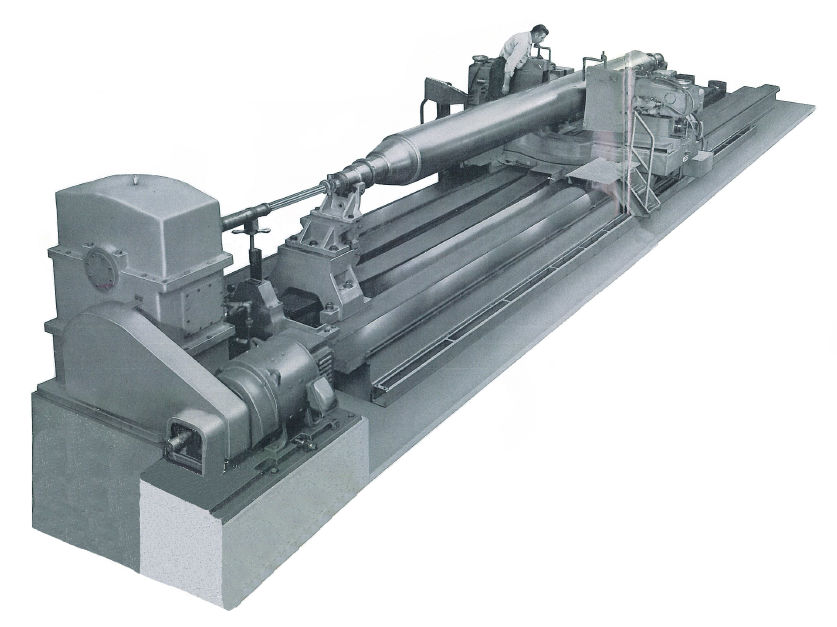
When evaluating a used, surplus or second-hand roll grinder such as the Farrel (USA-made) “69 A 4895” travelling‐head model, it’s wise to go through a methodical checklist—especially since roll grinders are large, critical pieces of equipment with many subsystems. Here’s a detailed “engineer’s choice” list of what to check before purchasing, along with why each point matters and what to watch out for.
Visual & mechanical condition
- Overall machine cleanliness & condition
- Check for rust, corrosion (especially on ways, bed, carriage, and headstock).
- Check signs of misuse: missing panels, damaged way covers, oil leaks, coolant leaks, chatter marks.
- Ask for recent photographs of all key parts: bed & carriage ways, grinding wheel heads, headstock and tailstock.
- A machine kept in good condition typically indicates better maintenance.
- Bed, ways, carriage travel & alignment
- Check the bed (bedways) for wear, gouges, rust, uneven wear. Large grinders often suffer from way wear or bed deflection.
- Carriage traverse: Are there smooth motions, no binding, no excessive backlash?
- Check the travel length (verify that advertised “travelling‐head” length capacity matches what you need).
- Check for correct fit of journal rests/steady rests and that there is sufficient clearance for your rolls.
- Grinding wheel heads & wheel spindles
- Inspect the spindle condition: play in the spindle, bearing condition, thermal run-up.
- Confirm the wheel size capability (wheel diameter × face width) and check whether wheel flanges and guards are included.
- Check dressing system: is there a built‐in dresser, or is one required? Is coolant/lubrication system for wheel spindle intact?
- Check for wear in the wheel head ways/traverse/tilt/crowning mechanism (if applicable).
- Headstock, tailstock, roll handling/drive system
- Verify that headstock and tailstock centres are aligned, that the drive for rolls works (motor, gearbox, coupling).
- Check roll spindle speed range, torque, how drive is applied (direct, gearbox, belt).
- Check steady rest (neck rests) condition: Are they adjustable, in serviceable state? These are critical for roll grinding.
- Check for roll size capacity: maximum diameter, maximum length, and weight between centres — ensure it meets your requirement.
- Crowning/concaving / traverse / control systems
- Many roll grinders (including Farrel style) have mechanisms to produce crowning (curved profile) or concaving. Verify that the crown/concave mechanism is functional (cams, eccentrics, motors).
- Verify traverse feed system: is it servo/AC/DC motor driven, or older mechanical gearbox? What speeds and controls are available? Example: another Farrel double wheel roll grinder had D.C. variable speed carriage feeds.
- Verify controls: Are read‐outs digital? Are there modern upgrades (CNC or manual)? Does the machine still meet your automation/production expectations?
Electrical, hydraulics, coolant & auxiliary systems
- Motors, drives, electrical panel
- Identify the condition of all major motors (wheel head drive, headstock, carriage traverse, feed systems). Check service records if available.
- Check control panel: Are drives/variators still supported? Are there obsolete spare parts issues?
- Verify wiring, safety circuits, emergency stops, machine guarding.
- Check for motor/VFD compatibility with your local power supply (voltage/frequency). If importing to Türkiye, check for 50 Hz/380-400 V compatibility.
- Hydraulic & lubrication systems
- Check if the machine uses hydraulic feeds/clamping—verify the condition of cylinders, seals, hoses.
- Check automatic lubrication of ways, spindles, drive gears—poor lubrication leads to way wear and spindle bearing failure.
- Ask for maintenance records of lubrication systems.
- Coolant & filtration system
- A roll grinder will typically have coolant (for grinding operation) and filtration or separation systems to handle swarf. Check that pumps, filters, cyclone/separator (if any) are functional.
- Check coolant tank condition, whether coolant is usable or contaminated (rust, oil, sludge). Replacing coolant hardware or cleaning may cost significant time/cost.
- Steady/neck rests, roll supports & ancillary fixtures
- Check for availability and condition of neck rests, journal rests, bearing blocks. These are often custom fixtures and may be missing or damaged on used machines.
- Check for availability of any special tooling you will need (steady rests, center blocks, rollers) for your roll diameters/weights.
Capacity, fit for your application & upgrade potential
- Capacity vs your needs
- Confirm maximum roll length, maximum roll diameter (on-centre or above–centre), maximum roll weight between centres. Ensure the machine meets your incoming workload. (For example, some Farrel machines list “roll length capacity 424″” and “swing above center 72″”.)
- Check footprint and foundation requirements: these machines are heavy, may need a reinforced floor or pit, vibration isolation, and precise foundation.
- Consider overhead crane or roll handling: can your facility move large rolls into/out of the machine?
- Spare parts / wear items / support
- Check for availability of spare parts (bearings, wheels, drives, controls) for the model in question. Older models may have limited support.
- Ask for history of major rebuilds or wear replacement (ways, spindle bearings).
- Check if machine has been “rundown” (i.e., lots of hours, poor maintenance) — if so, factor in likely future rebuild cost.
- Upgrade potential / automation
- Does the machine allow upgrades (CNC control, data capture, automatic loading/unloading) if you want to modernize?
- If your production requires quick changeovers with different roll sizes, check how flexible the machine is (change of chucks, journal rest adjustment, etc).
Alignment, calibration & service history
- Alignment check & precision verification
- Ask for recent alignment/calibration records: bed alignment, carriage way straightness, headstock‐tailstock alignment.
- Ideally, you or a qualified expert should be able to check residual errors: e.g., roll run-out after grinding, put a test roll in and measure finish, surface profile, crowning accuracy.
- Check for way wear: measure carriage sag, bed deflection, headstock drift.
- Service/maintenance history
- Request service logs: major overhauls, replacement of key components (spindle, bearings, ways), any incidents (accidents, flooding, earthquakes).
- Ask about operator experience: Was machine used heavily, lightly, intermittently? Was it used for abrasive materials or less demanding work?
- Previous operating environment
- Check the environment where the machine was used: Was it in a clean, air‐conditioned plant, or in a harsh dusty/dirty environment (e.g., steel mill)?
- Poor environment can accelerate wear on ways, hydraulic systems, spindles.
Cost, logistics & warranty considerations
- Cost of relocation / reinstallation / commissioning
- These machines are very heavy and bulky. Plan cost for disassembly, transport, shipping (especially to your country), crane hire, foundation work, pit or shim support, re-leveling, calibration.
- Ask the seller whether machine is currently wired up, whether it can run for demonstration, whether they will assist with disassembly.
- Demonstration / running condition
- Ideally see the machine running: carriage traverse, wheel head operation, roll spindle turning, loading/unloading of roll, coolant system working.
- If not possible, ask for live video and recent inspection photos.
- Check for unusual vibration, noise, inconsistent surfaces.
- Warranty / acceptance terms
- On used machines, ask for acceptance period: can you inspect after delivery? Are there any warranty or implied guarantees? What is the return policy?
- Make sure contract clearly states condition, included accessories, tooling, fixtures, spare parts.
- Total lifecycle cost & expected remaining life
- Estimate how many useful years you can get from the machine, given its current condition and workload.
- Factor in maintenance, possible overhaul cost, downtime risk.
Specific to travelling‐head roll grinders
Since this is a “travelling‐head” type of roll grinder (the head moves along the roll length) there are extra points:
- Traveling head carriage and screw/lead‐nut system
- Check the condition of lead screws, nuts, guide ways for the travelling head: wear, backlash, overshoot.
- Verify that traverse length is correct and matches your roll lengths.
- Wheel head in-feed / out-feed and tilt/crowning mechanism
- Travelling head machines often allow wheel feed in‐out, wheel tilt, crowning. Check that these functions work properly, and verify the crowning mechanism (cam or eccentric) for adjustment. See patent description of such systems.
- Check if digital or manual control of these are available; if manual, check condition of micrometers/dials.
- Roll drive and roll rotation drive carriage synchronisation
- For roll grinding you often need synchronisation between roll rotation and wheel head traverse (to ensure correct feed per revolution). Ask how this was accomplished on the machine: mechanical clutch, electronic, sensor.
- Check whether this part of the system is functional and documented.
- Size & weight of rolls you plan to grind
- Because travelling‐head machines are used for large rolls, ensure the machine’s layout fits your roll diameters, face lengths, weight. For example, one Farrel machine quoted: roll length capacity 424″ and 72″ swing above center.
- Also check clearance above center, below bed and interferences with wheel head travel.
Red‐flags / “deal breakers”
- Major way wear causing large tolerance issues — this will cost a large refurbishment.
- Missing or severely worn spindle bearings (would show as noise, rough rotation, high vibration).
- Obsolete electrical drives or control systems that cannot be easily replaced or will cost a fortune.
- Huge cost of relocation and foundation modifications that make the purchase no longer cost‐effective.
- Poor documentation: no service history, no parts list, no drawings or schematics.
- Unavailability of steady rests or journal rest tooling for your specific rolls.
- The machine’s capacity is significantly mismatched to your needs (either too small or too large/inefficient).
Practical tips for you
here are some tailored tips:
- Request the serial number and build drawing of the unit (so you can check with Farrel or other big machine tool service providers for spare parts availability).
- Have a third-party specialist inspect the machine on site (for a fee) and provide a condition report: especially for the large roll grinder marketplace, that adds value to your listing.
- Make sure you capture all included accessories (chucks, fixtures, steady rests, wheel flanges, documentation, lubrication system, coolant system, etc) and photograph them.
- Provide potential buyers with full specifications: roll diameter capacity, roll length capacity, swing over bed, wheel size, motor sizes, travel lengths, drive type. This reduces buyer hesitation.
- Clearly state what is excluded and what condition the machine is in (running, shut down, stored, dismantled).
- Estimate transport, installation and commissioning costs for the buyer (especially important for large machines) — this transparency builds trust and helps with sale.
- Encourage the seller to produce a live video demonstration of the machine in operation (if possible) to reduce risk for the buyer.
Summary checklist
☐ Visual condition: bed, ways, carriage, rust/leaks
☐ Bed and way alignment / travel smoothness
☐ Grinding wheel head: spindle play, wheel size, dressing system
☐ Headstock/tailstock: roll drive, centres, steady rests
☐ Crowning/concave mechanisms functional
☐ Carriage traverse & traveling head travel (length)
☐ Electrical: motors, drives, control panel, compatibility
☐ Hydraulic/lubrication systems
☐ Coolant/filtration system working
☐ Fixtures: journal rests, neck rests, tooling included
☐ Capacity: roll diameter, length, weight between centres
☐ Foundation/footprint/relocation cost estimated
☐ Service history and spare parts availability
☐ Demonstration (video or in-person) checked
☐ Upgrade/automation potential assessed
☐ Contract and warranty/acceptance terms agreed
☐ Total lifecycle cost estimated