Before You Buy: Essential Criteria for Evaluating a Used, Second-Hand, Pre-Owned, Surplus Sahinler HPK-200 Profile Bending Machine made in Türkiye
This guide is intended for professional buyers, fabrication companies, and industrial users evaluating a used / second-hand / pre-owned / surplus Sahinler HPK-200 profile bending machine. It focuses on technical capability, mechanical condition, and long-term reliability, not marketing claims.
Machine Overview
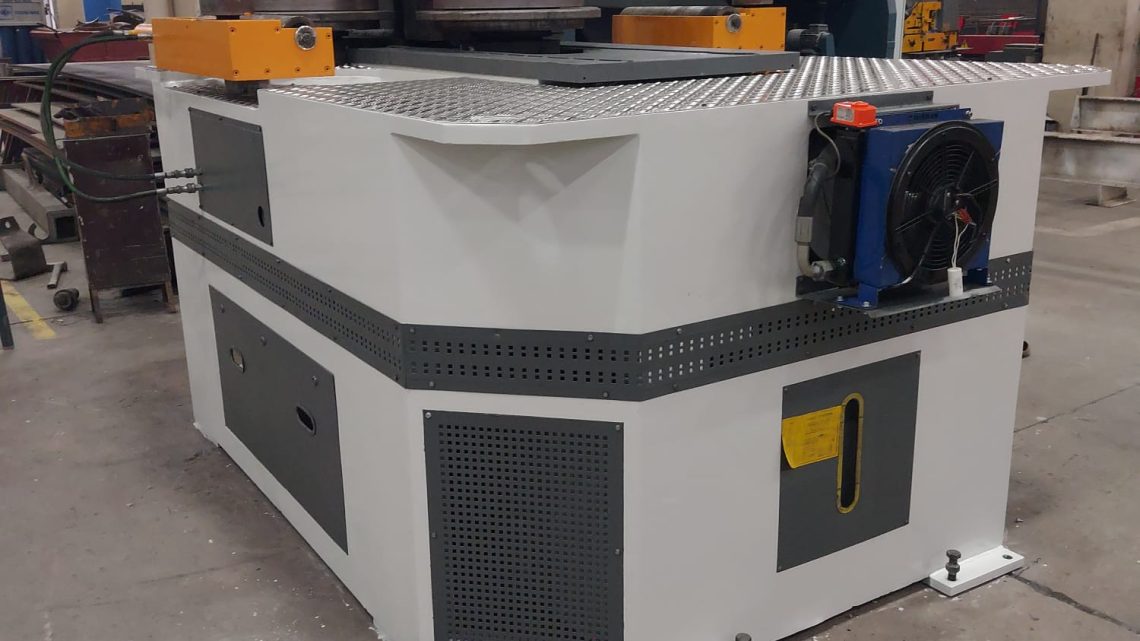
The Sahinler HPK-200 is a heavy-duty hydraulic profile and tube bending machine designed for cold bending of steel profiles, tubes, and structural sections. It is widely used in steel construction, shipbuilding, metal fabrication, and industrial manufacturing environments.
The machine operates with a three-roll hydraulic bending system, offering high forming force, stability, and repeatability for medium-to-heavy section bending applications.
Technical Specifications (Typical / Representative)
Exact specifications may vary by production year and configuration (HPK-200 or HPK-200 DP), but commonly observed values for used machines are:
| Specification | Typical Value |
|---|---|
| Manufacturer | Sahinler (Türkiye) |
| Model | HPK-200 / HPK-200 DP |
| Machine Type | Hydraulic profile & tube bending machine |
| Bending System | 3 driven rolls |
| Shaft Diameter | Approx. 200 mm |
| Roll Diameter | Approx. 900 mm |
| Structural Bending Capacity | Heavy profiles and tubes up to large section sizes |
| Working Speed | Approx. 2–5 m/min |
| Main Motor Power | Approx. 30 kW |
| Power Supply | 3-phase industrial (commonly 400 V) |
| Machine Dimensions | Approx. 2400 × 3400 × 2300 mm |
| Machine Weight | Approx. 15,000 kg |
| Control Type | Mobile control panel with digital readout |
| Working Position | Typically horizontal |
Note: “DP” versions generally indicate enhanced hydraulic or dual-speed configurations, offering improved control and torque management.
Essential Evaluation Criteria Before Purchase
1. Machine Frame and Structural Integrity
- Inspect the main frame for deformation, stress cracks, or repairs.
- Pay close attention to welded areas and high-load zones.
- Surface corrosion is acceptable to a degree; structural distortion is not.
A straight and rigid frame is essential for consistent bending accuracy.
2. Rolls, Shafts, and Bearings
- Examine roll surfaces for wear, grooves, flat spots, or re-machining.
- Verify shaft alignment and check for bearing noise or excessive play.
- Confirm that rolls are hardened and suitable for your profile types.
Worn rolls directly affect bending radius, surface finish, and repeatability.
3. Hydraulic System Condition
- Check hydraulic cylinders, hoses, fittings, and seals for leaks.
- Inspect oil quality for contamination or overheating signs.
- Listen for abnormal pump noise during operation.
Hydraulic system condition is a key cost factor in used machines.
4. Electrical System and Controls
- Test all control functions, including emergency stop and safety switches.
- Verify accuracy of digital readouts and positioning indicators.
- Inspect control cabinet for overheating marks or non-original modifications.
Electrical reliability is critical for production continuity.
5. Functional Bending Test
- Perform a bending test using profiles similar to your production parts.
- Check for consistency, repeatability, and smooth roll movement.
- Confirm that achieved bending radii match expected results.
A live test reveals issues that static inspection cannot.
6. Tooling, Accessories, and Documentation
- Confirm which rolls, dies, and profile tooling are included.
- Ask for operation manuals, hydraulic diagrams, and maintenance records.
- Availability of original tooling significantly increases machine value.
Missing tooling can represent a substantial hidden cost.
7. Machine Age and Usage History
- Ask about production environment (single shift, multi-shift, heavy profiles).
- Request approximate operating hours if available.
- Consistent maintenance is more important than machine age.
A well-maintained older machine can outperform a poorly kept newer one.
Typical Applications
The Sahinler HPK-200 is commonly used for:
- Structural steel bending (angles, channels, beams)
- Tube and pipe bending
- Hollow and open profile forming
- Industrial and construction-related metal fabrication
It is well suited for continuous industrial use when properly maintained.
Common Issues Found in Used HPK-200 Machines
| Issue | Impact |
|---|---|
| Hydraulic leaks | Loss of pressure, inconsistent bending |
| Roll wear | Poor surface quality and inaccurate radius |
| Sensor or control faults | Positioning errors |
| Electrical aging | Unplanned downtime |
Key Questions to Ask the Seller
- Which tooling and rolls are included in the sale?
- Has the hydraulic system been overhauled?
- Are seals, hoses, and pumps original or replaced?
- Can a bending test be performed before purchase?
- Are manuals and electrical diagrams available?
Clear answers to these questions reduce investment risk.
Summary for Buyers
The Sahinler HPK-200 is valued for its:
- Heavy-duty hydraulic bending capability
- Robust mechanical design
- Suitability for large structural profiles
Before purchasing a used unit, focus on:
- Frame integrity
- Roll and hydraulic condition
- Electrical reliability
- On-site bending test results
A properly inspected HPK-200 can remain a productive asset for many years in industrial service.