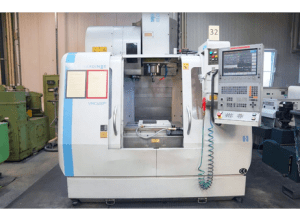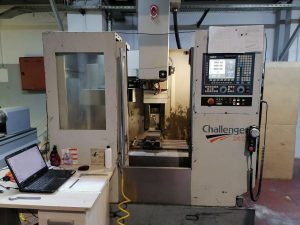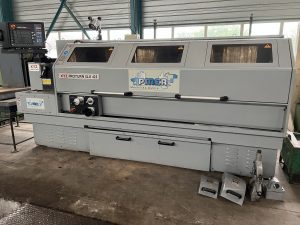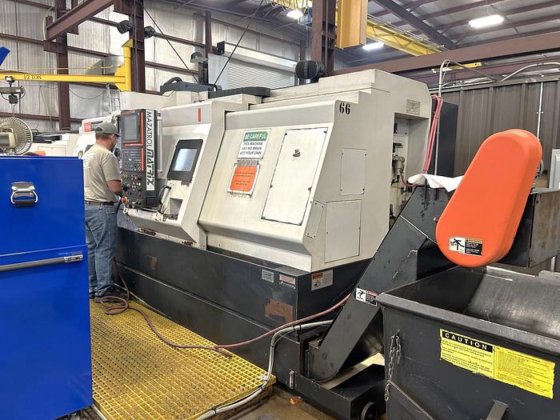
Avoid Costly Mistakes: Professional Tips for Purchasing a Pre-Owned / Surplus / Second-Hand / used Mazak Nexus QTN 350 II-M/1500 CNC Lathe made in Japan
Here’s a detailed, professional-grade due diligence guide for buying a used / surplus Mazak Nexus QTN 350 II-M/1500 (or similar high-end CNC lathe). The goal: uncover hidden problems, estimate refurbishment costs, avoid nasty surprises, and negotiate with leverage.
1. Know the Machine (Spec Review Before You Inspect)
Before you visit the seller, arm yourself with correct specifications and typical failure modes. Here are some known / reported specs for the QTN 350 II-M series:
- Max turning diameter (over slide): ~ 750 mm (≈ 29.5 in)
- X-axis travel: ~ 260 mm
- Z-axis travel: ~ 1605 mm
- Spindle bore (hollow): ~ 102 mm
- Spindle speed: ~ 3,300 rpm
- Spindle power: ~ 30 kW
- Tool turret: 12-station (revolver) style
- Live tooling (if applicable): certain units support live tools (but power and rpm may vary)
- Weight / footprint: around 7,500–8,000 kg, large footprint of several meters depth and width
- Control: Mazak’s Mazatrol Matrix Nexus control on many units
Use these specs as baselines. If the seller’s claims deviate, ask why (modified, upgraded, or mis-stated).
Also research known failure modes for Mazak machines in your region (wear of slides, issues with turrets, electronic part obsolescence, etc.) and typical refurbishment costs regionally
2. Pre-Inspection Questions to the Seller (Before You Travel)
These are “filter questions” to avoid wasting a trip:
- Year of manufacture / serial number. This lets you check parts support availability.
- Total hours or cycles (if logged). Even approximate load history is helpful.
- Any refurbishment or major repairs done (e.g. slide regrinding, spindle overhaul, turret rebuild, control replacement).
- Whether original manuals, circuit diagrams, software backups, parameter files, and parts lists are included.
- Whether any parts are missing or nonfunctional (e.g. broken tool station, dead live-tool axis, missing protective covers, disabled functions).
- Available tooling / chucks / fixtures included (and their condition).
- Whether the machine is functional now (power on, axes move) or whether it must be “brought back to life.”
- Whether moving / disassembly assistance is included (or whether they require you to pay for full dismantling / transport).
- Whether they offer any short-term guarantee or acceptance period after purchase.
If the seller refuses to allow basic verification steps (e.g. powering up, move tests), treat it as a red flag.
3. On-Site Physical & Functional Inspection Checklist
Once you arrive, use a systematic checklist. Take photos, measurements, video of motion, and (if allowed) test bends / cuts.
Below is a detailed breakdown.
A. Structural & Mechanical Integrity
| Component | What to Inspect / Test | Acceptable Condition / Warning Signs |
|---|---|---|
| Bed, Machine Casting, Frame | Look for cracks, weld repairs, distortions, painted-over patches. Use dye-penetrant if possible on suspicious areas. Check alignment across the bed. | Small cosmetic wear is okay; structural cracks, large weld repairs, or misalignment are serious. |
| Slides / Ways (X, Z axes) | Using a precision measuring tool (dial test indicator or laser), check way wear, straightness, backlash, taper over travel. Slide surfaces should be smooth. | Excessive wear, pitting, scoring, or “stick/slip” movement are red flags. |
| Ballscrews / Ball Nuts / Leadscrews | Inspect what is visible. Look for backlash, chatter, noise on motion, lubrication condition. | Worn ball nuts or screw damage is expensive to repair/replace. |
| Turret / Tool Changer Mechanism | Index through all stations (if possible). Check for station-to-station repeatability, if the turret clamps solidly, absence of wobble or misalignment. | Sluggish indexing, poor clamping, or play in turret are serious issues. |
| Spindle / Bearings | With the spindle free, rotate manually and check for smoothness. Listen for noise. Under power, check for vibration, temperature, and run-out. Check for spindle oil leaks. | Bearing wear, heating, vibration, or run-out beyond spec is a major repair. |
| Live Tooling (if present) | Rotate the live tool spindle, test under load if possible, measure run-out, check gearing or coupling. | Poor concentricity, weak power, or inability to reach rated rpm are issues. |
| Chuck & Clamping Devices | Inspect mating surfaces, jaws, hydraulic or mechanical clamping systems, chuck bore. Test opening/closing action. | Worn jaw faces, misalignment, or loss of clamping force can degrade machinability. |
| Hydraulics & Pneumatics | Leaks in hoses, cylinders, valves; condition of hydraulic oil; integrity of pressure pipes; operation of tailstock (if hydraulic). | Persistent leaks or degraded hydraulic components incur ongoing maintenance cost. |
| Cooling / Lubrication System | Check coolant pump, pipes, filters, coolant tank, chip conveyor, lubrication lines, and oil reservoirs. | Malfunctioning coolant or lubrication systems can damage tools / workpieces. |
| Guards, Covers, Enclosures | Missing or damaged guards or covers allow chips, coolant, etc. to penetrate critical components. | Replacing or fabricating missing guards can be tedious and costly. |
| Electrical Cabinet & Wiring | Open the cabinet; inspect power wiring, controller modules, servo drives, contactors, fuses, terminal blocks. Look for overheating, discoloration, repairs, or irregular wiring. | Burn marks, patched wiring, or incompatible upgrades suggest prior failures or improper servicing. |
| Safety Devices | E-stop, interlocks, door sensors, guards. Ensure they function. | Nonfunctional safety will require retrofitting to meet your local regulations. |
B. Control / CNC / Electronics
| Subsystem | What to Test / Check | Acceptable Condition / Warning Signs |
|---|---|---|
| CNC / Mazatrol Control | Power it up, navigate through menus, load a program (if available), test axis commands (in manual mode) to move X, Z axes. | Control screen dead, unresponsive keys, inconsistent programming, or inability to jog axes are red flags. |
| Parameter & Backup Data | Ask to inspect memory, backup files, parameter settings, calibration data, compensation tables. | If control memory is blank or no backups are provided, you may lose original calibration. |
| Servo Drives / Amplifiers | Inspect drive units: look for overheated, burnt components, bad capacitors, abnormal bulging, or signs of repair. | Failed or obsolete drives may be difficult or expensive to replace. |
| Limit / Home Switches & Sensors | Trigger limit switches, home sensors; test feedback loops. | If switches are nonfunctional or poorly aligned, motion may be unsafe or inaccurate. |
| Human-Machine Interface (HMI) & I/O | Touch screen, buttons, UIs, networking ports, I/O boards should respond. | Inoperative I/O or HMI modules seriously limit usability. |
C. Motion / Performance Tests
- Jog Motion Tests: Move axes manually and under slow feed. Observe smoothness, catch points, noise, backlash, skip.
- Repeatability / Backlash Test: Use a gauge to move back and forth a small distance and see how reproducible the position is.
- Run at Speed / Load Test: Under light load, run spindle + axis motion to check for vibration, noise, thermal behavior.
- Test Machining / Cutting: If allowed, run a test cut or machining pass on a representative material. Compare dimensional accuracy, surface finish, and tool behavior.
- Temperature / Thermal Drift: Run the machine for a while and watch for thermal drift, component heating, or control instability.
D. Alignment & Geometric Checks
- Spindle to Bed Alignment: Check perpendicularity / coaxial alignment of the spindle relative to bed or ways.
- Turret / Tool Alignment: Ensure each station is concentric and aligned with spindle axis.
- Flatness / Straightness over travel: Use telescopic bar, precision straight edges, or lasers to check deflection or deviation across full travel.
- Tailstock alignment: If tailstock present, check alignment, axial movement, quill condition.
E. Supporting Equipment & Infrastructure Checks
- Power supply (voltage stability, grounding, phase balance).
- Foundation and floor flatness where machine sits.
- Overhead clearance, access for crane / rigging, doors.
- Utilities (coolant supply, chip removal, lighting, ventilation, dust / chip control).
- Environmental conditions: humidity, vibration, temperature extremes.
4. Estimating Repair / Rebuild Costs & Risks
Once inspection reveals defects or wear, you need to convert them into cost estimates and risk buffers. Below are typical “repair delta” buckets and how to estimate them.
| Issue | Typical Remediation | Ballpark Cost / Effort | Risk / Impact |
|---|---|---|---|
| Replacing or rebuilding spindle bearings | Disassemble spindle, replace bearings, regrind, reassemble, balance | Moderate to high (depending on spindle size & complexity) | High — spindle is central |
| Servicing or replacing ballscrews / ball nuts | Replace worn screw or nut, realign, calibrate | Medium | Degraded motion & repeatability |
| Turret / tool changer refurb | Replace worn gears, bearings, indexing mechanism, seals | Medium to high | Tooling errors, downtime |
| Servo drive / control module replacements | Replace failed drive electronics | High (especially if electronics are obsolete) | Can break entire system |
| Slide / way repair or re-scraping | Re-scraping or re-grinding ways, re-lapping surfaces | High | Critical for accuracy |
| Hydraulic / pneumatic repairs | Replace seals, hoses, valves | Low to medium | May not break the machine, but ongoing leaks cost |
| Replacing missing guards, covers, panels | Fabrication / sourcing parts | Low to medium | Mostly convenience & safety |
| Rewiring / electrical cleanup | Replace damaged wiring, reorganize control panel | Low to medium | Adds reliability and safety |
| Transport / dismantling / reassembly / alignment | Crane, rigging, leveling, calibration, commissioning | Moderate (often underestimated) | Operational start-up risk |
Add a contingency (often 15–25 %) above your calculated repair cost to cover unseen issues.
Also consider lead times for spare parts (especially for Mazak control, drive modules, proprietary electronics) in your region. Some parts may require long import times or special ordering, which increases downtime.
5. Negotiation Leverage & Purchase Terms
- Use defects as discount leverage: Document wear, missing parts, or required repairs. Use them to push the price down by at least the estimated cost of fix + your risk premium.
- Request a “test period” or conditional acceptance: E.g. a short warranty window (30–90 days) or the right to reject if hidden defects appear.
- Require spare parts, tooling, and documentation: Insist spare modules, wiring spares, extra tooling, and original drawings be included (or be credited in the price).
- Ask seller to perform certain repairs pre-sale: You might negotiate that the seller replaces bearings, repairs turret, or recharges hydraulics before handover.
- Deposit & staged payments: Hold back portion of payment until machine acceptance criteria are met.
- Insurance / transit risk: Insure transport, define liability for damage during relocation, and clarify responsibility.
- As-is vs reconditioned clause: Document exactly what condition is being accepted, and what is expected at delivery.
6. Post-Purchase / Commissioning Strategy
- Before you run production, do a full system audit: re-lubricate, flush coolant, replace filters, calibrate, back up control data, check all safety systems.
- Perform initial trials under low load to validate behavior.
- Gradually ramp up to full capacity while monitoring position drift, temperature, vibrations, and tool wear.
- Log all deviations under production, and adjust compensation tables carefully.
- Set up a preventive maintenance schedule from day one (lubrication, filter changes, calibration check, spindle health monitoring).
- Stock critical spare parts (drive modules, seals, bearings) to limit downtime.
7. Summary / “Red Flags” to Watch For
- Control or CNC system inoperative or unresponsive.
- Turret or tool changer with excessive play, indexing issues, or “sticking.”
- Significant wear on slides, scoring, pitting, or unrecoverable damage.
- Spindle vibration, run-out, overheating, or bearing noise.
- Obsolete electronics for which replacements are difficult to source.
- Missing documentation, backups or parameter files.
- Nonfunctional guards, safety systems, or missing protective covers.
- Underestimating relocation, alignment, and commissioning efforts.
- No trial cuts allowed or restricted access to test movement.