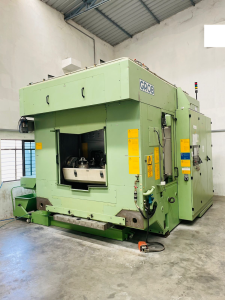
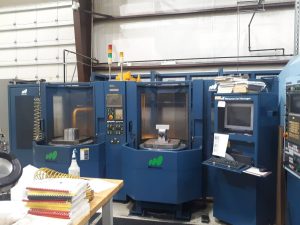
Avoid Costly Mistakes: Professional Tips for Purchasing a Pre-Owned, Surplus, Second-Hand, Used Hyundai Wia L800A CNC Lathe made in South Korea
Buying a used or surplus Hyundai Wia L800A CNC lathe can be a smart, cost-effective move — if you avoid hidden pitfalls. Below is a professional, detailed checklist and set of tips (with “red-flags”) to help you evaluate and negotiate with confidence.
In this context, “used” includes machines that are pre-owned, surplus, or secondhand. The underlying principles apply generally to heavy CNC lathes, but we’ll tailor them to what’s known about the L800A model.
Background & Typical Specs (for the L800A)
It helps to know what to expect from the L800A as a benchmark. Here are some typical specifications you should verify (and use as reference during inspection):
- Max turning diameter: approx. 36.22 in (≈ 920 mm)
- Max turning length: ~ 65 in (≈ 1,650 mm)
- Chuck size: 32 in (≈ 800 mm)
- Spindle speed: ~ 700 rpm
- Spindle motor power / torque: e.g. 45/37 kW, torque ~ 7,045 / 5,795 N·m (depending on step)
- Guide / slide type: “box way” design (heavy duty)
- Tailstock: yes (for extended work support)
- Spindle nose: A2-20 (common for heavy duty)
These are your “ideal vs plausible range” values; deviations can be legitimate (due to optional equipment or damage), but should be explained and justified.
Pre-Visit Preparation & Document Review
Before traveling to inspect the machine, try to get as much documentation as possible. This will save you time, allow remote evaluation, and help you flag issues ahead of time.
Documents / data to request:
- Maintenance logs and repair history — dates, parts replaced, who did the work
- Machine usage / hours / “cutting hours” — how intensively it’s been used
- Original factory drawings, electrical/hydraulic schematics, parts lists
- Software / CNC control logs, backups, versioning
- Past inspection / calibration reports (e.g. spindle runout, axis alignment)
- List of upgrades or modifications (e.g. spindle change, tooling additions)
- Reasons for sale — e.g. decommissioned, replaced by newer machine, existing defects
- Photos and video— views of the machine in situ, running under power if possible
If the seller cannot provide a credible history, treat that as a warning sign.
Visual / Structural Inspection
Once on site, begin with a careful walk-around using good lighting, measuring tools, and a camera to document everything. Look for hidden warning signs.
1. Structural integrity
- Frame / base / bed: check for cracks, weld repairs, distortion, sagging or twisting.
- Bed ways: for wear, gouges, corrosion, surface pitting. Excessive wear compromises accuracy.
- Gib and slideway covers: are they intact? Are there missing or broken covers?
- Tailstock: alignment and travel condition. Does it lock solidly and move smoothly?
- Guarding, enclosures, coolant trays: whether they’re present, functional, and clean.
Even small structural issues, if neglected, can cascade into large alignment and precision problems.
2. Spindle & headstock
- Rotate spindle (manually, if possible): listen/feel for roughness, binding, noise, side play.
- Spindle runout test: using a dial indicator or better, check front and rear bearing runout.
- Check bore / through hole: see if the bore is worn / oversized / damaged.
- Check spindle bearings’ condition: look for signs of oil leakage, discoloration, heating.
- Gearbox (if present in design): for internal wear, noise, backlash, vibration.
Any abnormal spindle behavior is a serious red flag.
Mechanical & Motion Components Inspection
3. Axis movement & slides
- Move X- and Z-axes (if possible, both manually and by servo) — check for smooth travel, consistent motion, no binding, and no lateral or vertical “play.”
- Check ball screws / lead screws (if used), nuts, bearing blocks for wear or backlash.
- Inspect guides / ways / rails for lubrication, wear patterns, and contamination.
- Look at axis motors / drives / couplings: ensure no excessive vibration or misalignment.
4. Tool turret / tool holders
- Check turret indexing: is it precise, fast, and without error?
- Inspect tool holders: are they tight, not worn, free of play?
- Confirm tool change mechanisms (hydraulic or mechanical) operate reliably.
- Check turret drive mechanisms, clamping, and alignment.
5. Tailstock (if present)
- Movement must be smooth; locking robust; alignment to spindle within tolerance.
- Quill movement and condition, seals, lubrication.
CNC, Controls & Electronics
Because this is a CNC lathe, the electronics and software are critical—often the most expensive failures in used machines.
- Power up the machine; monitor startup behavior (errors, alarms, delayed response).
- Check control panel, display, indicators, buttons, switches, emergency stops.
- Inspect wiring and junctions for signs of overheating, splices, non-OEM wiring, corrosion.
- Test all sensor inputs (limit switches, home switches, interlocks) — do they behave reliably?
- See whether the current CNC controller is original, upgraded, or replaced.
- Ask about software version, license status, ability to upgrade, spare backup control units.
- Test program loading (USB, network, DNC) if possible.
- Check connectivity (Ethernet, ports, remote I/O) if relevant.
- If there are PLCs, check their status, I/O cards, power supplies, backups.
If the control is obsolete, proprietary, or partially nonfunctional, repair or replacement can be prohibitively expensive.
Functional / Operational Testing
Seeing the machine run (ideally with a representative part) is essential. No matter what you see on paper, performance under load reveals hidden problems.
- Warm-up cycles: run the machine idle; check for drift, noises, hydraulic/homing behavior.
- Test cuts: run a realistic job or test piece (material & dimensions typical of your production).
- Measure dimensional accuracy, repeatability, surface finish.
- Test across the length and diameter extremes (i.e. near the ends of travel).
- Watch for chatter, tool deflection, vibration, consistency over multiple parts.
- Axis repositioning / repeatability test: command same position several times, measure the spread.
- Turret change test: cycle through tool changes, measure speed, mis-indexing, errors.
- Emergency stops, safety interlocks: trigger them mid-cycle, check machine’s reaction.
- Coolant / chip evacuation: run with coolant and chips; watch for adequate flow, leaks, clogging.
Record and measure everything — deviations from spec are often your negotiation leverage.
Precision, Tolerance & Calibration Checks
- Use precise instruments (micrometers, dial indicators, gauges) to measure:
- Spindle runout
- Axis straightness, flatness, squareness
- Backlash in axis drive mechanisms
- Angular deviations / taper (if applicable)
- Repeatability of positioning
If possible, compare against factory tolerances or prior calibration data. A machine might be “in spec” for rough work but unusable for high precision.
Spare Parts, Support & Lifecycle Considerations
- Confirm spare parts availability for the L800A (bearings, gears, electronic modules, spindles, tool holders).
- Ask whether Hyundai WIA or third-party support (in your country / region) still services L800A models.
- Explore local or regional service houses that can refurbish axes, spindles, electronics.
- Determine cost and lead times for critical parts you might soon need.
- Assess whether any upgrades are feasible (e.g. modern CNC retrofit) and their cost.
- Ask whether seller will include spare parts, tooling, or consumables (e.g. coupling, belts, seals).
A machine may look great, but if its parts are discontinued and repair shops few, you may end up with a paperweight.
Price Negotiation Strategy & Risk Buffering
- Compile a list of deficiencies and remediation tasks (blade change, alignment, electronics repair) and get budgets/quotes.
- Use this as a tool to negotiate down the price (e.g. “this problem will cost you X to fix — discount accordingly”).
- Insist on a trial or “as-seen” guarantee period (e.g. 30 days) if possible, or a conditional clause.
- Factor in transport, rigging, installation, leveling, recommissioning costs.
- Leave a contingency buffer (10–20 % of the bidding price) for unforeseen repairs.
- Compare with alternative offerings and auction/commercial listings to make sure you aren’t overpaying.
Don’t let emotions dominate — cold technical evidence should drive your negotiation.
Post-Purchase: Installation & Commissioning Checklist
Once you’ve bought it, proper installation and commissioning are essential for the machine’s longevity and performance.
- Foundation & leveling — ensure a rigid, vibration-dampening foundation; precise leveling and anchoring.
- Electrical supply & grounding — stable three-phase power, clean supplies, proper grounding.
- Flush / change lubricants, coolants, filters — eliminate contaminants, sludge, residues from prior usage.
- Full alignment & calibration — re-check spindle, axes, tool offsets, angular alignment.
- Break-in run & stability tests — run light loads, gradually increase; monitor drift or deviation.
- Baseline measurement — record runout, positioning error, repeatability for future reference.
- Operator training & safety checks — ensure staff knows safe operation, emergency procedures.
- Document new maintenance log — from day 0, rigorously record all service and adjustments.
If any major discrepancy arises in early life, you may have leverage (depending on your purchase agreement) for compensation or repair.
Specific Red Flags / Deal-Breakers for an L800A (and heavy CNC lathes in general)
- Spindle shows heavy play, noise, or overheating
- Excessive wear on bed ways, top slides, or guides
- Turret indexing errors or misalignment
- CNC controller partially nonfunctional, with missing modules or obsolescence
- Evidence of structural repair, welding, or frame damage
- No maintenance history or blank logbooks
- Missing / nonfunctional safety interlocks or guards
- Tooling / chucks / holders absent (bare machine)
- Parts for key components not available or discontinued
- Seller refuses to permit cut test or examination
- Control wiring or electronic boards that look “cobbled up” or nonstandard
- Major hydraulic or pneumatic leaks or failures
If you encounter several of these, the risk may outweigh the saving.
Summary
Purchasing a used Hyundai Wia L800A CNC lathe (or any heavy used CNC lathe) demands a disciplined, evidence-based approach. Your focus should be on:
- Verifying that what you see matches what you were told
- Stress-testing critical subsystems (spindle, axes, turret, control)
- Ensuring the support ecosystem (parts, service, upgrades) is viable
- Building negotiation leverage based on flaws you uncover
- Safely installing and commissioning the machine to preserve accuracy