Avoid Costly Mistakes: Professional Tips for Purchasing a Pre-Owned / Second-Hand / used Spinner TC65MC?
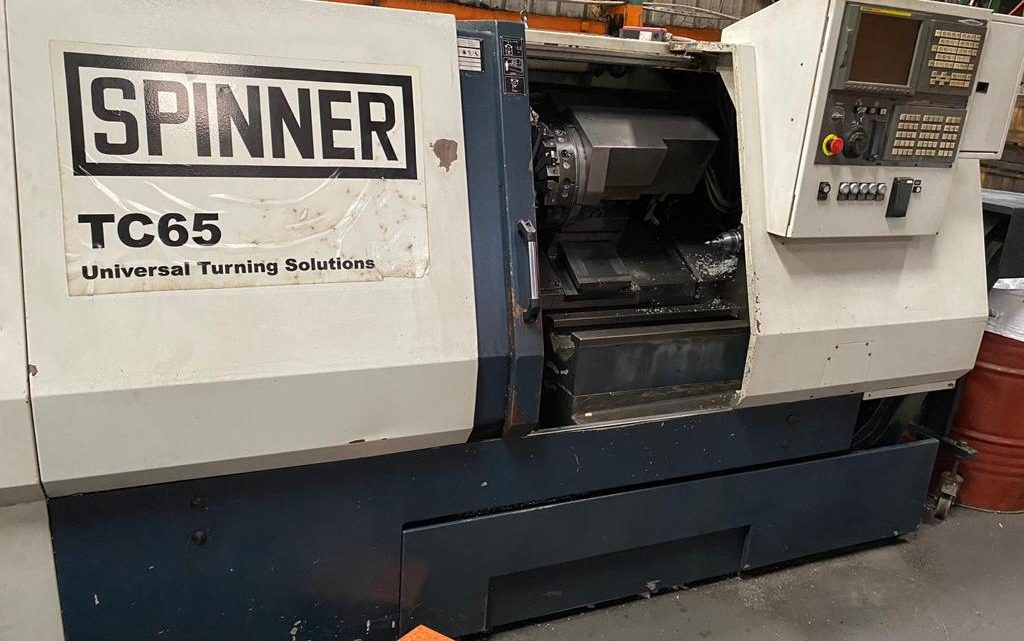
Here are professional tips and things to check when evaluating a used Spinner TC 65 MC (turn-mill / CNC turning centre) to help you avoid costly mistakes. I’ll include known spec-details, weak spots, red flags, and negotiation / cost buffers.
What the Spinner TC 65 MC Should Offer — Key Specs & Capabilities
Before inspecting, know what a good TC 65 MC normally provides, so you can spot shortfalls. Below are typical specs from several listings:
| Spec | Typical / Published Values |
|---|---|
| Control | Siemens 810 D (ShopTurn) or other Siemens / FANUC 21i in some units. |
| Turning Diameter (swing) | ~ 425 mm over bed; ~ 310 mm usable turning diameter in many listings. |
| Turning Length / Centre Distance | ~ 600 mm turning length Z-axis common; Z-travel of ~ 640-740 mm in some units. |
| X-axis Travel | ~ 230 mm. |
| Spindle Speed (Main) | Up to ~ 4,500 RPM; sometimes lower minimum speeds. |
| Spindle Power | Main spindle around 16.5 kW in many examples. |
| Driven / Live Tools | Units often have a turret with driven tool positions, up to ~ 12 driven tools, VDI-30 tool taper. |
| Spindle Bore / Bar Capacity | Bar feed capacity ~ 65 mm (or less, depending on bore / chuck) in some examples. |
| Rapid Traverse Speeds | X rapid ~ 15 m/min; Z ~ 24 m/min in good condition units. |
Knowing these helps you verify what the seller claims (actual specs vs nominal ones) and decide if your intended work will be feasible (size, material, tooling etc.).
What to Inspect / Test: Detailed Components & Checks
When you go onsite, check everything thoroughly. Small issues in key areas can become big problems later.
| Component / Area | What to Check / How to Test | Why It Matters / What Often Fails |
|---|---|---|
| Spindle & Bearings | • Run spindle at no load at various RPMs (low-mid-high). Listen for unusual noise (whine, rattling), feel for vibration. • Measure run-out at spindle nose / chuck mounting; check bore alignment. • Check for heat buildup after extended operation. • Inspect spindle taper, nose flange, chuck mounting face for damage, wear or fretting. • Check seals; ensure coolant / lubricant is not leaking into bearings. | Spindle issues degrade surface finish, reduce precision, increase tool wear. Replacing bearings or repairing spindle nose is costly. Coolant leaks can destroy bearings. |
| Axes, Guideways, Ball Screws / Nut Wear | • Move X & Z axes through full travel; feel for sticking, binding; check travel reaches full extents. • Measure backlash / lost motion in axes (e.g. move in + direction, reverse, measure difference). • Visual inspect slide ways / rails for scoring, rust, pitting, wear. • Inspect ball screws / nuts: noise, play, smoothness; any backlash compensation settings. • Check way covers, protective seals are intact. | Worn axes or screws reduce precision & repeatability. Worn rails are expensive to repair or replace. If way covers are damaged, chips and coolant can accelerate wear. |
| Turret, Driven Tools / Live Tool Stations | • Cycle turret through positions; check indexing accuracy; check tool clamps, senses. • Test all driven tool (live tool) positions: RPM, torque, tool holding, vibration. • Check tool change time; check sensors / actuation components. • Inspect tool holders, holder interfaces for wear or damage. | Live tools and turret are often high-maintenance areas. Misaligned or worn live tool spindle causes chatter or poor quality. Tool change issues cost time. Worn holders affect precision. |
| Control / CNC Electronics / Software | • Boot up the control (Siemens or FANUC etc.); check that the panel, display, keys/buttons all work. • Review error/fault logs: spindle overcurrent, axis errors, drive faults. • Inspect cabling, connectors, servo/drive modules; look for overheating, burns, loose wires. • Confirm software & control version; check for optional features (C-axis, driven tools, bar feed, etc.) are present and functioning. • Check parameter / program memory backup; batteries (if present) are good. | A bad control or missing function often cannot be added cheaply. Faults in drives or sensors lead to downtime. Losing parameter memory leads to re-tuning. |
| Workholding / Chucks / Tailstock / Bar Feed (if applicable) | • Inspect chucks: jaws condition, chuck run-out; hard-jaws vs soft jaws. • If bar feeding interface exists, inspect it; try feeding sample material. • Check tailstock (if present): quill travel, alignment, locking; tailstock fit. • Check whether chuck face, jaw mounting surfaces are in good condition. | Poor workholding degrades precision and surface finish. Bar feeding failures or misalignment can waste time or damage parts. Tailstock issues cause taper or misaligned parts when using. |
| Spindle Bore / Bar Capacity & Overhang | • Check actual usable spindle bore; see if long bars can pass through without obstruction. • Measure overhang: because long parts past the chuck put load on spindle bearings. • If support (steady rest) is needed, check whether the machine has or supports steady rest. | If your work involves long bars or deep work, overhang issues will lead to vibration, chatter, poor surface, spindle wear. |
| Cooling / Lubrication / Chip & Swarf Management | • Inspect coolant system: tank, hoses, filters; is coolant clean; any leaks? • Check chip conveyor, chip removal; check whether chips accumulate under way covers or in paths. • Inspect lubrication systems: way lubrication (grease/oil), screw lubrication, spindle lubrication; check whether automatic lube works. • Check for adequate cooling on the spindle, and whether heat chokes or thermal drift may occur. | Poor cooling or lubrication leads to accelerated wear, heat build-up, reduction of precision. Chip buildup leads to mechanical interference, possible damage. |
| Machine Geometry & Accuracy Tests | • Try to run a test part (if possible) similar to your production parts: check dimension, surface finish, repeatability. • Do positioning accuracy: move to a preset, retract, return; measure with indicators. • Warm up machine then repeat accuracy checks to see thermal drift. • Check axis squareness (X vs Z, spindle perpendicular to bed etc.). | Even a machine that looks good “cold” often shows errors when heated. Geometry errors lead to parts out of spec; thermal drift costs scrap time. |
| Physical Condition / Structural Integrity | • Inspect bed and base for cracks, rust, wear, sagging. • Check spindle housing and saddle for damage; signs of impact or crash. • Check guardings, covers, protective doors; way covers, bellows etc. • Look for general signs of neglect: peeling paint, missing panels, oil leaks, collected chips. | Visible neglect often hides harder to see wear. Damage to structural parts or bed alignment can be very expensive to correct. Missing covers allow debris to accelerate wear. |
| Usage History & Documentation | • Ask number of hours; differentiate between “powered-on” vs “cutting / load” hours. • Maintenance logs: when work was done on spindle, on bearings, guides, live tool spindles, when belts, filters, hydraulics replaced etc. • History of crashes or overloads. • Whether original manuals, parts lists, wiring diagrams, drawings are available. • Whether spare parts are included or known to be available. | Machines with good documented maintenance tend to show fewer unpleasant surprises. Without documentation, diagnosing or repairing becomes harder/longer. Spare parts availability is crucial for uptime. |
| Electrical / Power / Infrastructure Compatibility | • Confirm supply voltage & phases; ensure that your site matches what the machine needs (e.g. 400V 3-phase etc.). • Check whether any power upgrades or modifications have been done; inspect main electrics. • Evaluate machine footprint: space for operating, clearing, maintenance. • Floor strength / foundation, levelness, rigging points. • Environmental conditions: dust, temperature swings, humidity. | Mismatched or weak power supply causes issues; poor foundation or leveling reduces precision; environmental neglect increases corrosion or electrical issues. |
Known Weaknesses / Common Problem Areas for Spinner TC 65 MC
From listings and user data, here are weaknesses or recurring issues seen on Spinner TC 65 MC machines, so you can test these areas extra carefully:
- Lower spindle speed & torque: Some may have worn bearings or reduced torque at lower RPMs which affects heavy cutting.
- Live tools / driven tool positions: wear in the driven tools bearings, tool holders, or misalignment issues, especially if they have been heavily used.
- Turret indexing timing or wear: Turret mechanisms may have backlash, worn clamping, or slow switchover.
- Wear in the spindle bore / bar feed capacity issues: over-worked bar feed or repeated bar pushes can degrade bearing or bore surfaces.
- Control panel / electronics aging: internal wiring, limit or home switches, sensors may have intermittent faults.
- Cooling / lubrication neglect: coolant leaks or poor filtration, chip buildup especially under way covers.
Red Flags / Deal-Breakers
Here are issues which are serious, often meaning you must discount heavily or maybe walk away unless repaired or guaranteed:
- Spindle run-out or vibration / noise that doesn’t clear up with warm-up.
- Severe backlash in X or Z axes, or noticeable slop in ball screws or way bearings.
- Live tool / driven tool positions not functioning accurately (excessive run-out or loose tools).
- Control errors / old electronics showing repeated faults, missing functions (e.g. control not recognizing driven tools, turret errors).
- Worn or damaged chucks or inserts; soft jaws in bad condition, jaws not gripping true.
- Poor cooling or lubrication; coolant leaks into bearings; way covers collapsed or missing.
- Structural damage / visible signs of crash or misalignment: bent bed, damaged spindle housing, etc.
- No documentation / maintenance history; seller reluctant to allow test cuts or accuracy checks.
- Electrical problems: wiring burnt or exposed; intermittent power faults; display failure.
- Accessories missing when essential: live tool modules, chucks, tool holders, steady rests etc., especially if you need them for your work.
Negotiation & Hidden Costs to Budget
Even “good” used machines often need extra investment to bring them up to optimum condition. When making your offer, include these in your cost plan:
- Spindle bearing overhaul or replacement if signs of wear are present.
- Refurbishment or replacement of way bearings, slide ways, or ball screws if wear or backlash found.
- Service or repair of driven tool heads (live tools), tool holders, turret mechanisms.
- Replacement of chucks / jaws / soft jaws if worn.
- Cleaning, replacing coolant, filters, seals, way covers.
- Electrical / control panel repairs: sensors, connectors, cable harnesses, display screens etc.
- Transport, rigging, installation & alignment: Spinner TC 65 MC is heavy (~4-4.7 tonnes in many cases) and full of precise components. Improper moving damages alignment.
- Power supply adaptation, if needed: matching voltage, 3-phase, possibly adding UPS or clean power depending on site.
- Safety upgrades, local regulatory compliance (guards, interlocks, etc.).
- Time & material for test cuts, scrap material, calibration after installation.