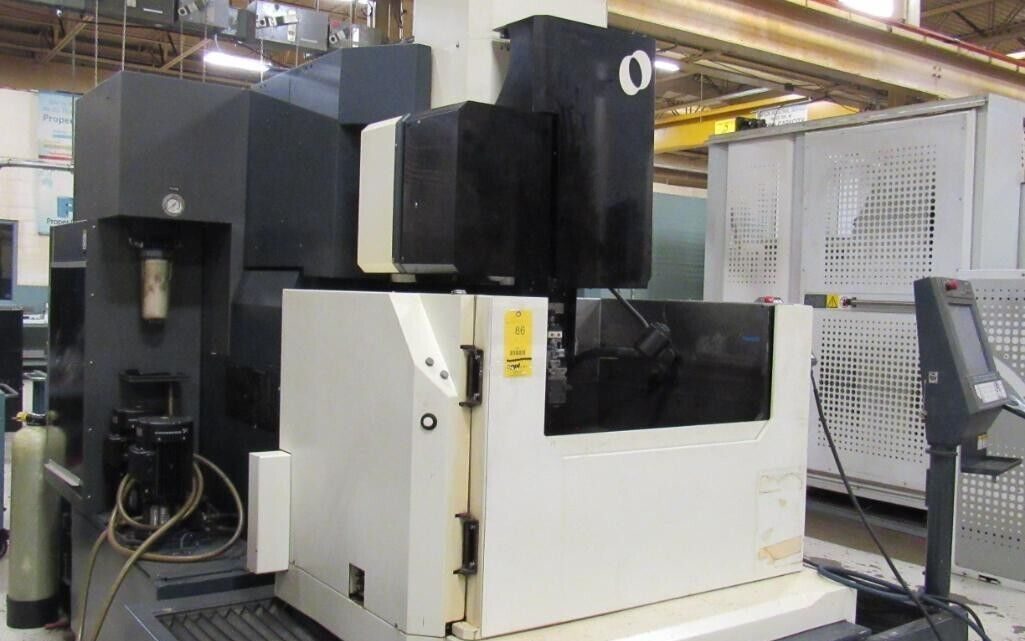
Avoid Costly Mistakes: Professional Tips for Purchasing a Pre-Owned / Second-Hand / used Makino DUO64 Wire EDM?
Here’s a detailed guide to help you avoid costly mistakes when buying a pre-owned Makino DUO 64 Wire EDM. The DUO64 is a high-precision, complex piece of equipment: small defects or neglect show up only under load or over time, and fixes are often expensive. Use this as a checklist to inspect machines carefully, ask the right questions, and negotiate well.
Key Specifications & What “Normal” Looks Like
First, know what the DUO64 should be capable of, so you can spot when what’s being offered is under crept, worn, or misrepresented. Here are standard specs and features:
| Feature | Typical Value / Spec for DUO64 |
|---|---|
| X, Y, Z travel | ~ 650 × 400 × 420 mm |
| U, V axes travel | ±101 mm each |
| Max workpiece size (in work tank) | ~ 1070 × 855 × ~411 mm |
| Table load capacity | ~ 1,200 kg |
| Wire guide sizes / supported wire diameters | ~ 0.10-0.30 mm wires typical; wire guides for ~0.25 mm available. |
| Control system | Makino MGW-S6 is common in many used units. |
| Dielectric fluid volume / filtration & cooling system | ~ 990 liters dielectric tank; multiple filters; chiller / temperature control essential. |
These baseline specs are what you should test against; anything significantly degraded will cost you in time, quality, or repairs.
What to Inspect / Test In-Person
Here are the critical subsystems & items to test. Bring measuring gear, sample parts, and preferably someone familiar with EDM machines.
| Area | What to Test / Inspect | What to Watch Out For / What Fails Commonly |
|---|---|---|
| Wire Guide & Threading System | • Inspect all wire guides (upper head, lower head) for wear: grooves, burrs, scoring, ceramic guide damage. • Check automatic wire threading: does wire thread reliably? Does the annealer work (if built-in)? • Test wire tension control, wire feed rates under different loads. • Check tension rollers, pinch rollers, drive rollers: bearings, alignment, rollers in acceptable condition. | Worn guides or damaged rollers cause wire breakage, chatter, poor finish. Threading failures slow production or force manual intervention. Tension problems can cause wire break or inconsistent cut. |
| Dielectric / Filtering / Cooling Systems | • Check the dielectric tank: cleanliness (no sludge, rust, debris), condition of seals, level sensors. • Check filters: main filters, quick disconnects, condition, flow rate. • Check cooling/chiller unit: is temperature control accurate; is there evidence of overheating; proper flow of cooling fluid. • Check flushing / remote flushing (upper & lower heads) operations. | Poor dielectric fluid condition or filtration causes unstable cutting, surface finish degradation, spark erosion of parts, corrosion. Cooling issues reduce precision and may cause thermal drift. |
| Accuracy, Geometric Condition & Motion | • Check axes motion in X, Y, Z, and U, V: is movement smooth, no sticking, binding. • Measure static positioning accuracy and repeatability (e.g. full travel, return). • Check taper / angle cutting capabilities; see if the machine still holds taper specification. • Perform a test cut on stable material and measure dimensional accuracy, kerf width variation, edge finish. • Warm-up test: run a somewhat long job to see if thermal distortions or drift occur. | Over time, ball screws, guideways, and linear bearings can wear. Tapers may degrade. Thermal drift is often underestimated. Dimensional errors often show up only under real cutting. |
| Control / Electronics / Software | • Boot up control (MGW-S6 or whatever is fitted); check display, interface, operator screen. • Examine error/fault logs: frequent wire breaks, power supply faults, alarms during cutting. • Inspect wiring, connectors, sensors, especially wire break sensors, limit/home switches. • Check spare parts / firmware availability for control; whether software options are included. • See if manuals, service histories, parameter backups are available. | Control fragility can be expensive: control boards can be obsolete. Wiring issues lead to intermittent failures. Without service history, hidden problems may emerge. Missing firmware / options may limit what machine can do. |
| Wire Breakage History & Consumable Use | • Ask how often wire breaks occur, under what cutting conditions, what wire diameters are used, what wire quality & brand. • Inspect past wire usage, whether proper wire & guides have been used. • Look at spare guides, spare rollers, spare consumables included. • Check automatic wire threading and wire alignment fixtures. | Wire breakage is one of the costliest recurring issues. Frequent breaks = wasted time, wire, possibly damage to heads or workpieces. Good consumable spares can save downtime. |
| Wear & Corrosion / Condition of the Work Tank & Table | • Inspect the work tank: look for rust, corrosion, damage, leaks. • Check the table bed condition: flatness, leveling, any damage to travel paths. • Check workpiece holding fixtures or clamps and whether the machine still supports heavy loads without sagging. • Inspect covers / seals to prevent dielectric splash into moving parts. | Work tank leaks or damage lead to fluid contamination, leakage, maybe electrical risk. Table bed sagging or worn leads to inaccuracy. Poor sealing allows dirt / fluid ingress that compromises precision and causes wear. |
| Power / Environment / Housekeeping | • Verify that your facility can supply the correct electrical power (voltage, phase, current) and clean power. • Check environmental conditions: temperature stability, humidity, vibration. EDM is sensitive to both. • Check whether there is proper drainage, fluid disposal, ventilation etc. • Inspect floor loading, foundation stability, whether machine has been relocated or is still level & aligned. | Mismatched electrical supply or dirty power can cause control or energizer issues. Temperature fluctuations lead to drift. Poor ventilation or poor housekeeping accelerates corrosion or puts strain on cooling systems. Foundation misalignment leads to mechanical stresses and accuracy loss. |
| Maintenance History & Documentation | • Ask for total hours: both cutting time and idle or service time. • Service logs: wire guide replacements, pump servicing, fluid changes, chiller, control maintenance. • Past damage / repairs: any crash, overcurrent incidents, misalignment or bed damage. • Spare parts inventory, whether previous owner kept consumables / spare guides or spare parts. • Check for availability of Makino support, service network for your region. | A DUO64 that’s been well maintained is worth significantly more and likely to have fewer surprises. Lack of documentation increases risk. If parts are scarce, you’ll pay high premiums or suffer downtime. |
Common Failure Modes & Red Flags
Here are issues that repeatedly show up with wire EDMs generally, and with DUO64s specifically, that you should watch out for:
- Frequent wire breaks, especially under light load or immediately after wire threading. This often indicates worn rollers, worn wire guides, misalignment, or tension control issues.
- Guide rollers or pinch rollers worn (flat spots, grooves) which damage wire or cause misfeeds.
- Wire drive clutches or drive rollers slipping or partially failing.
- Dielectric fluid contamination (rust, particulate, microbial growth) or cooling fluid issues: poor filtration or inadequate chiller performance.
- Motion axis backlash or drift: ball screws, linear guides worn; U/V axes especially prone to wear because they often move under tricky loads or angles.
- Control or firmware glitches: timer drift; error codes for “wire break” when the gap or water conductivity / cleanliness is off; broken sensors (limit, wire break, flush) causing false alarms.
- Tank leaks, or damaged seals allowing dielectric fluid to get into moving or electrical parts.
- Poor table alignment or deformation; when the large workpieces sit heavy, the table or bed sags or loses flatness.
- Cooling/chiller failure, or chillers undersized or non-functional; leads to thermal instability.
- Lack of spare parts / high cost of consumables (wire, guides, rollers) when sourced from OEMs.
- Poor environmental conditions: humidity, temperature fluctuations, dust, vibration that degrade precision.
How to Negotiate & What Hidden Costs You Should Budget For
Even if the DUO64 looks good, be sure to build in these items when calculating your total cost and negotiating the price.
| Item | Reason / What to Factor In |
|---|---|
| Wire guide, roller and consumable replacement | Even well-used machines will need wire guide ceramic inserts, roller replacement, tensioner parts etc soon. Cost can be nontrivial. |
| Spool of wire & threading system check | Good threading systems sometimes need servicing or spare parts. If the automatic threading is damaged or intermittent, cost is lost time or manual work. |
| Dielectric fluid cost & purification / filtration setup | Initial cleaning or replacement of fluid, possibly flushing tank, replacing filters, checking water quality or water supply, cooling unit. |
| Chiller or cooling unit repair or replacement | Heat and temp control are central. If the chiller is underpowered or failing, precision and surface finish will suffer. |
| Control / electronics spares | Display, sensor modules, power supply, feedback encoders, limit switches. Older machines may have some boards that are scarce. |
| Transportation / rigging / installation | Wire EDMs are large, heavy, and often delicate. Moving them, leveling, aligning, hooking up power, water, ventilation etc. adds cost. |
| Foundation / environment conditioning | May need stable temperature, clean air, low vibration floors. If your site doesn’t meet spec, you may need upgrades (e.g., HVAC, vibration isolation). |
| Operator training, programming / test cuts / calibration time | Even with a good machine, getting it dialed in for your application takes time (including scrap). |
| Safety, maintenance tools, spare consumables inventory | Better to get some spares / tools as part of the deal; else you’ll be buying them at premium later. |
Suggested Inspection / Pre-Purchase Checklist (DUO64)
Here’s a sample checklist you can adapt/print and bring when you inspect a DUO64:
- Basic Identification / Verification
• Model, year, serial number match seller’s documentation.
• Control system version (MGW-S6 or what else), firmware/software version. - Visual Inspection
• Overall cleanliness. Signs of neglect or rust or flooding.
• Work tank condition (corrosion/leaks).
• Wire guides and rollers: worn / ceramic inserts cracked or chipped.
• Condition of covers, seals, way covers. - Motion & Acoustic Tests
• Move axes: X, Y, Z, U, V, fast & slow; listen for unusual noises.
• Check backlash / slop in axes.
• Test automatic threading; feed wire manually; inspect tension stability. - Electrical / Control
• Boot up, check panel display; lights/buttons working.
• Check fault log / alarms; see history of wire break, controller errors.
• Inspect wiring and connectors for corrosion / burn marks. - Dielectric / Filtration / Cooling
• Fluid clarity / smell / any metal particulates.
• Filter conditions; pump performance; chiller operation. - Test Cuts
• Cut sample shapes: straight lines, corners, tapers if used.
• Measure finish, dimensional accuracy.
• Warm-up and then test again. - Consumables & Spares
• What is included: wire, guides, rollers, spare ceramic inserts.
• How available are these locally or via distributor. - Power / Utilities / Environment
• Power supply match (voltage, phase, current).
• Is the floor stable & level? Site vibration or environmental issues. - Service History & Documentation
• Hours (cutting vs idle); major repairs done.
• Manuals, wiring diagrams, parts lists, software licensing. - Safety
• Emergency stop, guards installed and working.
• Safety labels, access for maintenance, fluid handling safety (dielectric).
Final Thoughts
- A well‐cared for DUO64 can be extremely productive and accurate. But wear on wire guides, rollers, dielectric systems, and poor alignment show up only over time or in cutting.
- Always insist on test cuts under conditions similar to what you will run. Theoretical specs don’t always translate.
- Because wire EDMs are high‐precision machines, small misalignments or worn parts that seem minor can lead to large costs in scrap, rejects, or repair.
- Building in spare parts / consumables, transport / installation, and calibration into your cost estimate is essential to avoid surprises.