Avoid Costly Mistakes: Professional Tips for Purchasing a Pre-Owned / Second-Hand / used Poreba TZB 250 Universal Facing Lathe
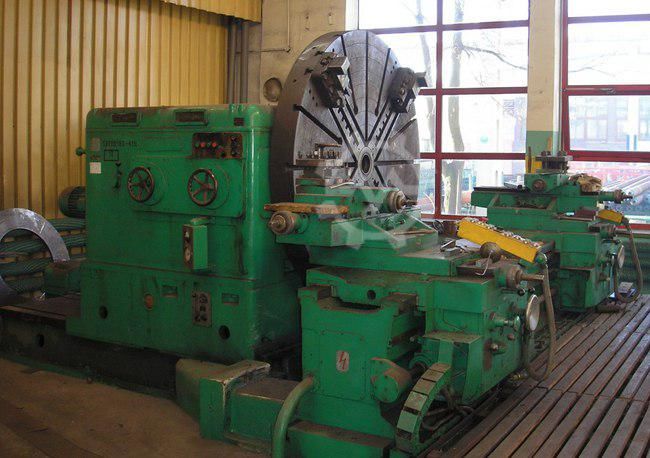
A Poreba TZB 250 (universal/facing / bed-type lathe) is a heavy, high-capacity machine. Because of its size and complexity, buying a used one without thorough vetting can lead to enormous repair, alignment, and transport costs. Here are professional tips—things many buyers overlook—that can help you avoid costly mistakes.
I’ll also include the “typical spec envelope” for a TZB 250 (so you know what to expect) and a suggested on-site inspection checklist you can use.
I. Typical Specs & What to Expect
Before you go to see a candidate, know what a “healthy” TZB 250 should roughly be able to do. Use these as guard rails to spot exaggerations or hidden defects.
From manufacturer / listing sources:
- Swing over bed ways: ~ 2,500 mm (98.4 in)
- Swing over gap (recess / between supports): ~ 3,200 mm
- Turning length / between centers (max possible): ~ 3,000–4,000 mm (many listings show ~ 3,149 mm)
- Maximum workpiece weight on faceplate: ~ 4,000 kg (unsupported)
- Installed power / motor rating: ~ 56 kW in some configurations
- Bed height / center height: For model “TZB 250 B,” center height ~ 1,300 mm
- Modular construction elements: many TZB units use modular beds, multiple saddles, motorised head positioning (some units include 700 mm head travel)
- Year / refurbishment / CNC retrofit common: Many used machines are retrofitted with controls (e.g. Fanuc Oi-TF) for modern operation.
Use these as rough benchmarks. If a seller claims something wildly more (e.g. swing 4,000 mm over bed, spindle power 200 kW, etc.) without proof, demand verification.
II. Documentation & Provenance: Your First Filter
A machine that looks good but has no history is a risky buy. Insist on the following from the seller (before serious negotiation):
- Maintenance & Service Logs
- Records of spindle overhauls, bearing changes, repairs
- Alignment, scraping, or reconditioning work
- Invoices showing parts replaced (e.g. bearings, bushings)
- Control and Electrical Documentation
- CNC / control backups (parameter files, program files)
- Wiring diagrams, electrical schematics
- Control manuals, circuit diagrams
- Modification / Retrofit History
- Any changes to spindle, drives, motor upgrades
- Addition / removal of saddles, modular extensions
- Any structural welding / repairs
- Usage History
- Machine hours, if available
- Type of usage (heavy duty, intermittent, light, job shop)
- Material classes worked (steel, cast iron, etc.)
- What’s Included in Sale
- Chucks, faceplates, jigs, steady rests, tailstock
- Spare parts (bearings, seals, drive parts)
- Guards, covers, control pendant, cables
- Inspection / Calibration Reports
- If the machine was tested recently, alignment or certification reports
- Evidence of re-scraping or restoration
If a seller cannot provide credible documentation or is evasive, reduce your confidence (or price) substantially.
III. Visual / Structural Inspection (Before Powering Up)
Before applying power, walk around the machine carefully and check for signs of abuse, wear, or structural issues.
- Cast structure / bed / way surfaces
- Creeping cracks, welded repairs, distortion, visible bends
- Damage or pitting on bed ways, saddle surfaces, cross slides
- Way covers, shields, wipers, bellows
- Tears, missing covers, misaligned guards — these often correlate with internal damage
- Headstock / spindle housing / nose area
- Oil leaks, coolant stains, seal failures
- Damage or corrosion on spindle nose / faceplate mount area
- Saddles / carriage / tool post
- Excessive wear, scoring, chips embedded
- Play or looseness in dovetails or gibs
- Tailstock (if present) / supports / steadies
- Check quill condition, alignment, locking mechanisms
- Modular / saddle supports
- If it uses multiple saddles or support modules, check for alignment between modules
- Control cabinet / wiring trays
- Inspect interior for corrosion, water ingress, discoloration, missing covers, rust
- Coolant / chip handling / plumbing
- Leaks, rust, clogged lines, degraded seals
- Foundation / leveling / mounting
- Evidence that machine has been moved: re-anchoring, cracked mounting pads, floor damage
A “well-cared” exterior often signals that the internal systems were also maintained; neglect outside frequently correlates to internal wear.
IV. Power-Up / Motion Testing (No Load)
If the seller allows you to power the machine, perform a thorough motion test before any cutting.
- CNC / Controller Boot & Diagnostics
- Watch for fault codes, missing modules, alarm history
- Test all panel buttons, emergency stop, display, overrides
- Axis Motion & Backlash
- Jog all axes (X, Y, Z, or in this case “saddle / longitudinal / cross” axes) through full travel at varying speeds
- Reverse direction to test backlash / play; use a dial indicator to quantify it
- “Dead zones”, sticking spots, variable resistance zones are red flags
- Listen for scraping, metallic contact, sudden change in resistance
- Traverse / Speed Range Tests
- If the machine has multiple speed or traverse ranges, shift through them and see how smoothly transitions occur
- Watch for any lag, jerking, resonance
- Saddle / Carriage Behavior
- Push / pull manually (if possible) to detect looseness, stiff areas
- Check for vertical play or sag under load
- Turret / Tool Room (if applicable)
- If the machine has a tool post or face tool system, cycle it through positions
- Inspect indexing accuracy, tool clamp repeatability
- Auxiliary Systems
- Test coolant pumps, chip conveyor, filtration, lubrication systems
- Check for leaks, noise, poor flow, pump cavitation
- Hydraulic / pneumatic components: clamps, pressure systems, control valves
If anything in motion feels “off,” that’s a negotiation lever (or reason to turn away).
V. Spindle, Faceplate & Mounting Systems
These are among the most critical and expensive parts to rebuild. Test them thoroughly.
- No-load spindle test
- Run spindle through its speed range; listen for hum, vibration, instability
- Runout measurement
- Mount a test bar or mandrel and measure radial & axial runout over full 360°
- Repeat at different positions if possible
- Spindle nose / seating / taper
- Inspect the contact surfaces for burrs, corrosion, wear
- Mount and unmount a test faceplate or adapter to test repeatability
- Faceplate / chuck mounting
- Inspect the faceplate, mounting bolts, keys for wear, distortion
- Check for proper registration when remounting
- Back gear / speed range (if applicable)
- If the machine has multiple spindle speed ranges or gearboxes, shift and test under no load
Spindle problems or runout that’s beyond acceptable tolerances will cost you a full rebuild.
VI. Precision / Test Cuts / Accuracy Verification
After motion and spindle checks, test actual machining to validate whether the machine can still deliver usable accuracy.
- Mount a known reference / ground test bar
- Use test indicators or dial gauges to measure:
- Straightness along length
- Taper (difference between front and back)
- Radial runout at various points
- Retract / return to same location and measure repeatability
- Perform a light finishing cut in a sample material and measure geometry (diameter, surface finish, straightness) at multiple positions
- Test near extremes of travel (start, mid, end) — machines often drift near ends
- Warm up the machine (run a cycle or idle for 20–30 min) and re-measure to detect thermal drift
If accuracy falls outside acceptable limits, you may need expensive re-scraping, alignment, or overhaul.
VII. Common / Hidden Wear Items & Cost Traps
Even “good” machines often require refurbishment. Be realistic about cost risks:
- Spindle bearing replacement or full spindle rebuild
- Wear in leadscrews, nuts, backlash correction
- Wear / damage on ways, guides, gibs (requiring scraping or replacement)
- Tool post / post drive system wear or misalignment
- Control / servo drives, power electronics failure
- Wiring harnesses, connectors, insulation aging
- Coolant system, pumps, plumbing, filters needing overhaul
- Structural repair (if cracks or distortions discovered)
- Calibration, alignment, test setup after transport
- Spare part availability (especially for large Poreba parts, spindle components)
- Transport, rigging, reinstallation, leveling
Set aside a “refurbishment contingency” (often 10–20 % of purchase cost) for these hidden surprises.
VIII. Negotiation & Contract Safeguards
Your inspection should feed into protective clauses in your purchase agreement:
- Acceptance / testing period: allow full motion, test cuts, precision checks before final payment
- Hold back a portion of payment until acceptance criteria are met
- Require delivery of all documentation, manuals, schematics, control backups
- Secure a written condition disclosure from seller describing known defects
- If seller is amenable, negotiate a limited warranty (30-90 days) on critical systems (spindle, drives)
- Clearly define who assumes responsibility for transport, rigging, foundation, leveling
- Request inclusion of tooling, chucks, spares, accessories
- Ask for assistance (or reimbursement) of final alignment / calibration at your site
These protections reduce your exposure to unknown costs.
IX. Red Flags / Walk-Away Conditions
Certain conditions or signs are too serious to tolerate without steep discount—or should cause you to walk away entirely:
- Seller refuses full inspection, motion, spindle, or test cuts
- Excessive or unstable backlash, binding or uneven motion in any axis
- Spindle noise, hum, vibration, or unacceptable runout
- Faceplate or chuck registration errors or distortion
- Control faults, missing modules, corrupted backups
- Electrical cabinet with burn marks, corrosion, missing boards
- Structural damage: cracks, weld repairs, distortions
- Way covers / guards missing or heavily damaged
- Poor modification or retrofit work (bad welding, misalignment)
- Replacement parts or critical components unavailable
Sample On-Site Inspection Checklist (Summary)
Here’s a quick summary you can carry in the field:
| Inspection Item | Acceptable / Target | Pass / Fail / Notes |
|---|---|---|
| Swing / travel (bed, gap) | ~2,500 mm swing, ~3,200 mm gap | |
| Visual: bed ways, way covers | No deep gouges, no missing covers | |
| Motion test: jogging axes | Smooth, no jerk, no binding | |
| Backlash (rev test) | < tolerance for size class (e.g. < 0.05 mm or per spec) | |
| Spindle run (no load) | Quiet, smooth, stable | |
| Spindle runout (bar test) | < acceptable tolerance (e.g. few microns) | |
| Tool mounting repeatability | Minimal reposition variation | |
| Test cut accuracy | Within tolerance on multiple points | |
| Repeatability test | Return to same point, minimal deviation | |
| Warm-up drift | Minimal shift after extended run | |
| Coolant / pumps / lubrication | Operate smoothly, no leaks | |
| Electrical / control panels | No burn marks, clean, all modules present |
You can expand this into a full numbered checklist with pass/fail steps and actual measurements.