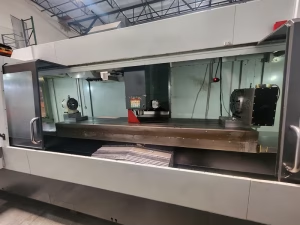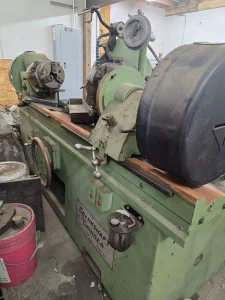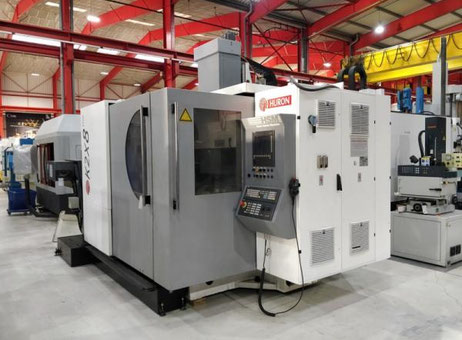
Avoid Costly Mistakes: Professional Tips for Purchasing a Pre-Owned / Second-Hand / used Huron K2X8?
If you are evaluating a used Huron K2X8 (especially the 5-axis “K2X8 Five” / “K2X8-F”) machining centre, that’s a high-value, high‐precision piece of equipment. Getting it wrong can cost huge amounts in repairs, downtime, or producing out-of-spec parts. Below are professional tips, inspection points, red flags, and negotiation buffer suggestions specific to this model, so you are well armed.
What a Huron K2X8 Is / Key Specs
First, know what to expect in “good condition” from this model. Here are its typical specifications (from recent listings) so you can benchmark what a seller claims:
| Spec | Typical Value |
|---|---|
| Axes travel (X / Y / Z) | ~ 650-700 mm (X), ~ 700 mm (Y), ~ 450 mm (Z) |
| Table / Pallet | ~ 500 mm diameter table (for 5-axis versions) |
| Max workpiece weight | ~ 250 kg on that table |
| Spindle taper / tool holder | HSK-63A in many versions |
| Spindle speed | Up to ~ 24,000 rpm (electro spindle) in many 5-axis / high speed versions |
| Power (spindle motor) | ~ 18.5-25 kW depending on variant |
| Controller / CNC type | Siemens 840D is common in recent 5-axis models of this machine. |
| Other key features/options | Through-spindle coolant, chip conveyor, tool changer (40-60 tools), A and C axis tilt / rotate, high rapid traverse (e.g. ~ 50 m/min) on some axes. |
Knowing these helps you test seller claims and spot downgraded or under-maintained units.
What to Inspect / Test — Key Areas
Here are what I’d consider absolutely essential to check, plus how to test, and issues that tend to show up in this machine type.
| Area | What to Check / Test | Why It’s Important / What Can Go Wrong |
|---|---|---|
| Spindle & Bearings | • Run the spindle at various speeds (low → high), with and without load; listen for unusual noises, buzzing, growl, vibration. • Measure spindle run-out at nose / taper with a dial indicator. • Feel for heat after running; too much heat or rise suggests worn bearings or lubrication issues. • Verify tool change (if ATC) and that tool-holder interfaces (HSK63 or variant) register tightly / no play. • Check if through-spindle cooling is working, if fitted; coolant leakage or bypass can degrade spindle life. | The spindle is one of the most expensive components to repair or replace. High spindle speeds (24,000 rpm etc.) impose tight tolerances; any defect here impacts surface finish, reliability, scrap rates. Poor coolant / lubrication accelerates wear significantly. |
| Axes, Guides, Ball Screws / Linear Drives | • Move each axis through full travel: check for smooth motion, dead spots or “sticky spots”. • Check backlash in all axes (including rotary / tilt axes, if included). • Inspect guideways or linear rails / slideways: look for scoring, rust, pitting; check whether covers / wipers are intact. • Check ballscrews (or whatever drive mechanism): jog forward/back, feel for “knock” or backlash; ensure alignment. • See whether the lubrication (for axes and ball screws) is automatic or manual; test whether it works properly. | Worn guides / rails degrade precision, repeatability. For complex 5-axis work, tilt/rotate (A/C) axes often see wear in bearing surfaces, gearboxes or motors. The cost of replacing ball screws, linear rails or refurbishing guideways is very high. |
| Controller & CNC Electronics / Software | • Inspect the CNC control (e.g. Siemens 840D in many), HMI panels, buttons; ensure everything powers up cleanly, no error codes, fault logs. • Check firmware / software version; make sure necessary licensable options are installed; see whether spares / support are still available. • Check wiring, cable drag chains, connectors – look for damaged wiring, signs of overheating, corrosion or wear. • Look at sensors / limit switches for each axis (A, C, etc.), tool-change sensors, safety interlocks. • Check backup system, memory retention (battery or internal) for parameters or controller settings. | Faulty or obsolete control electronics can be show-stoppers; parts may be expensive or discontinued. Mis-aligned or bad sensors lead to crashes or poor positional accuracy. Loss of parameter memory / wrong config can prevent reproducing parts or tuning. |
| 5-Axis / Rotary & Tilt Axes | • Inspect the condition & play in tilt (A) / rotate (C) axes: test for backlash, teeth or damage in gearing / torque motors. • Check table rotation (C axis) full 360°, see if there’s wobble, vibration, or positional error. • Inspect tilting axis motion (look for drag, oil leakage, wear in pivots). • Test all simultaneous / multi-axis moves under idle and under load: any binding or synchronization issues. | The 5-axis capability is what makes a machine valuable; weak or failing rotation or tilt axes degrade accuracy, cause problems in complex parts (angular features). Repairs to rotary / tilt mechanisms are costly. |
| Workpiece Table, Clamping, Tool Holding | • Inspect table surface, T-slots (if present), flatness. • Check table stability under load: with a heavy workpiece, whether the table sags, vibration or deformation. • Check the clamping / fixture ability; alignment of table relative to axes. • Examine tool holder fit (HSK or other): look for wear, fretting, mis-fits. • Check ATC / tool magazine: operation, mis-indexing, tool release / clamp mechanisms. | Poor table condition makes setups difficult and may limit usable workpiece size. Tool holding or ATC problems cost time and tooling. If table is worn or misaligned, large parts may go out of spec. |
| Coolant, Chip Management, Lubrication Systems | • Coolant tank condition: clean or full of sludge / rust / chips? Filters and coolant pumps working properly. • Check coolant hoses, seals, nozzles; see whether chip conveyor (if fitted) works and is clean; look for leaks. • Lubrication of linear guides, ball screws, rotary joints: is it automatic? Are the lines functioning? • Thermal management: is the environment stable; is spindle cooling / thermal compensation in place; do large machining cycles cause drift? | Coolant issues degrade machining performance, can allow corrosion underneath covers. Lubrication neglect is a major cause of accelerated wear. Thermal drift can make precision undesirable. Chip build-up can cause interference / safety risks. |
| Structural Integrity, Machine Enclosure, Protection | • Inspect machine frame for cracks, signs of collision, impact damage. Pay special attention to tilting / rotary joints or arms (if any). • Check protective covers / way wipers / bellows: are they intact? • Examine enclosure doors, guards, seals for chip / coolant leakage. • Check base / foundation leveling; any signs of settling; alignment of machine axes. • Visual signs of neglect: rust, chipped paint inside machining area, accumulation of chips in corners indicating poor cleaning / maintenance. | Structure defects or broken way seals accelerate wear and make accuracy hard to maintain. Enclosure leaks & poor protection lead to damage to moving components. Misleveling causes alignment drift. Visual signs often reveal underlying neglect. |
| Test Job / Accuracy & Repeatability | • If possible, run a sample part typical of what you’ll produce: do finishing passes; check surfaces, tolerances. • Do repeated positioning: move to same coordinate multiple times; measure differences. • Test under load (heavier cuts or large part) to reveal potential deflection, chatter or vibration. • Measure alignment: squareness of axes, true of rotary/tilt axes, perhaps using test indicators or calibration artifacts. • Heat test: run for some time and measure if positions / accuracies drift as machine warms up. • For 5-axis machines, test synchronization between axes during simultaneous motions. | Many defects only show under actual work; idle tests often hide vibration, deflection, thermal issues. Tolerances may shift with load or heat. A well-performing sample job gives confidence in actual production. |
| Usage / Maintenance History & Documentation | • Ask for hours of operation, but distinguish between “power on” vs “cutting/under load” hours. • Maintenance records: lubrication, spindle service, any rebuilds, repair of rotary/tilt axes, any collision history. • Environment history: was it in a clean, temperature/humidity controlled shop or dusty / humid environment. • Whether the seller has manuals, parts lists, wiring diagrams, spare parts inventory. • Whether software / controller option licenses are valid. | Machines that are well maintained tend to last much longer; hidden damage or neglect often causes unexpected costs. No documentation can slow down servicing or make troubleshooting difficult. |
| Electrical & Controls / Safety | • Electrical cabinets: inspect for cleanliness, moisture, burned smells, proper cable routing. • Check that safety features are present and work: interlocks, emergency stops, guarding, overload protection. • Control HMI, displays, buttons: test all functions, check error or warning logs. • Power supply requirements: voltage, phase, stability; ensure your plant can meet the machine’s needs. • Check for proper grounding, cable shielding as per local safety codes. | Electrical failures or safety non-compliances can be expensive to fix, cause downtime, or violate local regulations. Poor wiring or insufficient power can reduce machine performance or damage components. |
Red Flags / Deal Breakers
If you encounter any of the following during inspection, treat them as serious issues unless the price is deeply discounted or the seller is willing to remediate. Sometimes these are deal killers.
- Spindle run-out or vibration that cannot be explained or remedied.
- Tilt / rotate (A or C) axes with excessive backlash, misalignment, or worn gearboxes / motors.
- Ball screws / guideways that show deep scoring, rust, pitting, or wear; especially linear rails.
- Control system errors or missing / obsolete controller boards; improper or missing backup of software and parameters.
- Inoperative or unreliable ATC / tool changer; mis-indexing or errors.
- Coolant / lubrication systems that are bypassed or non-functional; filthy coolant tanks.
- Structural damage: collisions, base damage, cracked welds, warped table.
- Poor enclosure / way covers / way wipers; chip infiltration into critical zones.
- Thermal drift: inability to maintain accuracy after prolonged running.
- Missing documentation: manuals, parts diagrams, maintenance / repair history.
Pricing / Negotiation & Hidden Costs to Budget For
Even if the machine checks out well, there are many costs that often are overlooked. When you negotiate, build in allowances for these:
- Refurbishing spindle or bearings (especially for high rpm machines).
- Replacing or refurbishing guideways, linear rails, ball screws.
- Repairing or replacing rotary/tilt axis motors, gearboxes or bearings if wear is detected.
- Overhauling coolant / lubrication systems; making sure filters, pumps, lines are clean and operational.
- Electrical repairs: replacing old wiring, connectors, sensors, control boards.
- Controller / software licensing updates or backups.
- Installing safety features, guarding, possibly meeting local electrical / machine safety regulations.
- Transport, rigging, load/unload; moving such a large machine safely.
- Foundations, floor strength, leveling; perhaps base/grouting work.
- Initial calibration & alignment once installed; test cutting; tooling setup.
If any of those are neglected by the seller, you’ll have to spend on them. So factor them into your offer.
Specifics for Huron K2X8
Here are things that are more specific to this model (i.e. issues users have reported or that the spec suggests you pay attention to):
- Because this is a 5-axis machine (rotary + tilt) with high spindle speeds– wear in those extra axes is often underestimated. So check carefully the pivot points, bearings, rotary tables.
- The spindle is a high speed electro spindle (often ~ 24,000 rpm) in many used versions; high speed means tighter tolerances, more demanding maintenance. Cooling and balance are critical. If coolant through spindle is fitted, check whether it’s working and how well.
- Tool holding (HSK-63A or equivalent) must be in good condition. Worn tool-holder shanks or spindle taper degrade performance significantly.
- Rapid traverse speeds are relatively high (50 m/min in some units) in X/Y/Z; high speeds put more stress on guideways, bearings, lubrication systems. So check for signs of wear that correspond to those rapid movements.
- Clip / wiper seals / covers: such a machine will generate many chips during machining; ingress of chips into tilting / rotary joints or linear ways is a common cause of early failure. Make sure enclosures, covers, way wipers are well maintained.
- Software / control version: with Siemens 840D or Heidenhain or manufacturer-specific options, ensure that the controller has all needed licenses, that any “5-axis continuous motion” options are present and configured correctly—or else you may have a “5-axis” machine that is limited.