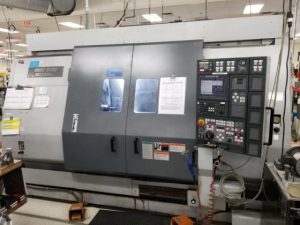
Avoid Costly Mistakes: Professional Tips for Purchasing a Pre-Owned / Second-Hand / used HARDINGE CONQUEST T42 – CNC Lathe?
Here are professional tips, known quirks, red flags, and negotiation suggestions when evaluating a Hardinge Conquest T-42 CNC lathe second-hand. Make sure to bring measuring tools, someone with experience, and allow time to test.
Key Specs & What the T-42 Should Be Like
Before you inspect, know what a properly functioning T-42 offers so you can spot compromises. From listings:
| Spec | Typical Value / Range |
|---|---|
| Swing over bed / upper way cover | ~ 21.2″ (~ 538 mm) |
| Max turning diameter | ~ 9″ (~ 228-230 mm) |
| Z-axis (turning length) | ~ 13.1-13.9″ (~ 330-353 mm) depending on whether using collet or chuck setup |
| X-axis travel | ~ 5.3″ (~ 135 mm) |
| Spindle speed / motor power | ~ 5,000 RPM, 10 HP spindle in many units. Some higher spec or “Super Precision” variants go to ~ 6,000 RPM and more HP depending on drive. |
| Tooling / Turret / Live Tools | Many units have a 12-station turret, often with some “live tool” positions; some have sub-spindle or barfeed options. |
| Control | Typically Fanuc 18-T in many machines. |
If the machine offered is significantly below these in any dimension, or the specs are overstated, that’s a warning you’ll be paying to regain lost capability (if even possible).
What to Inspect / Test In Detail
Here are specific subsystems & features to test, what to look for, what might cost you down the road.
| Area | What to Check / Test | Why It Matters / What to Watch Out For |
|---|---|---|
| Spindle & Bearings | • Run spindle at low, medium, high RPM and listen & feel for smoothness. Any grinding, hum or vibration is bad. • Use dial indicator to measure spindle nose or taper run-out. • Check for heat rise during operation. • Check the spindle bore (if applicable), collet closer/housing for damage or wear. • Inspect for coolant leakage or contamination in spindle bearings. | Spindle rebuilds are expensive. Worn bearings reduce part quality & increase background vibration. Contamination or leaks often lead to rapid failure. |
| Guideways / Ways / Axes Travel, Backlash | • Move X & Z axes through full travel, check for smooth motion, sticking, or rough spots. • Check backlash by moving ± directions and measuring lost motion. • Check visible wear, scoring, rust or pitting on ways or rails. • Inspect carriage and cross slide movement. • Inspect lubrication systems for ways/screws; see if they are regularly serviced. | Way wear degrades precision, accuracy, repeatability. Significant wear may require regrinding or replacement. Backlash causes loss of repeatability and poor surface finish. |
| Collet Closer / Collet System | • Operate collet closer many times; test under load. • Check opening/closing speed, consistency. • Inspect seals, O-rings or “quad rings” in collet closer/housing. • Check tool holding retention, condition of collets, fit, whether run-out in collet is acceptable. | Users report slow or inconsistent collet closer behaviour; seals wear. Poor collet clamping causes tool deflection, surface quality loss, and can damage spindle. Fixed tool costs & collet costs matter. |
| Tool Turret / Live Tools | • Check turret indexing, repeatability, whether tool positions are accurate. • If live tool positions exist, test their operation (speed, torque, sound, run-out). • Inspect gears / belts driving live tools, see if bearings or belts have been replaced. • Check tooling accessories (tool holders, adapters), inventory. | Live tooling is mechanically more complex and one of the more failure-prone subsystems. Gears / belts wear. If live tools are worn, their repair or replacement is a nontrivial expense. Missing tooling or worn holders degrade upfront usage. |
| Control / Electronics / CNC / Parameters / Backup | • Check CNC control startup, panels/buttons, displays; any missing or flicker display issues. • Review alarm history / fault logs. • Inspect wiring, connectors, inside of electrical cabinets: moisture, signs of overheating, corrosion. • Check memory / parameter backup; battery health for memory; whether manuals / wiring diagrams are provided. • Make sure control version has support / spare parts. • Test “homing” functions, limit/home switches. Users report “home position” issues. | Control failures or obsolete boards may have long lead times or high cost. Lost parameters mean machine setup resets and could require calibration. Faulty switches or sensors cause reliability issues. |
| Tailstock / Sub-Spindle / Barfeed (if equipped) | • If tailstock is present, check quill travel, alignment, locking, any wobble. • If sub-spindle or barfeed is included, test alignment, speed, feed reliability. • Check condition and position accuracy of sub-spindle or cross devices. | Optional equipment may be expensive to replace but are critical if your work depends on them. If they’re misaligned or worn, they degrade finished parts significantly. |
| Coolant / Chip Management / Cleanliness | • Check coolant system (tank, filters, pumps), cleanliness, evidence of sludge or chips. • Inspect chip conveyor or parts catcher, how well chips are removed; are guards / trays in place. • Inspect machine interior, covers, panels for chips or rust; way cover condition. • Check whether coolant has been kept clean / changed regularly. | Poor coolant / chip management leads to rust, corrosion, wear in moving parts. Chip buildup causes problems for slides, may lead to mechanical interference. Clean machines tend to last much longer. |
| Test Job / Accuracy / Repeatability, Thermal Stability | • If seller allows, run a realistic part or test cut that simulates your production; check original tolerances, finish, etc. • Make repetitive positioning tests; see if after some hours the results stay within spec. • Warm up the machine and measure after warm-up drift. • Check tool change consistency, backlash compensation if required. • Check whether machining force causes deflection or chatter. | Many issues only reveal under load or after warm-up (heat issues, spindle drift, deflection). If the machine cannot hold tolerance in your real job, then its value is much less. |
| Mechanical / Structural Condition | • Inspect bed, headstock, tailstock (if any), turret housing for dents/cracks or signs of crash damage. • Check base & alignment: whether machine is level; inspect foundation or supports. • Inspect guards, panels, doors, way covers; see if anything is missing or damaged. • Look for rust/corrosion in critical areas (ways, spindle housing, feeds). • Check chuck jaws for wear; chuck run-out. | Structural defects, misalignments, or rust can cause serious degradation of precision. Bed misalignment is very difficult to correct. Missing protective components often indicate neglect. |
| Usage History & Maintenance Records | • Ask for number of years and approximate hours of operation, distinguishing “powered on” vs “cutting hours” if possible. • Maintenance logs: when bearings were replaced, when turret/lives tools serviced, collet maintenance, coolant changes. • Any known crash / overload incidents. • Environment: shop conditions (dust / coolant / humidity). • Whether original manuals, parts schematics, tool holder lists, etc. are included or obtainable. | A well-documented machine is lower risk. Hidden damage or neglect often show up in later expensive failures. Manuals and schematics make repair and calibration much easier. |
| Safety / Electrical / Infrastructure Requirements | • Check emergency stops, guarding, interlocks, chips / coolant guarding. • Electrical supply: voltage, phase, adequacy; control cabinet ventilation. • Examine wiring inside cabinet, proper grounding, no exposed wires. • Check if local safety / regulatory compliance is OK (noise, guarding, signage). • Evaluate the cost & feasibility of transporting, rigging, installing the machine. | Safety & infrastructure costs are often underestimated. Electrical issues can be dangerous; non-compliance may lead to legal / insurance problems. Transport or rigging damage can occur if not done properly. |
Known / Common Problems with Hardinge Conquest T-42
From user reports & past listings:
- Collet closer slowness or inconsistent closing/opening – seals, O-rings / quad rings wear. This affects cycle time and may lead to tolerances being off. Users report this in T42 models.
- Home / limit switch / “over travel” issues: Some machines have trouble with “home position” of axes, or false limit trips. Sometimes software limits or sensor mis‐adjustment causes “over travel” alarms.
- Live tool / turret wear, especially if live tooling was used heavily: belts, gears, motor in live tools may need replacement; gear wear in bevel or angular live tools.
- Support parts availability for certain optional gear, tool holders, live tools; however, many older T42s still have parts available. Good that some have inventory.
- Electrical panels & coolant system neglect: coolant leaks, dirty coolant, chip accumulation inside covers; poor seals or corrosion. These worsen spindle or way damage.
- Wear on ways or machine bed especially if slideway lubrication has been neglected or chips have been allowed to accumulate under covers.
Red Flags / Deal-Breakers
Here are issues which are serious enough that unless addressed, cost of ownership will likely be high. If you find one or more of these, make very sure you’ve priced in remediation or demand a big discount.
- Spindle with excessive run-out or bearing noise / vibration that doesn’t clear up after warm-up.
- Collet closer that is intermittent, slow, or leaking pressure; if seals are damaged.
- Turret mis-indexing, live tools non-functional or noisy, or gear belts loose or damaged.
- Home or limit switch / software limit problems: overtravel alarms that can’t be cleared, sensor failure.
- Significant way wear or visible rust / scoring on slideways, especially if way covers are damaged or missing.
- Missing or heavily worn parts: chucks, collets, tooling, live tool adapters. If holders are missing or tooling is rarer, cost adds up.
- Control electronics / display faults: flickering screens, error messages, corroded connectors, battery memory loss (parameter loss).
- Coolant / chip management systems that are not working or missing. Accumulated chips, no guards, leaks.
- Poor documentation: manuals, electrical schematics, parts lists, etc. Missing documentation greatly increases risk.
- Structural damage / crashes / base misalignment. If the bed is bent, or headstock housing has hit something, etc., repair may be uneconomic.
Negotiation & Cost Buffer Suggestions
When making an offer or budgeting, include possible downstream costs. Make sure you protect your investment.
- Budget for spindle bearing rebuild (and possibly taper refinishing) if noise or run-out is found.
- Seal & O-ring replacement in collet closer or coolant / hydraulic systems.
- Turret / live tooling maintenance – belts, motor bearings, gearboxes.
- Way / slideway alignment / regrinding / scraping if wear is moderate. Possibly replacement of worn slides.
- Electrical / control board spares: some control electronics, sensors or boards may be obsolete or costly. Include cost to replace them.
- Coolant clean-up & system refurbishment: tank cleaning, filter replacement, coolant condition, leak repairs.
- Tooling and collets: you may need to buy a decent inventory of collets, holders, live tools.
- Safety & guarding: maybe retrofitting of guards, interlocks, signage.
- Transport / rigging / installation / leveling: heavy machine; rigging properly is important. Also leveling & alignment on site.
- Warm-up / test runs: time cost, scrap of test parts, calibration. Don’t expect “plug & play”—used machines usually need tweaking.
- Conditional purchase: try to make your purchase contingent on passing over certain mechanical tests (run spindle, test parts, measure tolerance, etc.).