20/09/2025
What Should I Pay Attention To When Buying a Second-Hand / used Commersald Implanti PTA200 ROT Welding Cladding System?
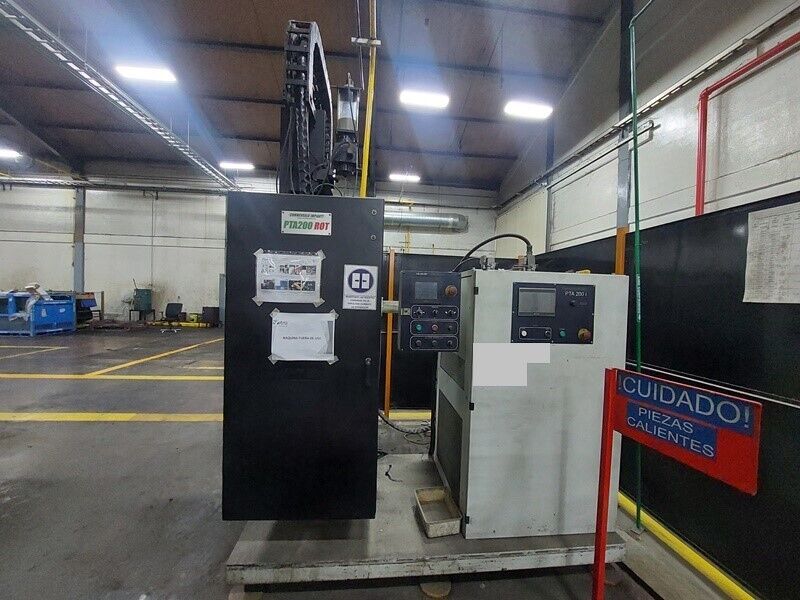
When considering a used Commersald Implanti PTA200 ROT system, it is important to thoroughly inspect both mechanical and operational aspects to ensure long-term reliable performance. Below are the key items to check, along with potential risk areas.
Key Inspection Points
- System Identification and Documentation
- Check model and serial number to ensure it matches documentation.
- Review maintenance records, usage hours, service history, and any past repairs or breakdowns.
- Confirm that operating manuals, schematics, spare parts lists are available.
- Power Supply, Torch & Plasma Unit
- Verify that the power transformer, power supply modules and cooling circuits operate correctly and remain within specifications.
- Inspect the torch (plasma torch), electrode condition, nozzle, and powder feeder for wear or damage.
- Look for signs of overheating, erosion, or damage at the torch tip or shielding components.
- Powder Feed System
- Check the powder feeding mechanism: hopper condition, consistency of powder flow, any clogging or segregation.
- Test powder dose control, feed rate calibration.
- Oscillator / Rotary Table / Motion Components
- Inspect the rotor table (ROT) functionality: smooth rotation, load capacity, balance.
- Verify oscillator or torch holder movement (stroke, travel) is accurate, stable and free of abnormal vibration.
- Check linear rails, bearings, guides for play or wear; inspect motors and drive systems.
- Control System, PLC, Interface
- Examine the PLC/control panel: user interface, program memory, safety interlocks, software version.
- Test remote or manual controls; see if sensors, limit switches, feedback systems are all functioning.
- Check calibration and repeatability of automated functions (oscillations, index positions, etc.).
- Cooling, Gas, and Utilities
- Ensure cooling circuits (water or other coolant) are effective and free of leaks or sludge.
- Check gas supply (if required) and gas flow regulators, filters.
- Verify general utilities: appropriate electrical voltage and amperage, stable current supply, adequate grounding.
- Cladding Quality & Layer Characteristics
- Inspect samples (if available) or perform test cladding to check for uniform deposition, good metallurgical bond, minimal dilution of substrate.
- Check for defects: porosity, cracks, inclusions, undercut, overheating marks.
- Assess layer thickness capability vs what is required for your application.
- Safety, Enclosures, and Protection
- Check enclosures, shields, safety doors / interlocks.
- Verify that hot surfaces, sparks, powder dust, and plasma arc exposure are properly guarded.
- Spare Parts and Consumables Support
- Confirm availability of replacement parts: torch consumables, nozzles, electrodes, powder alloys, motion components.
- Check price and lead time of spare parts in your region.
- Trial Run
- Ask to run the machine under working conditions.
- Observe operation: how stable is the arc, consistency of powder feeding, cladding result, vibration, noise, temperature rise.
- Inspect final finish on a test piece: adhesion, uniformity, surface finish.
Potential Risk / Red Flag Indicators
- Excessive wear or damage on torch or powder feed path (eroded nozzles, blocked feed ports).
- Poor or inconsistent powder flow, leading to lack or surplus in cladding.
- Weak or intermittent motion in rotary table / oscillation mechanisms.
- Control panel with missing safety features / broken sensors.
- Cooling system failures or signs of overheating.
- Underground corrosion or rust in key metal parts.
- Difficult to find or very expensive spare parts.
- Lack of documentation or history of repairs.
If all these points are checked and acceptable, a used PTA200 ROT system can perform well for many years.