What Should I Pay Attention To When Buying a Second-Hand, Pre-Owned, Surplus, Used Huron VX12 CNC Vertical Machining Center made in France?
This is a comprehensive, technically detailed guide on what to pay attention to when evaluating and buying a Huron VX12 CNC Vertical Machining Center (France-made, used / second-hand / surplus). It includes the key technical specifications that define the machine’s capability, what to inspect physically and functionally, and which components and parameters most strongly impact reliability and long-term value.
Huron VX12 CNC Vertical Machining Center – Key Technical Details
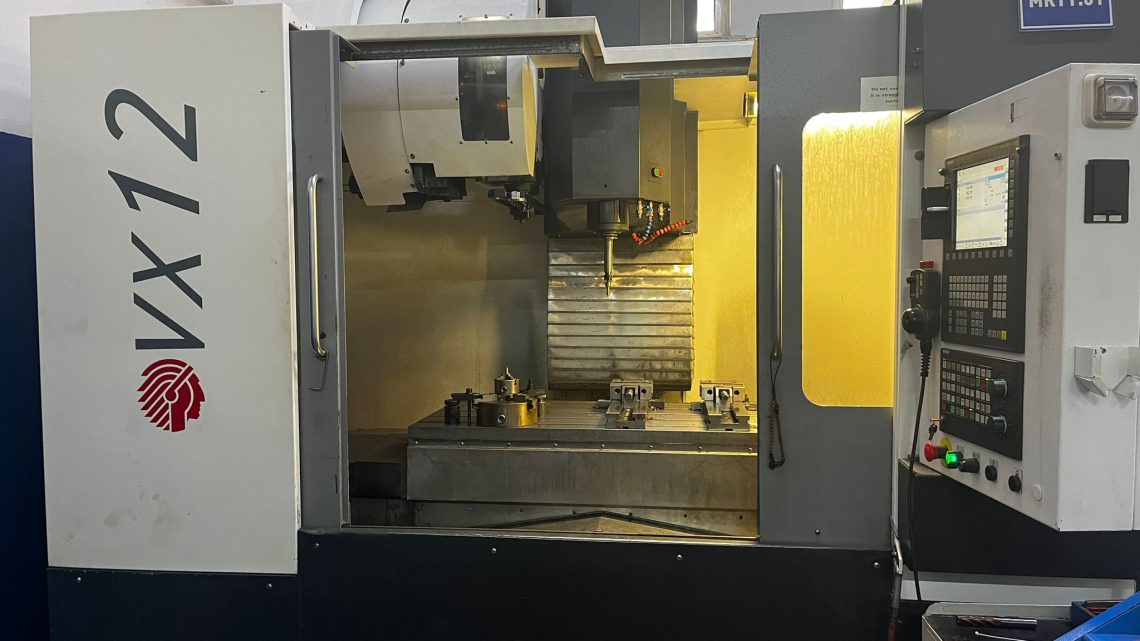
The Huron VX12 is a 3-axis vertical machining center (column type) manufactured in France. It is designed for milling and machining medium-to-large workpieces, offering good rigidity, stable cutting behavior, and reliable geometric accuracy.
Core Machine Specifications
Travel / Axis Ranges
- X-axis: approximately 1,220 mm
- Y-axis: approximately 600 mm
- Z-axis: approximately 610 mm
These working travels define the maximum usable machining envelope and must be matched carefully to your part size requirements.
Table
- Table dimensions: approximately 1,400 × 630 mm
- Maximum workpiece weight: approximately 1,200 kg
- Standard T-slots for fixture mounting; slot condition and spacing directly affect fixturing flexibility and accuracy.
Spindle and Cutting Capability
- Spindle taper: ISO 40 / BT40
- Maximum spindle speed: approximately 10,000 rpm
- Spindle motor power: typically between 10 and 15 kW (depends on configuration and year)
- Tool magazine capacity: typically 24 to 40 tools (depending on version)
This configuration offers a balanced capability for general milling, drilling, and moderate roughing operations.
Feed and Rapid Rates
- Rapid traverse: approximately 24 m/min (typical across axes)
- Working feed rates are lower and must be evaluated if heavy roughing operations are planned.
Control System
Commonly equipped with:
- Siemens 810D
- Siemens 840D
- Heidenhain TNC series
The CNC control selection strongly affects programming flexibility, maintenance complexity, diagnostics, and spare-parts availability.
Machine Dimensions and Weight
- Overall length: approximately 2,800–3,400 mm
- Overall width: approximately 2,500 mm
- Overall height: approximately 2,700–3,100 mm
- Machine weight: approximately 7,700–8,500 kg
These values are critical for transport planning, floor loading, and foundation requirements.
What to Inspect Before Buying – Technical Checklist
A structured inspection is essential to evaluate real condition and avoid unexpected repair costs.
1. Mechanical and Structural Condition
Way quality and wear
- Inspect linear guideways and ball screws for backlash, noise, uneven movement, or visible wear.
- Excessive backlash directly reduces machining accuracy and surface finish quality.
Spindle condition
- Check for runout, abnormal noise, or vibration across the full speed range.
- Request spindle bearing test or vibration analysis results if available.
Table and fixture surface
- Ensure T-slots are straight, undamaged, and not pulled or cracked.
- Check table flatness and surface condition for signs of repeated heavy impacts.
Tool changer system
- Verify reliable automatic tool change operation.
- Check tool gripping force, alignment, and repeatability.
- ATC faults can be costly and time-consuming to repair.
2. Control System and Electronics
CNC controller model and age
- Siemens 840D offers high capability but requires skilled support.
- Siemens 810D is simpler but may lack modern features.
Electrical cabinet condition
- Cabinet should be clean, dry, and free of corrosion.
- Look for overheating marks, burnt connectors, or modified wiring.
Servo motors and drives
- Listen for abnormal motor noise during axis motion.
- Check for alarms, drive faults, and service history.
Homing and limit switches
- Confirm accurate and repeatable homing on all axes.
- Faulty limit systems can lead to crashes and alignment loss.
3. Alignment, Accuracy, and Performance
Geometric accuracy
- Laser calibration or ballbar testing is strongly recommended.
- Check squareness, straightness, and axis alignment.
Repeatability
- A well-maintained Huron VX12 typically achieves repeatability around 0.003 mm.
- Poor repeatability usually indicates wear in ball screws or guideways.
Cutting tests
- Request a live cutting demonstration if possible.
- Listen for chatter and observe surface finish consistency.
4. Fluids and Maintenance Systems
Coolant system
- Verify pump operation, flow rate, and tank cleanliness.
- Old or contaminated coolant may indicate poor maintenance habits.
Chip conveyor
- Inspect for mechanical damage and smooth operation.
- Non-functional conveyors can severely affect productivity.
Lubrication system
- Confirm automatic lubrication is working correctly for ways and ball screws.
- Lubrication failure accelerates mechanical wear dramatically.
5. Documentation and Software
Technical manuals and wiring diagrams
- Essential for troubleshooting, maintenance, and future upgrades.
Program backups
- Ensure CNC parameters and existing programs are backed up.
Service history
- Machines with documented service records are significantly lower risk.
Operational Considerations
Parts and Service
- Siemens-based systems are widely supported but parts can be expensive.
- Heidenhain service availability varies by region.
Spare Parts Availability
- Confirm availability of ball screws, drives, power supplies, and spindle components specific to the installed CNC version.
Intended Usage
- Light or prototype machining tolerates minor wear.
- Production machining requires verified accuracy, repeatability, and calibration records.
Red Flags to Avoid
- No maintenance or service history
- Heavy rust on guideways or spindle taper
- Abnormal spindle noise or vibration
- Frequent ATC errors or tool change failures
- Burn marks or corrosion inside the electrical cabinet
- Extremely high operating hours without rebuild documentation
Summary Inspection Checklist
| Area | What to Check |
|---|---|
| Machine capacity | Axis travels, table size, load rating |
| Spindle | Power, speed range, runout, taper condition |
| CNC control | Model, functionality, ease of support |
| Mechanics | Way wear, backlash, spindle bearings |
| Electrical | Cabinet condition, wiring, drives |
| Fluids & chips | Coolant, lubrication, chip handling |
| Accuracy | Test cuts, laser or ballbar results |
| Documentation | Manuals, diagrams, service history |