09/06/2024
What is SLANT TURN Tooling Turning Boring Blocks Capto?
SLANT TURN Tooling, Turning, Boring Blocks, and Capto are terms related to specific components and technologies used in CNC turning centers and lathes. Here’s a detailed explanation of each term and how they interrelate:
SLANT TURN Tooling
- Definition:
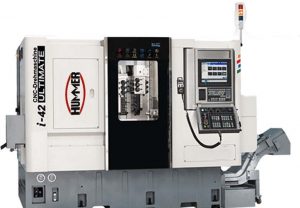
- SLANT TURN refers to a type of CNC lathe or turning center that has a slant bed design. The bed of the machine is angled, typically at 30 or 45 degrees, which offers several advantages over flat-bed designs.
- Advantages:
- Chip Flow: The slanted design facilitates better chip removal and management, as gravity helps chips fall away from the cutting area.
- Rigidity and Stability: The slant bed provides greater structural rigidity, which enhances machining accuracy and stability, especially during heavy cutting operations.
- Ergonomics: The layout is more ergonomic for operators, making tool changes and adjustments easier.
Turning
- Definition:
- Turning is a machining process where a cutting tool, typically a non-rotary tool bit, moves linearly while the workpiece rotates. This process is primarily used to create cylindrical parts by removing material from the outer diameter of a rotating workpiece.
- Processes:
- External Turning: Removes material from the outside of the workpiece.
- Internal Turning (Boring): Enlarges a hole or internal diameter.
- Facing: Cuts a flat surface perpendicular to the workpiece’s rotational axis.
- Threading: Cuts helical grooves (threads) into the workpiece.
Boring Blocks
- Definition:
- Boring blocks are specialized tooling blocks used in CNC turning centers to hold and position boring bars. Boring is the process of enlarging a hole that has already been drilled or cast.
- Functions:
- Tool Holding: Securely holds boring bars and other internal turning tools.
- Alignment and Stability: Ensures the tool is correctly aligned and stable during the boring process to achieve precise internal diameters and finishes.
- Types:
- Fixed Boring Blocks: Rigid and used for straightforward boring operations.
- Adjustable Boring Blocks: Allow for fine adjustments to the tool position, useful for precise machining tasks.
Capto Tooling System
- Definition:
- Capto is a modular tooling system developed by Sandvik Coromant. It is characterized by a polygon-shaped shank that allows for quick and secure tool changes. Capto tooling systems are used in various machining applications, including turning, milling, and drilling.
- Features:
- Modularity: The Capto system allows for quick changes between different types of tools (e.g., turning, milling) using the same basic shank or holder.
- Rigidity: The polygonal shank provides a high level of rigidity, ensuring precise and stable machining.
- Quick Change: Tool changes can be performed quickly and efficiently, reducing machine downtime and increasing productivity.
- Applications:
- Turning Centers: Capto tool holders are used in CNC lathes and turning centers for various turning operations.
- Machining Centers: Capto tooling is also used in multi-tasking machines that perform milling and drilling operations.
Integration and Usage in CNC Machining
- SLANT TURN Tooling with Capto:
- In a slant bed CNC lathe, Capto tooling systems can be used to enhance efficiency and precision. The modular nature of Capto allows for rapid tool changes, which is particularly beneficial in a slant bed environment where tool accessibility is already improved.
- Turning and Boring with Boring Blocks and Capto:
- For internal turning operations like boring, a boring block equipped with a Capto holder can securely hold the boring bar. This combination ensures that the tool is stable and precisely aligned, which is critical for achieving accurate internal diameters.
- Capto tooling systems can be easily switched out for different operations, whether external turning, facing, or threading, without the need for extensive re-setup, thanks to their quick-change capability.
- Advantages in Multi-Axis and Multi-Tasking Machines:
- In advanced CNC machines that perform multiple types of operations (turning, milling, drilling), using a Capto tooling system offers significant flexibility. The same machine can switch between different tasks seamlessly, reducing downtime and increasing overall productivity.
Conclusion
The integration of SLANT TURN Tooling, Turning, Boring Blocks, and Capto systems represents a significant advancement in CNC machining technology. The combination of a slant bed lathe with the modular and quick-change capabilities of Capto tooling enhances efficiency, precision, and versatility in manufacturing. These systems allow for rapid tool changes, better chip management, and increased rigidity, which are crucial for high-quality and high-volume production environments.