What is Hydraulic Shear Machine?
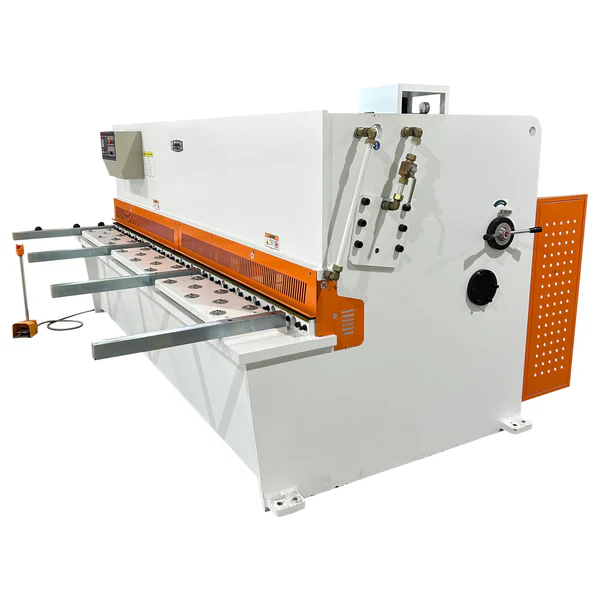
A Hydraulic Shear Machine is a precision industrial tool used in the sheet metal sector for cutting or shearing sheet metal and plates with high accuracy and efficiency. It employs hydraulic power to drive a blade through metal, producing clean, straight cuts with minimal material waste. Below is a technical explanation tailored to its application in the sheet metal industry:Working PrincipleHydraulic shear machines operate using hydraulic systems, where pressurized fluid (typically oil) is used to transmit power to a moving blade. The machine consists of a fixed lower blade and a movable upper blade, which are brought together to shear the sheet metal placed between them. The hydraulic system ensures controlled and consistent force, enabling precise cuts across various metal thicknesses and types.Key Components
- Frame: A robust structure, typically made of steel, that supports all components and withstands the high forces generated during cutting.
- Hydraulic System: Comprises a hydraulic pump, cylinders, valves, and fluid reservoir. The pump pressurizes the fluid, which drives the cylinders to move the upper blade.
- Blades: High-carbon, high-chromium steel blades designed for durability and sharpness. The upper blade is angled (typically 1-3°) to reduce the cutting force required and ensure a clean cut.
- Hold-Down Cylinders: Hydraulic or mechanical clamps that secure the sheet metal during cutting to prevent movement and ensure accuracy.
- Back Gauge: A motorized or CNC-controlled adjustable stop that positions the sheet metal for precise cut lengths.
- Control System: Modern machines feature CNC or PLC controls for programming cut dimensions, blade gap, and stroke length.
- Shear Table: A flat surface with support rollers or guides to position the sheet metal accurately.
Technical Specifications
- Cutting Capacity: Varies from 1 mm to over 25 mm thick sheets, depending on the machine’s hydraulic power and blade strength. Common materials include mild steel, stainless steel, aluminum, and alloys.
- Cutting Length: Ranges from 2 meters to over 6 meters, depending on the machine size.
- Blade Gap Adjustment: Adjustable to accommodate different material thicknesses, ensuring optimal cutting quality and minimal burrs.
- Shear Angle (Rake Angle): Adjustable to reduce cutting force for thicker materials, typically between 0.5° to 3°.
- Cutting Speed: Depends on hydraulic pump capacity and material thickness, typically 10-30 cuts per minute for thinner sheets.
- Power: Hydraulic pumps are driven by electric motors, typically ranging from 5 to 50 kW, depending on the machine’s size and capacity.
Types of Hydraulic Shear Machines
- Guillotine Shear: Features a straight vertical blade motion, ideal for high-precision cuts on thinner sheets.
- Swing Beam Shear: The upper blade is mounted on a pivoting beam, reducing blade wear and cutting force for thicker materials.
- CNC Hydraulic Shear: Equipped with computer numerical control for automated cutting, offering high repeatability and complex cutting patterns.
Operation Process
- Setup: The operator sets the blade gap and shear angle based on the material thickness and type. For CNC machines, cut dimensions are programmed.
- Material Placement: The sheet metal is positioned on the shear table, aligned using the back gauge.
- Clamping: Hold-down cylinders secure the sheet to prevent movement.
- Shearing: The hydraulic system activates, driving the upper blade downward to shear the metal against the fixed lower blade.
- Release and Removal: The hold-downs release, and the cut piece is removed, with scrap collected separately.
Advantages in Sheet Metal Sector
- Precision: Produces clean, straight cuts with minimal distortion, critical for high-quality sheet metal fabrication.
- Versatility: Handles a wide range of materials (steel, aluminum, copper) and thicknesses.
- Efficiency: High cutting speeds and automation (in CNC models) improve productivity in mass production.
- Reduced Waste: Accurate cuts minimize material loss, optimizing raw material usage.
- Safety: Modern machines include safety features like light curtains, emergency stops, and blade guards.
Limitations
- Thickness Limitation: Limited to cutting materials up to a certain thickness (typically 25-30 mm for standard machines).
- Blade Maintenance: Blades require regular sharpening and replacement to maintain cut quality.
- Initial Cost: Hydraulic shears, especially CNC models, have a higher upfront cost compared to manual or mechanical shears.
Applications in Sheet Metal Industry
- Fabrication Shops: Cutting sheet metal for automotive parts, HVAC ducts, and structural components.
- Manufacturing: Producing precision parts for appliances, machinery, and electronics enclosures.
- Construction: Cutting metal panels and plates for roofing, cladding, and structural frameworks.
- Aerospace and Automotive: Shearing thin, high-strength alloys for lightweight components.
Technical Considerations
- Material Properties: The machine must be calibrated for the material’s tensile strength and thickness to avoid blade damage or poor cut quality.
- Blade Gap: Must be precisely set (e.g., 0.05-0.1 mm for thin sheets, larger for thicker plates) to prevent burrs or cracking.
- Hydraulic Fluid Maintenance: Regular checks of fluid levels and quality are essential to maintain consistent performance.
- CNC Integration: Advanced models allow integration with CAD/CAM systems for automated, high-volume production.
In summary, hydraulic shear machines are critical in the sheet metal industry for their ability to deliver precise, efficient, and clean cuts across a range of materials. Their hydraulic-driven mechanism, combined with modern CNC controls, makes them indispensable for high-throughput fabrication environments. For specific machine models or pricing, you may need to consult manufacturers or suppliers directly, as this information varies widely.