What is Gasketed Plate Heat Exchanger for condensing applications?
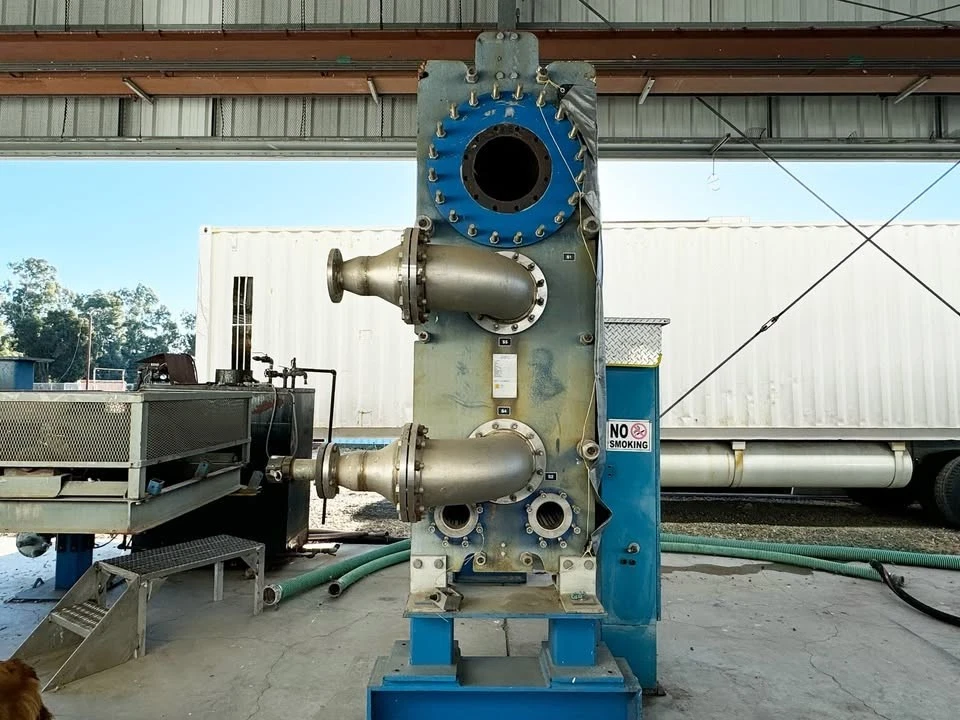
A gasketed plate heat exchanger (PHE) for condensing applications is a type of heat exchanger designed to facilitate the condensation of a vapor into a liquid by transferring heat to a cooling medium, typically a liquid like water. It consists of a series of thin, corrugated metal plates stacked together, sealed with gaskets, and clamped within a frame. The design maximizes heat transfer efficiency while handling phase-change processes like condensation. Below is a technical explanation of its components, working principle, and specific features for condensing applications:Components of a Gasketed Plate Heat Exchanger
- Plates: Thin, corrugated metal plates (usually stainless steel, titanium, or other corrosion-resistant alloys) with high thermal conductivity. The corrugations create turbulence, enhancing heat transfer and structural rigidity.
- Gaskets: Elastomeric seals (e.g., NBR, EPDM, or Viton) placed between plates to separate the fluid streams and prevent leakage. Gaskets are selected based on temperature, pressure, and fluid compatibility.
- Frame: A robust structure with a fixed and movable cover plate that clamps the plate pack together, ensuring alignment and sealing under pressure.
- Ports and Channels: Each plate has ports at the corners to allow fluid entry and exit. Alternating channels are formed between plates for the hot vapor (condensing fluid) and the cold fluid (coolant).
- Connections: Inlet and outlet nozzles for the two fluids, typically arranged in a counter-current or co-current flow configuration.
Working Principle in Condensing ApplicationsIn condensing applications, the gasketed PHE transfers heat from a vapor (e.g., steam, refrigerant, or hydrocarbon vapor) to a cooling medium (e.g., water or glycol), causing the vapor to condense into a liquid. The process involves:
- Vapor Flow: The hot vapor enters the PHE through one set of channels. As it flows across the plate surfaces, it releases its latent heat of vaporization to the cooling medium in adjacent channels.
- Heat Transfer: The corrugated plate design induces turbulence, increasing the heat transfer coefficient. The thin plates minimize thermal resistance, allowing efficient heat transfer from the vapor to the coolant.
- Condensation: As the vapor loses heat, it undergoes a phase change, condensing into a liquid. The condensate collects at the bottom of the channels and exits through the outlet port.
- Coolant Flow: The cooling medium absorbs the heat and exits at a higher temperature. The counter-current flow arrangement (vapor and coolant flowing in opposite directions) maximizes the temperature difference, enhancing efficiency.
- Phase Separation: In some designs, the PHE may include features to separate non-condensable gases (e.g., air or inert gases) from the condensate to maintain efficiency.
Technical Features for Condensing ApplicationsGasketed PHEs for condensing applications are optimized to handle the unique challenges of phase-change heat transfer. Key features include:
- Plate Design:
- Asymmetric Channels: Plates may have asymmetric corrugation patterns to accommodate the volume change from vapor to liquid, reducing pressure drop on the condensing side.
- Wide-Gap Plates: Some PHEs use wide-gap plates to handle high vapor volumes and prevent fouling by condensate or impurities.
- High Theta Plates: Plates with steeper corrugation angles (high theta) increase turbulence, improving heat transfer for condensing vapors with low viscosity.
- Gasket Materials: Gaskets are chosen to withstand the temperature and chemical properties of the condensing vapor (e.g., steam at 100–200°C or aggressive refrigerants). High-temperature gaskets like EPDM-HT or Viton are common.
- Large Port Sizes: Larger inlet ports on the vapor side reduce pressure drop and accommodate high volumetric flow rates of vapor.
- Condensate Drainage: Plates are designed to facilitate smooth drainage of condensate, preventing pooling that could reduce heat transfer efficiency or cause corrosion.
- Non-Condensable Gas Handling: Some PHEs include venting mechanisms or dedicated channels to remove non-condensable gases, which can reduce heat transfer efficiency by forming an insulating layer.
- High Heat Transfer Coefficients: The turbulent flow induced by corrugated plates results in heat transfer coefficients typically ranging from 2,000 to 8,000 W/m²·K, significantly higher than shell-and-tube exchangers.
- Modular Design: The gasketed PHE allows easy addition or removal of plates to adjust capacity for varying condensing loads.
Performance Metrics
- Heat Transfer Rate (Q): Calculated as Q=U⋅A⋅ΔTmQ = U \cdot A \cdot \Delta T_m
Q = U \cdot A \cdot \Delta T_m, where:- ( U ): Overall heat transfer coefficient (W/m²·K), influenced by plate material, corrugation, and fluid properties.
- ( A ): Total heat transfer area (m²), determined by the number and size of plates.
- ΔTm\Delta T_m
\Delta T_m: Logarithmic mean temperature difference (LMTD), adjusted for condensation due to the isothermal nature of the phase change.
- Pressure Drop: Typically low (10–100 kPa) due to optimized plate design, but higher vapor velocities can increase it. Proper sizing is critical to balance efficiency and pumping costs.
- Thermal Efficiency: Gasketed PHEs achieve close temperature approaches (as low as 1–2°C), maximizing energy recovery.
Advantages for Condensing Applications
- Compact Size: PHEs offer a high heat transfer area-to-volume ratio (up to 300 m²/m³), making them smaller than shell-and-tube exchangers.
- High Efficiency: Turbulent flow and thin plates result in superior heat transfer performance.
- Flexibility: Easy to disassemble for cleaning, maintenance, or capacity adjustment, critical for applications with fouling or scaling risks.
- Cost-Effective: Lower material and installation costs compared to traditional exchangers for the same duty.
- Low Hold-Up Volume: Minimal liquid retention reduces response time and improves control in dynamic condensing processes.
Challenges and Considerations
- Pressure and Temperature Limits: Gasketed PHEs are typically limited to 25–30 bar and 150–200°C due to gasket material constraints, though advanced gaskets can extend this range.
- Fouling and Corrosion: Condensing applications involving aggressive fluids (e.g., ammonia or acidic vapors) require careful material selection to prevent gasket degradation or plate corrosion.
- Non-Condensable Gases: Accumulation of gases can reduce efficiency, necessitating proper venting design.
- Vapor Maldistribution: Uneven flow distribution in large PHEs can reduce performance, requiring careful port and channel design.
ApplicationsGasketed PHEs for condensing are widely used in:
- HVAC and Refrigeration: Condensing refrigerants like ammonia or R134a in chillers.
- Power Plants: Condensing steam in low-pressure turbine exhausts or heat recovery systems.
- Chemical Processing: Condensing volatile organic compounds (VOCs) or solvent vapors.
- Food and Beverage: Condensing steam in pasteurization or sterilization processes.
- Marine and Oil & Gas: Condensing hydrocarbons or process vapors in compact systems.
Comparison with AlternativesCompared to shell-and-tube heat exchangers, gasketed PHEs offer higher efficiency and compactness but are less suitable for very high-pressure or high-temperature applications. Brazed or welded plate heat exchangers may be preferred for extreme conditions, but gasketed PHEs excel in applications requiring frequent maintenance or flexibility.In summary, a gasketed plate heat exchanger for condensing applications is a highly efficient, compact, and flexible solution for transferring heat during vapor condensation. Its design leverages turbulent flow, large surface areas, and modular construction to optimize performance, with specific adaptations like wide-gap plates and robust gaskets ensuring reliability in phase-change processes. For detailed sizing or selection, engineers typically use manufacturer software or empirical correlations based on fluid properties and operating conditions.