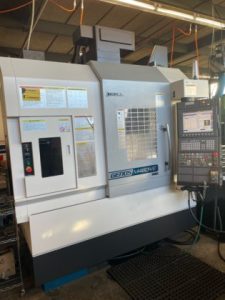
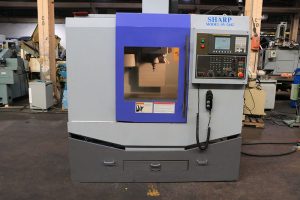
What is Fine Blanking Press Machine?

A Fine Blanking Press Machine is a specialized high-precision metal forming machine used in the sheet metal industry to produce intricately shaped, high-quality components with smooth edges, tight tolerances, and minimal post-processing. Unlike conventional stamping or blanking, fine blanking combines cutting, forming, and extrusion in a single operation, achieving superior part quality suitable for industries like automotive, aerospace, electronics, and medical devices.Technical Explanation of Fine Blanking Press MachinePrinciple of OperationFine blanking is a hybrid process that integrates elements of stamping and cold extrusion. It uses a triple-action hydraulic or mechanical press to apply three distinct forces:
- Blanking Force: Cuts the material to form the component’s outer shape.
- Counterforce: Applied from below the workpiece to support the material and prevent distortion.
- V-Ring Force (or Impingement Ring Force): A specialized force applied by a V-shaped ring around the cutting area to clamp the material tightly, ensuring precise shearing and smooth edges.
These forces work simultaneously to produce parts with clean, burr-free edges, high dimensional accuracy (tolerances as tight as ±0.01 mm), and excellent surface finish.Key Components of a Fine Blanking Press
- Press Frame: A rigid structure (C-frame or straight-side) designed to withstand high forces (typically 100 to 1,000 tons) without deflection.
- Triple-Action Hydraulic/Mechanical System:
- Main Ram: Delivers the blanking force.
- Counter Ram: Provides upward counterforce to stabilize the material.
- V-Ring Mechanism: Clamps the material to control material flow and enhance edge quality.
- Die Assembly:
- Punch: Cuts the desired shape.
- Die: Defines the cutting edge and shape.
- V-Ring: A raised ridge on the die or pressure plate that grips the sheet metal to prevent lateral movement.
- Material Feed System: Ensures precise positioning of the sheet metal (typically 0.5 to 6 mm thick) using automated coil or strip feeders.
- Control System: Advanced CNC or PLC systems for precise control of force, stroke, and timing.
Fine Blanking Process
- Material Clamping: The sheet metal (e.g., steel, stainless steel, aluminum, or copper alloys) is clamped between the die and pressure plate. The V-ring penetrates slightly into the material to lock it in place, preventing material flow and ensuring stability.
- Shearing: The punch descends, shearing the material against the die. The counterforce from below minimizes deformation and ensures a clean cut.
- Forming/Extrusion: Simultaneously, the process can form features like embossing, bending, or coining within the same stroke.
- Part Ejection: The finished part is ejected, and scrap (slug) is removed. The process often produces fully finished parts requiring no secondary operations like deburring.
Technical Advantages
- Superior Edge Quality: Produces smooth, burr-free edges with a shear zone of nearly 100% (compared to 30–60% in conventional blanking).
- High Precision: Achieves tolerances as low as ±0.01 mm, ideal for complex geometries.
- Versatility: Can produce intricate features like holes, slots, bends, and embossing in a single operation.
- Material Efficiency: Minimizes waste due to precise cutting and controlled material flow.
- Strength and Durability: Cold working during fine blanking enhances the part’s strength through work hardening.
Applications in the Sheet Metal SectorFine blanking is used for components requiring high precision and strength, such as:
- Automotive: Transmission gears, clutch plates, seatbelt components, and brake system parts.
- Electronics: Connectors, contact springs, and shielding components.
- Medical Devices: Surgical tool components and precision implants.
- Industrial: Lock mechanisms, hinges, and chain links.
Comparison with Conventional Blanking
| Feature | Fine Blanking | Conventional Blanking |
|---|---|---|
| Edge Quality | Smooth, burr-free, 100% shear | Rough, with burrs, 30–60% shear |
| Tolerances | ±0.01 mm | ±0.1 mm or higher |
| Secondary Operations | Rarely needed | Often required (deburring) |
| Material Thickness | 0.5–6 mm (typically) | Wider range, less precise |
| Tooling Cost | Higher (complex dies) | Lower |
| Production Speed | Slower (due to precision) | Faster |
Limitations
- High Initial Costs: Fine blanking presses and tooling are expensive due to their complexity and precision requirements.
- Material Constraints: Best suited for ductile materials like low-carbon steel, stainless steel, or non-ferrous alloys; brittle materials may crack.
- Slower Cycle Times: Precision requirements reduce production speed compared to conventional blanking.
- Thickness Limitation: Typically limited to sheet thicknesses of 0.5–6 mm, though specialized presses can handle up to 12 mm.
Technical Specifications (Example)
- Press Tonnage: 100–1,000 tons, depending on material and part size.
- Stroke Rate: 10–50 strokes per minute (slower than conventional presses).
- Material Types: Carbon steel, stainless steel, aluminum, copper, brass (hardness typically < 200 HB).
- Die Clearance: Extremely tight (0.5–1% of material thickness vs. 5–10% in conventional blanking).
- Surface Finish: Ra 0.4–1.6 µm (smooth, no additional finishing needed).
Recent Advancements
- Servo-Driven Presses: Offer precise control over force and speed, improving efficiency and flexibility.
- Automation: Integration with robotic feeders and vision systems for high-volume production.
- Tooling Innovations: Use of advanced coatings (e.g., TiN, DLC) on dies to extend tool life and reduce wear.
Conclusion A fine blanking press machine is a critical tool in the sheet metal industry for producing high-precision, high-quality components with minimal post-processing. Its ability to combine cutting, forming, and extrusion in a single operation, along with tight tolerances and superior edge quality, makes it indispensable for applications requiring complex, reliable parts. However, its high cost and slower cycle times make it best suited for high-value, precision-critical components rather than mass-produced, low-cost parts.