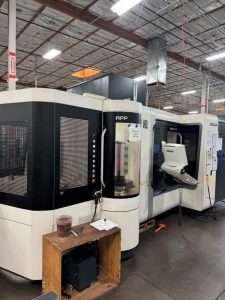
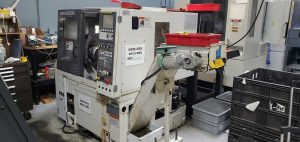
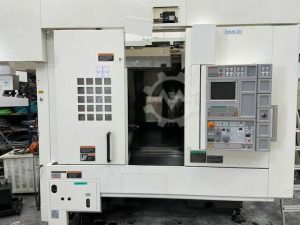
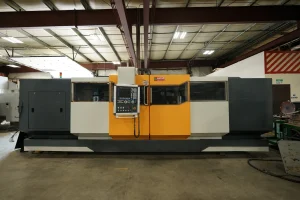
What is CNC 5 Axis Hybrid Profiling Machine and Sculpting Machining Center with Dual Table?
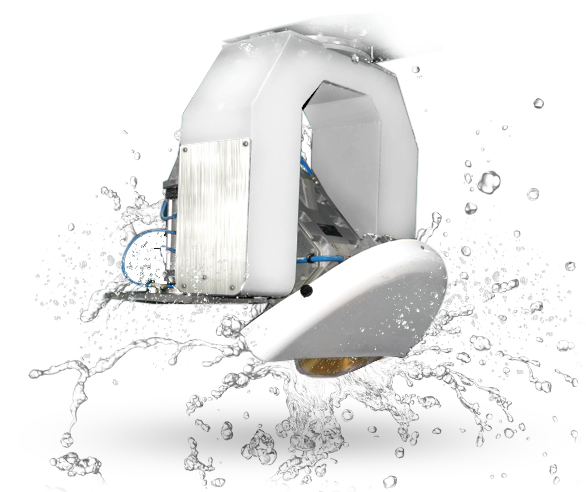
In the router sector, which primarily encompasses CNC routers used for subtractive manufacturing in materials like wood, composites, foam, plastics, aluminum, and soft metals, the “CNC 5-Axis Hybrid Profiling Machine and Sculpting Machining Center with Dual Table” refers to an advanced, multi-functional CNC router system designed for high-precision 3D profiling, sculpting, and contouring operations. This machine is particularly prevalent in industries such as furniture manufacturing, mold making, aerospace prototyping, automotive part fabrication, and artistic sculpting, where complex geometries and undercuts are common. It builds on traditional 3-axis CNC routers by incorporating simultaneous 5-axis motion, hybrid tool configurations for versatility, and a dual-table setup for uninterrupted production.Technically, this machine is a gantry-style or bridge-type CNC router optimized for the router sector’s emphasis on large-format workpieces (e.g., up to 4×8 ft or larger sheets) and high-speed routing rather than heavy metal milling. It combines profiling (edge contouring and 2D/2.5D shaping) with sculpting (full 3D freeform carving) capabilities, often featuring hybrid elements like interchangeable attachments for routing spindles, saw blades, or diamond tools. The “dual table” enhances throughput by allowing one table to be loaded/unloaded while the other is in use, reducing downtime in high-volume environments. Examples include models like the Poseidon T-REX Model X or similar hybrid 5-axis routers from manufacturers such as FlexiCAM, OMNI CNC, or Rhino CNC, which are tailored for the router sector’s materials and applications.Below, I’ll break down the technical aspects, focusing on kinematics, components, operations, and benefits in the router sector context.Technical Kinematics: 5-Axis Simultaneous MotionA standard CNC router operates on 3 linear axes (X, Y, Z) for basic planar cutting. This machine adds two rotational axes (typically A and B or A and C), enabling simultaneous 5-axis machining. This means the tool (e.g., router bit) and workpiece can move concurrently across all five degrees of freedom, allowing the tool to approach the material from any angle without repositioning.
- Axis Configuration:
- X, Y, Z (Linear Axes): X and Y provide horizontal traversal (e.g., 2000–4000 mm travel for large sheets), while Z handles vertical plunge (typically 300–600 mm depth). Driven by servo motors with ball screws or rack-and-pinion systems for precision up to ±0.01 mm repeatability.
- A-Axis (Tilting/Rotary): Usually a trunnion or swivel head on the spindle gantry, rotating ±110° to ±120° for tilting the tool. This enables undercuts and angled profiling.
- B-Axis (Rotating): Often integrated into the table or head, providing 360° continuous rotation. In head-head configurations (common in routers), both A and B are on the spindle for better access to large, stationary workpieces; in table-table setups, rotations are on the dual tables for smaller parts.
- Hybrid Aspect: “Hybrid” refers to the machine’s ability to switch between routing modes and attachments. For instance, it can perform simultaneous 5-axis sculpting (full interpolation of all axes for 3D curves) or 3+2-axis profiling (3 linear axes plus indexed rotations for fixed-angle cuts). This versatility is achieved via modular toolheads, such as an HSD or similar high-frequency spindle (up to 24,000–40,000 RPM) that can be swapped with a 20-inch saw blade for straight-line profiling or a diamond-tipped tool for composites. In the router sector, hybrid designs often include vacuum or T-slot hybrid tables for secure fixturing of irregular shapes like foam molds.
- Dual Table Mechanism: The machine features two independent worktables (e.g., phenolic vacuum pods or aluminum T-slots), each up to 1300 x 2500 mm. Powered by a conveyor or shuttle system, one table processes while the other is accessible for loading/unloading. This is controlled via the CNC system (e.g., Fanuc 31i-B5 or Syntec), with automatic table indexing to maintain axis alignment. In technical terms, it supports pallet changer logic, reducing cycle times by 50–70% in batch production, as the machine doesn’t idle during material swaps.
The overall structure is a rigid gantry frame (often steel or cast iron, weighing 5–10 tons) with linear guides (e.g., HG-15 rails) and high-precision encoders (e.g., Heidenhain) to minimize vibration and ensure surface finishes down to Ra 0.1–1 µm on wood or foam.Key Components and Specifications in the Router Sector
- Spindle and Tooling:
- High-speed electro-spindle (35–40 HP, air- or liquid-cooled) with automatic tool changer (ATC) magazine holding 12–20 tools (e.g., compression bits for wood, ball-nose for sculpting, V-bits for engraving).
- Hybrid attachments: Router bit for precise sculpting, saw blade for rough profiling of slabs, or aggregate heads for drilling/tapping. Tool length sensors and dual-contact holders (e.g., Big Plus taper) ensure rigidity, reducing deflection during 5-axis paths.
- Control System and Software:
- Industrial CNC controller (e.g., Fanuc, Siemens, or OSAI) with 5-axis interpolation support. It processes G-code from CAM software like Mastercam, Aspire, or RhinoCAM, which generates toolpaths for 3D sculpting (e.g., adaptive clearing strategies to maintain constant tool engagement).
- Features like Dynamic Work Offsets (DWO) and Tool Center Point Control (TCPC) allow programming without recalibrating for table swaps, crucial for dual-table efficiency.
- Fixturing and Workholding:
- Dual hybrid tables combine T-slots for clamps/pods with vacuum zones (6–12 zones, powered by 20–40 HP regenerative blowers) for holding porous materials like MDF or foam without clamps, preventing marks.
- Zonal vacuum control via solenoids ensures even hold-down (up to 1000 kg/m²), with options for high-pressure grids for non-porous sheets like acrylic.
- Drive and Motion Systems:
- AC servo motors (e.g., Yaskawa) with planetary gearboxes for rapid feeds (up to 20–50 m/min on X/Y, 10–15 m/min on Z/A/B).
- Closed-loop feedback from optical encoders maintains positional accuracy, compensating for thermal expansion via laser-calibrated pitch error.
- Safety and Auxiliary Systems:
- Enclosed cabin with dust extraction (10–15 HP collectors) to handle chips from routing wood/composites. Automatic lubrication and coolant mist for aluminum profiling.
- Safety interlocks for dual-table movement and overtravel limits.
Typical specs for a router-sector model (e.g., 4×8 ft format): X/Y travel 2000 x 4000 mm, Z 600 mm, A ±120°, B 360°, spindle 35 HP at 24,000 RPM, power consumption 20–30 kW.Operations: Profiling and Sculpting in the Router Sector
- Profiling: Involves 2D/2.5D edge contouring or 3+2-axis machining for outlines, pockets, and bevels. The hybrid setup allows switching to saw mode for straight cuts on large panels (e.g., kitchen countertops from quartz composites), then routing for details. Dual tables enable continuous profiling of sheet goods, ideal for furniture edging or sign-making.
- Sculpting: Full simultaneous 5-axis operation for 3D freeform carving, such as reliefs on wood doors, foam molds for boat hulls, or artistic sculptures from EPS foam. The rotating axes follow complex toolpaths (e.g., swirl or helical interpolation) to create undercuts and smooth contours without repositioning, reducing setup time from hours to minutes. In the router sector, this excels at subtractive sculpting of soft materials, achieving intricate details like human figures or automotive prototypes at speeds up to 10–20 m/min.
CAM programming uses strategies like roughing (adaptive clearing to remove bulk material efficiently) followed by finishing (constant scallop height for smooth surfaces). For dual-table ops, the system pauses one job to index the second table seamlessly.Advantages and Applications in the Router SectorThis machine addresses limitations of 3/4-axis routers by enabling single-setup machining of complex parts, reducing errors (e.g., from multiple fixturings) and tool wear (shorter, stiffer tools due to optimal angles). In the router sector:
- Efficiency Gains: Dual tables boost productivity by 40–60% for batch runs; 5-axis reduces cycles by 30–50% vs. 3-axis for 3D work.
- Material Versatility: Handles router-sector staples like wood (for furniture sculpting), foam/EPS (for molds and props), composites (aerospace panels), and light aluminum (trimming).
- Precision and Finish: Achieves tolerances of ±0.02–0.05 mm, with minimal vibration for high-quality surfaces on decorative items.
- Applications:
- Mold Making: Sculpting foam patterns for casting or thermoforming (e.g., car body molds).
- Furniture/Art: 3D carving of curved chair backs or sculptures.
- Signage/Prototyping: Profiling and sculpting large 3D signs or prototypes.
- Composites: Hybrid profiling for boat/boat parts or wind turbine blades.
Compared to metalworking machining centers, router-sector versions prioritize speed and larger envelopes over ultra-high rigidity, making them cost-effective (starting ~$100,000–$300,000) for non-ferrous applications.In summary, this machine represents a pinnacle of router technology, blending hybrid tooling for profiling versatility with 5-axis sculpting prowess and dual-table automation for industrial-scale efficiency.