What is a Pulse Mold Waterway Cleaning Machine?
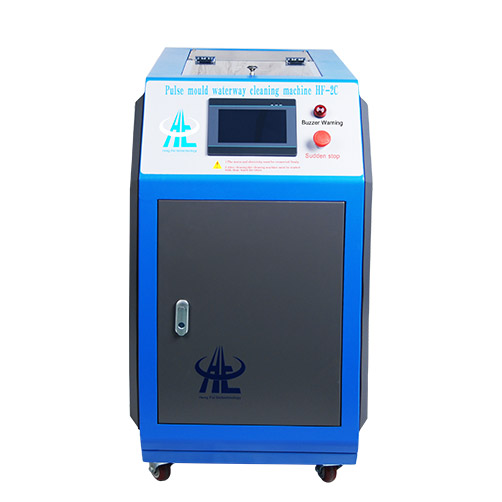
A Pulse Mold Waterway Cleaning Machine is a specialized industrial device designed for cleaning and maintaining the internal cooling channels (waterways) of injection molds, die casting molds, or other mold tools that rely on water-based cooling circuits.
Technical Working Principle:
- Problem Addressed:
- Over time, mineral deposits, rust, scale, algae, and corrosion can accumulate in the narrow internal water channels of molds.
- These blockages reduce cooling efficiency, cause uneven temperature distribution, increase cycle times, and may result in product defects.
- Pulse Cleaning Principle:
- Unlike traditional constant-flow flushing, a pulse cleaning machine uses pulsating (on/off, high-low, or shockwave-like) hydraulic pressure to remove stubborn deposits from the water circuits.
- The system sends bursts of pressurized water, air, or a water/cleaning chemical mixture through the mold’s internal waterways.
- The pulsing action creates turbulence, which breaks up and dislodges scale, rust, and debris far more effectively than laminar (steady) flow.
- Components:
- Pump Unit: Capable of producing high-pressure water and generating pulse cycles (often electronically controlled).
- Pulse Generator: Regulates frequency and intensity of pressure pulses.
- Filter System: Captures and removes dislodged debris from the return flow to avoid recontamination.
- Control Panel: For setting pulse frequency, pressure, and cleaning cycles.
- Chemical Injection System (optional): Allows for dosing descaling or rust-removing agents.
- Connection Hoses: Adaptable to various mold cooling circuit fittings.
- Operating Cycle:
- Connect the machine to mold inlet/outlet.
- Select cleaning mode (water-only, air/water, chemical-assisted).
- Set pulse pressure and frequency.
- The machine alternates between high and low pressure, creating pressure waves through the water circuit.
- Debris is flushed out and collected in a filter or waste tank.
- Cycle continues until water flows freely and pressure drops stabilize (indicating clean waterways).
Advantages Over Conventional Flushing:
- Superior Cleaning: Pulse flow generates turbulent flow and micro-jets, reaching dead zones and corners.
- Non-invasive: No need to disassemble the mold.
- Fast & Efficient: Reduces cleaning time and improves mold cooling efficiency.
- Prevents Mold Damage: Controlled pulses prevent damage to channels compared to brute-force high-pressure flushing.
Typical Applications:
- Injection Mold Maintenance in plastics and die casting industries.
- Heat Exchanger Cleaning.
- Any tooling or device with complex internal cooling circuits prone to scaling and blockage.
Summary Table:
| Feature | Pulse Mold Waterway Cleaning Machine |
|---|---|
| Cleaning Method | Pulsed/high-low pressure hydraulic cleaning |
| Key Advantage | Removes scale, rust, and debris efficiently |
| Main Application | Mold cooling channels & water circuits |
| Output | Cleaned, unobstructed waterways |
| Common Industries | Plastics, die casting, metal stamping |
In short:
A Pulse Mold Waterway Cleaning Machine is an advanced maintenance device that uses controlled pressure pulses (rather than constant flow) to dislodge and remove deposits from the cooling channels of molds, maximizing their cooling efficiency and production lifespan.
Here’s a diagram and a comparative table to make it clear how a Pulse Mold Waterway Cleaning Machine works and how it compares to other cleaning methods.
1. Technical Diagram
Below is a simplified schematic showing the pulse cleaning process for a mold waterway:
      ┌────────────────────────────────────────────────────────┐
      │                   Pulse Waterway Cleaning Machine      │
      │                                                        │
      │┌────────┐     ┌──────────────┐   ┌─────────────┐       │
Water  │        ├────▶│ Pulse Pump & │──▶│   Control   │       │
Tank──▶│ Filter │     │ Pulse Gen.   │   │   Panel     │       │
      │└────────┘     └──────────────┘   └─────────────┘       │
      │        ▲                                  │            │
      │        │   Water/Chemical Injection       │            │
      │        │                                  │            │
      └────────┴─────────────┬────────────────────┴────────────┘
                             │
                      ┌──────┴───────┐
                      │   Mold Tool  │
                      │ (with Water  │
                      │  Channels)   │
                      └──────┬───────┘
                             │
                   Dirty Water + Debris
                             │
                             ▼
                      ┌────────────┐
                      │ Waste Tank │
                      └────────────┘
Flow Steps:
- Clean water (sometimes with cleaning chemicals) is drawn from a tank.
- The filter ensures debris doesn’t enter the system.
- The pulse pump + generator create rapid high/low-pressure waves.
- Water is injected into the mold’s cooling channels, breaking up deposits.
- Dirty water and debris are flushed out and collected in a waste tank.
- Filters may further capture debris for disposal.
2. Comparative Table: Pulse Cleaning vs. Other Methods
| Feature / Method | Pulse Mold Waterway Cleaning | Conventional Flushing | Manual Cleaning (Rod/Brush) |
|---|---|---|---|
| Cleaning Principle | Pulsed/high-low pressure, turbulence | Steady flow (constant pressure) | Mechanical scraping |
| Reach | Deep into bends, dead-ends, corners | May miss dead zones, less effective | Only accessible, straight sections |
| Efficiency | Very high (removes stubborn deposits) | Medium (removes loose debris) | High only where accessible |
| Downtime | Minimal (in situ cleaning) | Minimal | High (requires disassembly) |
| Chemicals | Optional/controlled | Sometimes used | Sometimes used |
| Risk to Mold | Low (controlled pulses) | Low-Medium (constant pressure) | Medium (physical wear, risk of damage) |
| Labor | Low (automatic process) | Low | High |
| Recommended For | All molds, especially complex/internal | Simple/short channels | Emergency/spot cleaning |
Key Takeaway
- Pulse Mold Waterway Cleaning is the most effective and least invasive option for maintaining mold cooling efficiency, especially for complex or high-value molds.
- Conventional flushing is quick but often leaves stubborn deposits behind.
- Manual cleaning is labor-intensive, risky, and not practical for internal channels.