25/01/2025
What is 3-Stage Wash – Rinse- Blow Off Rotary Parts Washer Machine?
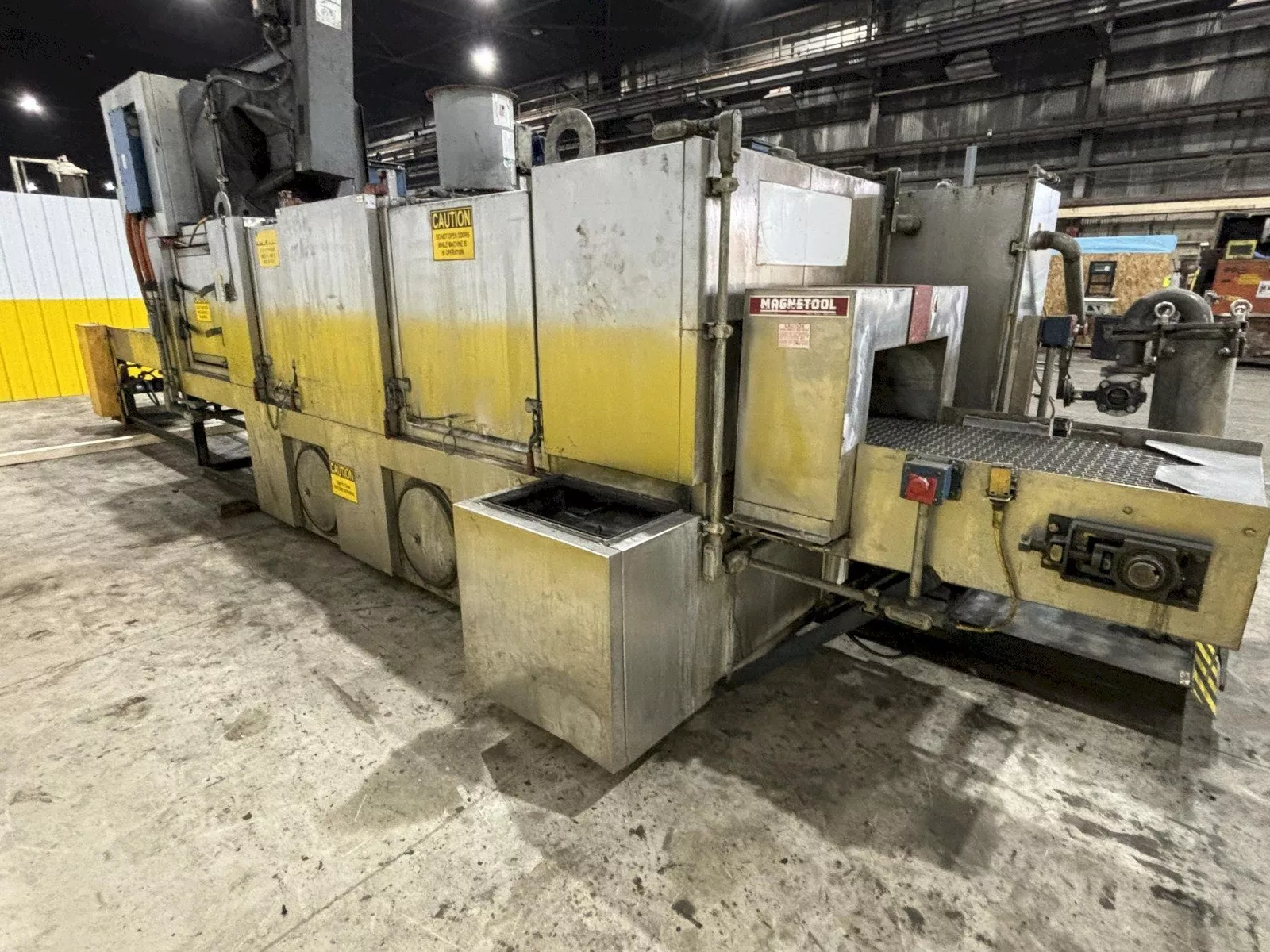
A 3-Stage Wash-Rinse-Blow Off Rotary Parts Washer Machine is an industrial cleaning system designed for high-efficiency cleaning, rinsing, and drying of parts. It is commonly used in manufacturing and maintenance applications to remove contaminants such as grease, oil, metal chips, dirt, and residues from components. Here’s a technical breakdown of the machine:
1. How It Works
This machine operates in three distinct stages:
- Wash Stage:
- The parts are cleaned using heated water or a cleaning solution (detergent-based or solvent-based).
- Pressurized spray nozzles target the parts from multiple angles to remove contaminants.
- The cleaning solution is usually recirculated through a filtration system to maintain effectiveness.
- Rinse Stage:
- After washing, the parts are rinsed to remove any residual cleaning solution or loosened debris.
- The rinse water is typically clean, deionized, or distilled water to prevent water spots or mineral deposits.
- Like the wash stage, the rinse system may also use recirculation and filtration.
- Blow-Off (Drying) Stage:
- High-velocity air is used to blow off water from the parts, ensuring they are dry and ready for further processing.
- Heated air may be used to enhance drying efficiency.
- Air nozzles are strategically placed to reach all surfaces, including internal cavities.
2. Machine Components
- Rotary Drum or Basket:
- Parts are loaded into a rotating drum or basket.
- The rotary action ensures even exposure to cleaning, rinsing, and drying, especially for complex shapes or parts with cavities.
- Spray Nozzles:
- High-pressure nozzles spray cleaning solution, rinse water, and air onto the parts.
- They are typically placed at multiple angles to ensure thorough cleaning and drying.
- Heating System:
- Heats the cleaning solution, rinse water, and drying air.
- Typical temperatures range from 50°C to 90°C (120°F to 194°F), depending on the application.
- Pump and Filtration System:
- Pumps circulate the cleaning solution and rinse water through the system.
- Filters remove debris and contaminants from the fluids, ensuring cleanliness and prolonging fluid life.
- Control Panel:
- PLC or manually operated control panel to manage washing time, rinse cycles, and drying parameters.
- Some systems offer programmable settings for different parts or cleaning requirements.
- Air Knife System (Blow-Off):
- High-speed air knives generate a focused stream of air to remove water efficiently.
- Often paired with an air heater to speed up drying.
3. Key Features
- Multi-Stage Cleaning:
- Wash, rinse, and blow-off stages ensure complete cleaning and drying in a single cycle.
- Rotary Motion:
- The rotary action enhances cleaning by exposing all surfaces of the parts to the cleaning process.
- Compact Footprint:
- Space-saving design suitable for workshop floors or manufacturing lines.
- Closed-Loop Filtration:
- Recirculating and filtering systems reduce water and chemical waste.
- Temperature Control:
- Adjustable heating ensures optimal cleaning performance for different contaminants and materials.
- Material Compatibility:
- Designed for metals, plastics, ceramics, or composites.
4. Applications
- Automotive Industry:
- Cleaning engine components, gears, brake parts, and other precision components.
- Aerospace:
- Removing oil, grease, and machining residues from turbine blades, landing gear, etc.
- Medical Equipment:
- Cleaning surgical tools, implants, and other medical devices.
- General Manufacturing:
- Cleaning components before assembly or painting.
5. Advantages
- Efficient Cleaning:
- High-pressure spray systems and rotary motion ensure thorough cleaning of intricate parts.
- Time-Saving:
- Combines washing, rinsing, and drying in one continuous process.
- Eco-Friendly:
- Recirculating fluids and filtration reduce water and chemical usage.
- Customizable:
- Settings can be tailored for specific parts and contaminants.
- Improved Surface Quality:
- Ensures parts are contaminant-free, improving the quality of subsequent processes like coating or assembly.
6. Key Specifications
| Parameter | Details |
|---|---|
| Cleaning Stages | 3 (Wash, Rinse, Blow-Off) |
| Rotary Drum Capacity | 10 kg – 500 kg (depending on model) |
| Spray Pressure | 2 – 10 bar (29 – 145 psi) |
| Temperature Range | 50°C – 90°C (120°F – 194°F) |
| Drying Air Speed | 100 – 200 m/s (focused air knives) |
| Power Requirements | 220V/380V, 50/60 Hz |
| Cleaning Fluid Capacity | 50 – 500 liters |
| Filtration System | Mesh filters or bag filters (5 – 50 microns) |
7. What to Look for When Buying
- Capacity:
- Choose based on the size and weight of parts you plan to clean.
- Cleaning Power:
- Higher pressure and temperature improve cleaning effectiveness.
- Build Quality:
- Look for corrosion-resistant materials (e.g., stainless steel).
- Ease of Operation:
- PLC controls with programmable cycles make operation easier.
- Maintenance:
- Opt for systems with easy-to-clean filters and accessible components.
- Energy Efficiency:
- Check for efficient heating and drying systems to minimize energy costs.
8. Common Manufacturers
This machine is an essential tool for industries that require high-performance, reliable cleaning systems to maintain precision and productivity.