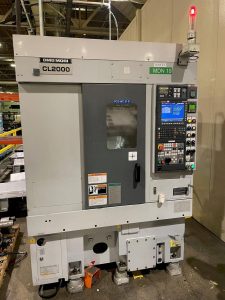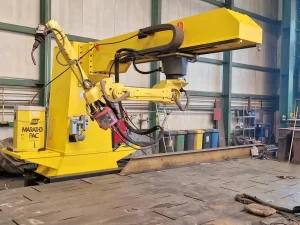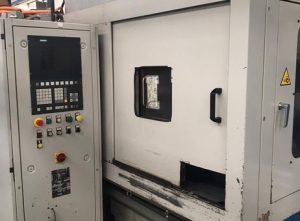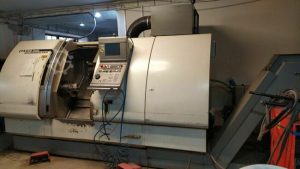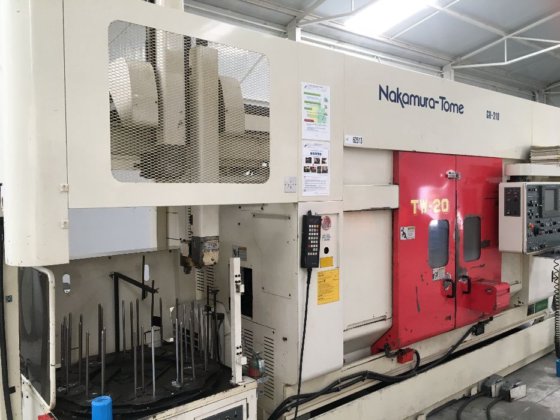
Technical Buyer’s Handbook: Assessing Pre-Owned, Used, Secondhand, Surplus CNC Machines Before Purchase NAKAMURA-TOME TW-20 with FANUC multi-axial ROBOT made in Japan
Technical Buyer’s Handbook
Assessing a Pre-Owned / Used / Second-Hand / Surplus
NAKAMURA-TOME TW-20 CNC Turning Center with FANUC Multi-Axial Robot (Japan)
Purchasing a pre-owned Japanese CNC production system such as the NAKAMURA-TOME TW-20 with a FANUC multi-axis robot requires careful technical evaluation. This type of system is typically used for high-volume precision turning with automated loading, often in automotive, aerospace, hydraulic, and precision component industries.
This handbook explains how a professional technical buyer should inspect, evaluate, and verify such a system before purchase.
1. Machine Overview
The NAKAMURA-TOME TW-20 is a twin-spindle, twin-turret CNC turning center designed for high-productivity automated manufacturing. Its architecture allows simultaneous machining operations, dramatically reducing cycle time.
Typical installations integrate:
- FANUC CNC control
- Multi-axis FANUC robot for loading/unloading
- Bar feeder or parts conveyor
- Parts catcher
- Chip conveyor
This creates a fully automated machining cell capable of 24-hour production.
2. Core Machine Architecture
Twin-Spindle Configuration
The machine uses:
- Main spindle
- Sub-spindle (counter spindle)
Parts can be transferred automatically from the main spindle to the sub-spindle for complete machining in one setup.
Advantages:
- Reduced handling
- Higher accuracy
- Lower cycle time
- Improved throughput
Twin Turrets
Each spindle is supported by a turret with multiple tools.
Typical configuration:
- 2 × 12 tool stations
- Live tooling capability
- Milling, drilling, tapping operations
This allows turn-mill operations on a single machine.
3. Technical Specifications
(Typical TW-20 configuration – values vary by year/version)
| Parameter | Specification |
|---|---|
| Machine Type | Twin-Spindle CNC Turning Center |
| Manufacturer | Nakamura-Tome (Japan) |
| CNC Control | FANUC (commonly 16T / 18T / 18i-TB) |
| Turrets | 2 |
| Tool Stations | 12 per turret |
| Live Tooling | Yes |
| Max Turning Diameter | ~165–270 mm |
| Max Turning Length | ~200 mm |
| Bar Capacity | ~51–65 mm |
| Spindle Speed | Up to 5000 rpm |
| Spindle Motor Power | approx. 7.5–15 kW |
| X-Axis Travel | approx. 193–195 mm |
| Z-Axis Travel | approx. 264 mm |
| Machine Weight | approx. 5,500–7,800 kg |
| Floor Space | approx. 3.4 m × 2.2 m |
4. FANUC Multi-Axial Robot Integration
A FANUC industrial robot is commonly integrated for automated part loading.
Typical robots used:
- FANUC LR Mate
- FANUC M-20 series
- FANUC M-10 series
Typical robot capabilities:
| Parameter | Typical Value |
|---|---|
| Axis | 6-axis articulated robot |
| Payload | 7–20 kg |
| Repeatability | ±0.02 mm |
| Reach | 700–1400 mm |
Functions in the cell:
- Raw part loading
- Finished part unloading
- Orientation and positioning
- Integration with conveyors or pallets
5. Critical Inspection Checklist Before Purchase
5.1 Mechanical Inspection
A professional buyer should inspect:
Spindle condition
Check:
- Spindle vibration
- Thermal growth
- Bearing noise
- Runout
Runout should typically be:
≤ 0.003 mm
Turret indexing accuracy
Verify:
- Index repeatability
- Tool station wear
- Live tooling engagement
Check backlash and locking force.
Ball screw wear
Examine:
- X-axis backlash
- Z-axis backlash
- servo load
Typical acceptable values:
Backlash < 0.01 mm
Guideways
Check for:
- Turcite wear
- lubrication condition
- stick-slip movement
6. CNC Control Evaluation (FANUC)
Inspect the control system carefully.
Check:
- Parameter backup
- Servo alarms
- ladder program
- axis following error
Important diagnostic screens:
Servo Load
Position Error
Axis Load
Alarm History
Verify the battery condition to avoid parameter loss.
7. Robot System Inspection
When the machine includes a FANUC multi-axis robot, verify:
Robot hours
Robots typically operate reliably up to:
40,000 – 60,000 hours
Check:
- Joint backlash
- repeatability
- encoder condition
Robot controller
Check the:
- FANUC R-30i or R-J controller
- robot teach pendant
- safety interlocks
- cell interface signals
8. Automation Cell Components to Verify
A typical TW-20 robotic cell includes:
- Robot loader
- safety cage
- pneumatic gripper
- parts conveyor
- chip conveyor
- bar feeder
Important inspection points:
- gripper wear
- pneumatic system leaks
- robot cell safety sensors
- PLC interface signals
9. Production Capability
A TW-20 automated cell can typically produce:
- automotive shafts
- hydraulic fittings
- aerospace connectors
- precision bushings
- valve components
Typical production performance:
| Parameter | Value |
|---|---|
| Cycle time | 20–120 seconds |
| Spindle utilization | >85% |
| Lights-out operation | Yes |
10. Key Advantages of the TW-20
High productivity
Twin turrets + twin spindles allow simultaneous machining.
Automation ready
Designed for robot integration and unmanned production.
Compact footprint
Despite its capabilities, it occupies relatively small floor space.
Proven Japanese reliability
Nakamura-Tome machines are widely used in automotive and aerospace production lines.
11. Common Wear Areas on Used TW-20 Machines
Professional buyers should pay attention to:
- turret clamping mechanism
- spindle bearings
- servo amplifiers
- coolant pumps
- chip conveyor motors
- hydraulic chuck cylinders
- robot wrist gearboxes
These are the most common refurbishment items.
12. Typical Market Value (Used)
Price varies by:
- year
- automation level
- hours
- condition
Typical ranges:
| Condition | Price |
|---|---|
| Machine only | …… |
| With robot cell | ….. |
13. Professional Buyer Recommendation
Before purchasing a used TW-20 robotic cell:
Always perform:
- Geometric accuracy test
- spindle vibration analysis
- servo diagnostic review
- robot repeatability test
- cutting test on real material
These steps ensure the machine can deliver production-grade accuracy and cycle times.