21/10/2025
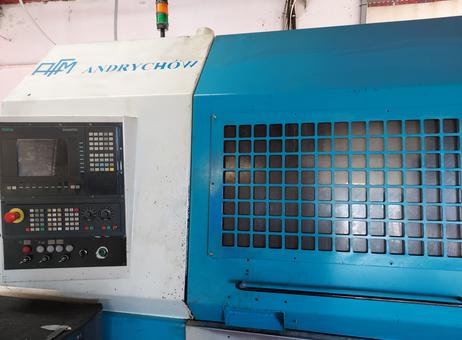
Insider Advice: What Successful Manufacturers Consider Before Buying a Used, Second-Hand, Pre-Owned, Surplus ANDRYCHÓW TAE 45E CNC Lathe C Axis made in Poland
Here’s an insider-level checklist and guidance that successful manufacturers use when considering buying a used, second-hand or surplus Andrychów TAE 45E (C-axis) CNC lathe (made in Poland). Use this to evaluate condition, risk and value before committing to purchase.
Why Consider the Andrychów TAE 45E
- The Andrychów brand (Poland) has a reputation in Central/Eastern Europe for robust machine tools designed for heavy industrial use.
- The TAE series (e.g., TAE 45N) offers a decent envelope (turning diameters ~350-390 mm, lengths ~500–1000 mm) in earlier listings.
- Buying a used one can be cost-effective if it’s in good condition and fits your production needs: fewer upfront costs vs new, often quicker lead times, good value if you assess wisely.
What to Check Before Purchase
Here are key areas to inspect and questions to ask, tailored to this machine type.
1. Machine History & Provenance
- Confirm build year, serial number, model exact (TAE 45E vs TAE 45N or older).
- Ask for proof of origin: manufacturer location (Poland), factory.
- What was its previous production use? Heavy duty vs light duty – this affects wear.
- How many shifts, how many years of continuous operation?
- Has it been maintained regularly? Are there service/maintenance logs?
- Why is it being sold now? (upgraded, closed shop, replaced by automation)
- Check if any major repairs or collisions occurred (spindle damage, crash, major machine rebuild).
2. Mechanical & Structural Condition
- Check the bed and ways for wear: lathe ways can become worn, reducing accuracy.
- Inspect the spindle and chuck: condition of the taper, run-out, stability, any wobble.
- Check C-axis (since you mention C-axis capability): Is the C-axis drive/servo functional? Is indexing accurate?
- Axis travel: check longitudinal (Z) travel condition, cross (X) travel, if axis backlash is within spec.
- Check tailstock or steady rest (if fitted): condition, alignment, wear.
- Inspect for signs of collision: dents, repairs, welds, missing guards, misalignment.
- Check the gearbox (if lathe uses gear train) for noise, play, wear.
- Check for lubrication system functioning: Are way/lubrication wipers intact? Are lubrication pumps running? If neglected, ways wear faster.
3. Spindle, Tooling & C-Axis
- Determine spindle type (direct drive vs geared) and check the condition of bearings: run spindle at speed, listen for bearing noise, measure run-out on test bar.
- Check tool turret or tool post system: condition of tool holders, indexing, repeatability.
- For machines with C-axis: verify the C-axis indexing accuracy and torque capacity. Does it hold the tool accurately at speed?
- Check chuck condition: jaws, mounting face, whether chucking has been done roughly.
- Inspect if there is a live-tool capability (if required) and whether tooling interface is standard/modern or obsolete.
- Review tooling availability: Are tool holders, inserts, live-tooling spares easy to source.
4. Electrical & Control Systems
- Confirm control system (e.g., Siemens Sinumerik, Fanuc, etc.). For example one TAE 45N spec lists “Sinumerik 828D Basic / Fanuc 0iT.”
- Inspect control panels: wiring cleanliness, no signs of burnt parts, water ingress, dust accumulation.
- Check servo drives, encoders, whether alarms or errors exist, whether spare parts are still available for this control version.
- Power supply: check whether machine was modified (voltage, phase) for previous owner; ensure your facilities match.
- Safety systems: e-stop, door interlocks, chip guards – these are important both for safety and for compliance.
5. Performance & Accuracy Testing
- Perform a test-cut if possible: turning a standard part and measuring results (surface finish, tolerances).
- Check axis movement: command a movement and back it, check backlash. Use dial indicator on tool tip or spindle face.
- Check repeatability: index the C-axis, return, check variation.
- Examine spindle run-out: measure with test bar. Any significant run-out → bearing wear or spindle damage.
- Thermal stability: after 30-60 min running, does machine stay accurate or drift? Older machines may shift more.
- Check C-axis speed and stability if doing live-tool or milling operations: vibration, chatter, noise.
6. Wear Items, Consumables & Remaining Life
- Check bed way condition: heavy usage means more wear → may need re-grind or refurbishment.
- Check spindle bearing hours: many hours mean upcoming cost for rebuild.
- Check turret/tool-changer condition, indexing mechanisms.
- Check if machine has been idle for a long time and whether neglect (rust, lubrication issues) has happened. Idle machines often need recommissioning.
- Evaluate availability of spare parts: For an older Polish machine, check whether parts (gears, motors, belts, controls) are still obtainable locally or require imports.
- Assess upcoming maintenance cost (spindle rebuild, way re-grind, drive overhaul) and factor into total purchase cost.
7. Installation, Fit & Facilities
- Check footprint and installation requirements: crane access, floor load, foundation.
- Verify whether you need to relocate the machine: transport costs, disassembly/assembly, alignment and leveling, recommissioning.
- Auxiliary systems: coolant system, chip conveyor/swivel, hydraulic systems, C-axis indexing mechanisms, tooling magazine etc.
- Check whether any add-ons (live-tooling, sub-spindle, etc) are fitted and in working order.
- Environmental factors: Ensure your facility can support the electrical, hydraulic, cooling, lubrication demands.
8. Total Cost & Risk Assessment
- Compare asking price with similar machines of same model/age/condition. Example earlier listing: TAE 45 on Polish site for ~45,000 PLN (~€10-12k depending on time) in 2019.
- Calculate total ownership cost: purchase price + transport + installation + any refurbishment + downtime risk.
- Consider machine downtime risk: older or heavily used machines may fail soon. Be sure there’s contingency budget.
- Consider resale value: A well-maintained Andrychów TAE 45 with C-axis and good tooling could have decent resale; a worn out one may be hard to re-sell.
- Check documentation: Are manuals, wiring diagrams, service history included? Lack of documentation increases risk.
- Consider the support network: Are there service engineers familiar with this brand/model in your country (Turkey) or region? If not, risk of longer downtime/higher cost.
Specific Red Flags for the Andrychów TAE 45E
Here are warning signs you should treat as serious red flags:
- No service history or unclear machine history (large number of prior owners, no records)
- Spindle exhibiting vibration/noise or excessive run-out
- C-axis drive not tested or non-functional (if C-axis is critical)
- Excessive backlash in axes or wear in ways indicating major refurb needed
- Control system obsolete with limited spare parts availability or unsupported version
- Machine heavily modified or had collisions/mishandling (e.g., repaired with non-OEM parts)
- Machine has been idle for long time without maintenance → risk of seized components, degradation of seals/lubrication
- Bed/grid worn beyond acceptable tolerance (affects precision)
- Costs + downtime combine to make purchase unviable compared to newer alternative.