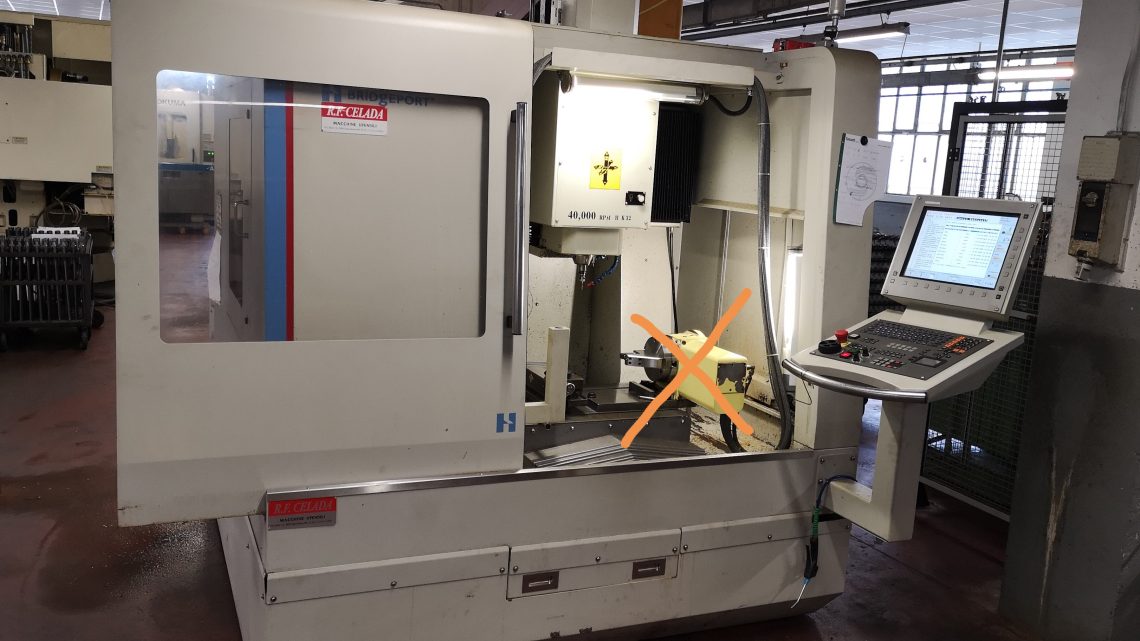
How Smart Engineers Assess a Pre-Owned, Used, Second-Hand, Surplus Bridgeport HSC 500 XP 3 made in UK Before Purchase
When assessing a pre-owned or surplus machine like the Bridgeport HSC 500 XP 3 (made in the UK) before purchase, smart engineers perform a thorough, structured inspection. Below is a detailed checklist and guidance you can apply — tailored for this kind of vertical machining centre — to help you evaluate condition, risks, remaining life and suitability for your shop.
Pre-Inspection Preparation
Before you visit the machine site:
- Ask the seller for the build/serial number, manufacturing date, original factory in the UK (to confirm provenance).
- Request documentation: maintenance logs, service history, any major repairs or rebuilds, list of hours or cycles if available.
- Review the machine’s specification: travel (X/Y/Z), table size, spindle motor/power, control type, any retrofits or upgrades.
- Prepare tools for inspection: feeler gauges, dial indicators, micrometre, clean lint-free cloths, flashlight, torque wrench if needed.
- Ensure power will be available to run the machine, and space to inspect access covers and lubrication system.
Inspection Checklist
Here’s a structured checklist, grouped by category, with specific things to check for an older HSC (High Speed) Bridgeport machine.
1. Visual & Structural Condition
- Check for corrosion or rust, especially on table surfaces, column faces, guides, bed base.
- Inspect the machine base/foundation – any cracks, misalignment, or previous damage.
- Examine the column – look for any repair welds, distortion, signs of knocks or mis-use.
- Check the table and T-slots – wear, surface flatness, damage in slots, burrs.
- Look at the guideways/ways (for example linear or roller ways) – are they clean, lubricated, have scoring or pitting?
- Review covers, guards, chip hoods – are they complete, original or missing? Missing guards may indicate heavy use or rough environment.
- Check for modifications: have any components been removed, altered or upgraded (eg spindle head changed, control retrofitted)? If so, request details.
- Accessory condition: tool changer (if fitted), coolant system, chip conveyor, doors/hatches – condition of operation and wear.
2. Mechanical Systems & Motion
- Power on the machine, jog each axis (X, Y, Z) slowly and listen/feel for unusual noises (grinding, scraping).
- Check backlash or play: use a dial indicator on table or axis, reverse direction gently and measure any free play. Excessive backlash can indicate worn screws or nuts.
- Check alignment: table movement should be smooth and uniform; check vertical (Z) axis for drift or inability to hold position.
- Spindle: run at various speeds (if possible). Listen for bearing noise, vibration. Check for spindle run-out using a test bar and dial indicator. Excessive run-out means spindle bearings may need replacement.
- Inspect lead screws, nuts, ball screws (if fitted) for wear or missing covers.
- Check lubrication system: Is the automatic lubrication functioning, are ways/oil flow evident? If the lubrication system is neglected that’s a red flag.
3. Electrical & Control Systems
- Inspect the control panel, wiring inside cabinets: look for overheating, burnt wires, poor cooling, dust accumulation.
- Ask about control system version, any upgrades – older controls may be harder to maintain or source parts for.
- Check whether all motors, drives, encoders are functioning; jog and verify actual movement vs commanded.
- Check emergency stop, safety interlocks, door switches are working properly.
- Examine condition of power supply and cables – any signs of over-heating or previous electrical issues.
4. Spindle & Tooling Interface
- Inspect the tooling interface: taper condition (e.g., BT, HSK if retrofit) for wear, rust, scoring.
- Check drawbar performance (if accessible): releases tools smoothly, holds firmly. A weak drawbar can cause vibration or tooling problems.
- Look at spindle cooling (if HSC spindle with cooling) – is the cooling system present, functioning, free of leaks?
- Running test: load starved vs loaded spindle to check power, torque, vibration. Ask if spindle has been rebuilt or bearing replaced.
5. Performance & Accuracy Testing
- If possible, perform a test cut: select a known material, tool, replica part and check surface finish, chatter/vibration, dimensional accuracy of output.
- Use dial indicator/test bar: check table flatness, axis straightness, spindle run-out, squareness of axes.
- Check repeatability: command a movement, return to zero and check reading.
- Thermal behaviour: after warm-up, check that the machine maintains position and doesn’t drift, especially for high speed (HSC) operations.
6. Consumables, Maintenance & Remaining Life
- Ask about when key consumables were last changed: spindle bearings, tool changer components, filters, coolant, ways/way wipers, belts/chains, lubrication lines.
- Check condition of coolant system: is coolant contaminated, filter condition, sump condition, chip management.
- Ask about how many hours or parts processed since major rebuild. The more usage/parts processed, the closer to major maintenance.
- Review availability and cost of spare parts (especially for a UK-made machine). Older machines may suffer from obsolescence of electronics or service.
- Compare estimated remaining life vs cost. A solid machine with good service history may be a bargain; one neglected may entail hidden repair costs.
7. Documentation & Provenance
- Confirm machine’s origin (“Made in UK”) and factory build records if possible. Confirm model number: HSC 500 XP 3 vs other variants.
- Review any service/repair history: Was the machine used in continuous production? Was it subject to heavy shifts, harsh conditions?
- Ask for original manual, wiring diagrams, spare parts lists – these help future maintenance.
- Get clear understanding of what is included in sale: tooling, fixtures, controllers, attachments, any warranty or return condition.
8. Cost-of-Ownership & Hidden Risks
- Determine transport/logistics cost (especially for Türkiye if import).
- Installation cost: foundation, leveling, anchoring, connection.
- Downtime risk: if machine fails soon after purchase, cost of repair could exceed savings.
- Consider future service availability: Are technicians familiar with the UK-build Bridgeport HSC machines? Are spares easily obtainable in Türkiye/Europe?
- Consider residual value: will this machine retain resale value, or would you be stuck if you needed to dispose of it?
Summary: Key Questions You Should Ask & Evaluate
- How many hours or parts has this machine processed since last major service or rebuild?
- Has the spindle been rebuilt or bearings replaced? When?
- Are there records of accuracy/leveling/alignment checks?
- Are there any major repairs, collisions or damage in its history?
- Are the control and drives original? Or have they been upgraded/modified?
- Are all major systems functioning (cooling, lubrication, chips, guards)?
- What condition are the ways, screws, guides in? Is there excessive wear?
- What are the service/support options for this machine locally?
- What are the total costs (purchase + transport + installation + any anticipated refurbishment) and how do those compare to a new or newer alternative?
Red Flags to Watch For
- No or incomplete service history, missing documentation.
- Excessive noise or vibration in axis movements or spindle.
- Spindle run-out beyond acceptable tolerance.
- Large amounts of wear on table way surfaces, T-slots damaged.
- Signs of major repairs (e.g., welded cracks) without full disclosure.
- Obsolete control systems or electronics difficult to support.
- Missing guards/accessories, improper chip/ coolant management (which often means heavy wear).
- Too good to be true price without justification – may hide needed major rebuild.
- No ability to test machine under power/live conditions before purchase.
By following this detailed checklist you’ll be able to assess the real condition of the Bridgeport HSC 500 XP 3, estimate remaining useful life, identify any hidden costs or risks, and make a well-informed decision whether the purchase is a good value or too risky.