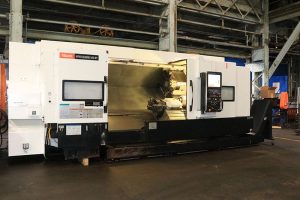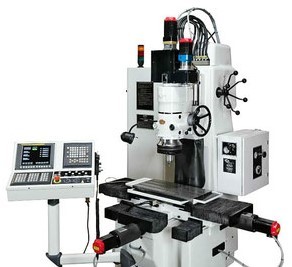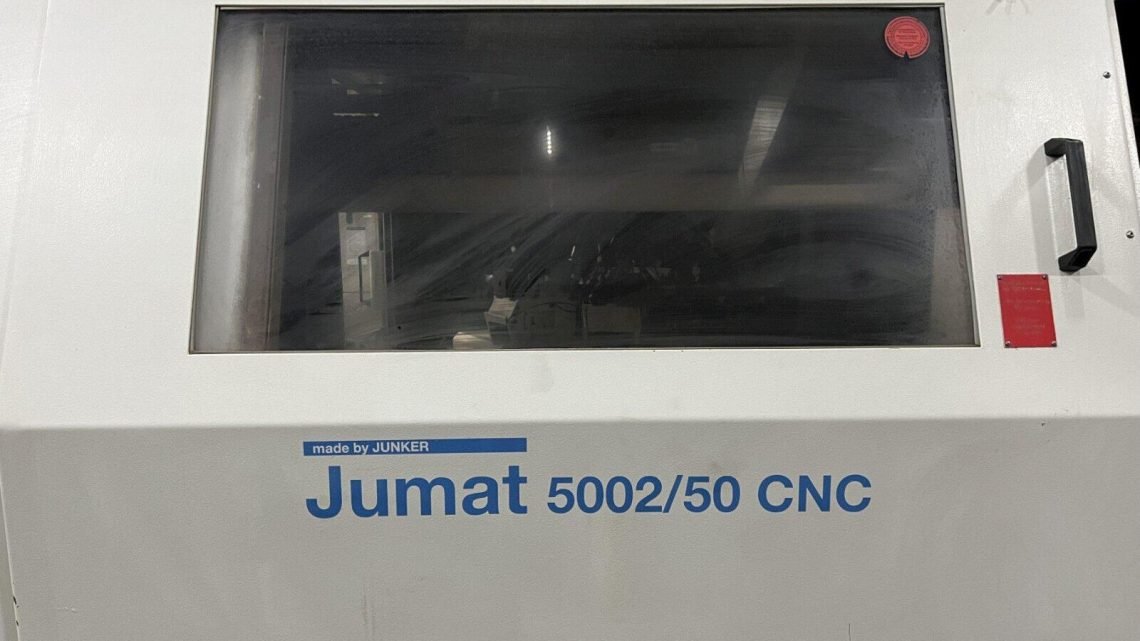
From Inspection to Installation: What to Verify Before Buying a Pre-Owned, Used, Secondhand, Surplus JUNKER JUMAT 5002/50 CNC Crank Shaft Grinding made in Germany
Purchasing a pre-owned JUNKER JUMAT 5002/50 CNC crankshaft grinding machine can deliver exceptional value—provided the evaluation is methodical and technically grounded. These machines are engineered for high-precision, high-volume grinding of crankshafts, often running in demanding automotive production environments. That means wear patterns, maintenance history, and configuration details matter just as much as headline specifications.
Below is a structured, professional checklist that takes you from initial inspection through commissioning.
1) Machine Overview & Application Fit
Before any physical inspection, confirm that the machine configuration matches your production requirements:
- Grinding concept: External cylindrical / crankshaft pin & main journal grinding
- Typical use case: Automotive crankshafts, large batch production
- Control system: Commonly Siemens or Fanuc (varies by build year)
- Automation: Loader/unloader, in-process gauging, steady rests, balancing systems
Key question:
Does the installed configuration (wheel arrangement, workholding, gauging) match your target part family?
2) Mechanical Condition & Geometry
Bed & Structural Integrity
- Inspect the machine base and casting for cracks, repairs, or deformation
- Check for leveling condition and evidence of improper installation
Linear Axes (X/Z)
- Measure backlash and positioning accuracy
- Listen for abnormal noise during rapid traverses
- Inspect guideways (hydrostatic or linear) for scoring or wear
Spindle & Wheelhead
- Verify:
- Bearing condition (noise, heat, vibration)
- Runout at spindle nose
- Check wheelhead swivel and positioning accuracy
Workhead & Tailstock
- Inspect:
- Alignment between centers
- Clamping force and hydraulic stability
- Rotational smoothness
Critical point:
Crankshaft grinding requires micron-level accuracy—any geometric deviation directly affects roundness and journal alignment.
3) Grinding System & Process Components
Grinding Wheels & Mounting
- Confirm wheel specification compatibility with your materials
- Inspect flange condition and mounting surfaces
Dressing System
- Check:
- Diamond dresser condition
- CNC-controlled dressing cycles
- Verify repeatability of dressing profiles
Coolant System
- Ensure:
- Proper filtration (fine particles typical in crank grinding)
- Pump pressure and flow consistency
- Look for contamination or neglected maintenance
Steady Rests & Supports
- Essential for crankshaft stability:
- Check wear on contact pads
- Verify hydraulic/pneumatic actuation
4) CNC Control & Electrical System
Control Unit
- Identify exact model (e.g., Siemens 840D, Fanuc series)
- Verify:
- Boot stability
- Parameter backup availability
- Alarm history
Drives & Motors
- Check:
- Axis drive response
- Spindle load behavior under test grinding
Electrical Cabinet
- Inspect:
- Wiring condition
- Cooling fans and filters
- Signs of overheating or modification
Important:
Older machines may still be excellent mechanically, but control obsolescence can impact long-term serviceability.
5) Accuracy Testing & Trial Grinding
A machine like the JUMAT 5002/50 should never be purchased without a live test.
Recommended Tests:
- Roundness measurement on journals
- Cylindricity check
- Surface finish (Ra) evaluation
- Cycle repeatability over multiple parts
Acceptance Indicators:
- Stable results across repeated cycles
- No drift in dimensions
- Consistent surface quality
6) Automation & Productivity Systems
Many JUMAT machines are integrated into automated lines.
Verify:
- Loader/unloader condition
- Sensor functionality
- In-process gauging system calibration
- Cycle time vs. stated production rate
Risk area:
Automation components are often the most expensive to repair or retrofit.
7) Documentation & Service History
Request and review:
- Maintenance logs
- CNC parameters backup
- Electrical schematics
- Mechanical drawings
Check:
- Frequency of preventive maintenance
- Replacement history of critical components
8) Logistics & Installation Planning
Machine Weight & Footprint
- Confirm:
- Transport requirements
- Floor load capacity at destination
Foundation Requirements
- Some crankshaft grinders require:
- Reinforced concrete base
- Vibration isolation
Utilities
- Electrical supply (voltage, phase, amperage)
- Coolant system capacity
- Air/hydraulic requirements
9) Commissioning & Alignment
Upon installation:
- Perform full machine leveling and alignment
- Recalibrate:
- Axes
- Gauging systems
- Dressing cycles
- Run test grinding validation again
10) Risk Assessment & Final Decision
Strong Purchase Indicators:
- Verified geometric accuracy
- Clean service history
- Stable CNC system
- Complete tooling and accessories
Red Flags:
- Inconsistent grinding results
- Missing documentation
- Excessive spindle vibration
- Worn automation components
Conclusion
A pre-owned JUNKER JUMAT 5002/50 CNC crankshaft grinder can be a highly productive, precision asset when properly evaluated. The key is not just confirming that the machine “runs,” but proving that it can consistently deliver micron-level accuracy under real production conditions.
A disciplined inspection process—covering mechanics, control systems, grinding performance, and installation requirements—ensures that your investment translates into reliable, long-term production capability rather than unexpected downtime.
Below are typical technical specifications for a JUNKER JUMAT 5002/50 CNC Crankshaft Grinding Machine (Germany).
(Note: exact values can vary by year, configuration, and automation package.)
| Specification | Metric | Imperial |
|---|---|---|
| Machine Type | CNC Crankshaft Grinding Machine | CNC Crankshaft Grinding Machine |
| Grinding Length | 500 mm | 19.7 in |
| Max Swing Diameter | 500 mm | 19.7 in |
| Max Workpiece Weight | 150 kg | 330 lbs |
| Grinding Wheel Diameter | 500 – 600 mm | 19.7 – 23.6 in |
| Grinding Wheel Width | 80 – 120 mm | 3.1 – 4.7 in |
| Wheel Speed | Up to 120 m/s | Up to 23,600 ft/min |
| Workhead Speed | 20 – 300 rpm | 20 – 300 rpm |
| X-Axis Travel | Approx. 300 mm | 11.8 in |
| Z-Axis Travel | Approx. 600 mm | 23.6 in |
| Positioning Accuracy | ±1 µm | ±0.00004 in |
| Repeatability | ±0.5 µm | ±0.00002 in |
| Surface Finish | Ra ≤ 0.4 µm | Ra ≤ 16 µin |
| Spindle Power | 15 – 30 kW | 20 – 40 hp |
| Control System | Siemens / Fanuc CNC | Siemens / Fanuc CNC |
| Machine Dimensions (L x W x H) | Approx. 4000 x 2500 x 2200 mm | 157 x 98 x 86 in |
| Machine Weight | Approx. 8,000 – 10,000 kg | 17,600 – 22,000 lbs |