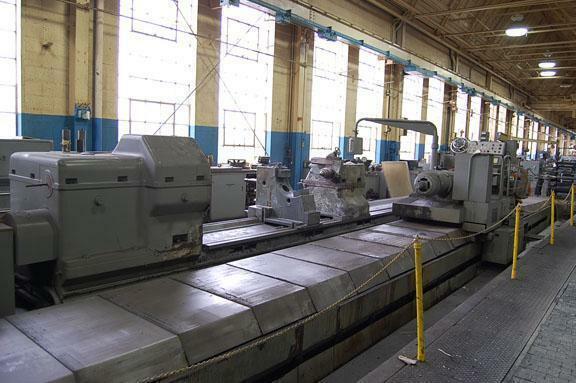
From Factory Floor to Your Workshop: Evaluating a Pre-Owned , Used , Secondhand, Surplus CNC Machines Before Purchase WALDRICH WSIII40 Roll Grinder made in Germany
Here is a robust, multi-phase guide you can use when evaluating a pre-owned / surplus WALDRICH WSIII40 roll grinder (made in Germany) — from initial screening through on-site testing, measurement, and final decision. Because roll grinders are heavy, complex, high-precision machines, the inspection must be especially thorough. Use this as a reference checklist and decision framework.
I also include what I was able to find about the WSIII40 (or similar Waldrich “WSIII / WS III” series) to help you benchmark expected specifications and detect exaggerations.
What I found: Reference / Contextual Data for Waldrich “WSIII” / WS III / Roll Grinders
Before the inspection, you should know what a “reasonable” spec is for a WSIII-type machine so you can detect inflated claims or mis-representations.
- There is a listing for a “WSIII 40” roll / heavy duty cylindrical grinder by Waldrich
- Waldrich Siegen is a well-known German manufacturer of heavy machine tools including roll grinders, milling, boring, grinding, etc.
- Waldrich’s “ProfiGrind” roll grinder technology emphasizes:
• Very rigid design with cast-iron structures, high stiffness, damping
• Use of hydrostatic guideways in many roll grinders to deliver wear-free, backlash-free motion over long life.
• Grinding wheel powers up to hundreds of kilowatts, with large roll weights and diameters in high-end units.
• Modular designs, measuring / compensation, cambering / crowning, steady rests, automation features in high-end models.
- A listing for “Waldrich Siegen Roll Grinder” shows a machine with max roll diameter 2,000 mm, roll weight up to 60 t, grinding wheel rpm 450–1,800, travel distances, etc. (not necessarily WSIII40, but illustrative of the scale)
These are supporting data points but do not correspond exactly to WSIII40; they help you set expectations (large mass, heavy work capacity, precision, stiffness).
Evaluation / Inspection Framework
Below is a structured inspection / evaluation plan you can use when assessing a used WSIII40. Bring precision metrology tools (indicators, test bars, micrometers), and if possible have a specialist in roll grinders or machine tool metrology with you.
Phase 1: Pre-Purchase / Remote Screening
Before visiting the site, gather as much background info and documentation as possible. This helps you decide whether the machine is worth a visit and prepare what to test.
Ask / Request:
- Nameplate photos
- Mechanical nameplate (make, model “WSIII40”, serial number, year of manufacture)
- Electrical / control cabinet nameplate (voltage, phases, power draw, controls)
- Specification / brochure / technical sheets
- Official WSIII40 spec sheet (or Waldrich roll grinder documentation)
- Mechanics (max roll diameter, roll length between centers, max workpiece weight, grinding wheel specs, axis travels, speeds)
- Control / CNC / Automation details
- Which control brand / system (CNC, manual + digital readout, servo / hydrostatic)
- Axis drives (servo, hydrostatic)
- Any automation (e.g. automatic dressing, cambering, roll change, measuring systems)
- Operational history
- Hours of use, grinding hours, idle time
- Types of rolls ground (material, intermittency, rough vs finish)
- Duty profile (heavy roughing vs fine finishing)
- Maintenance & repair history
- Spindle rebuilds, guideway or slide repairs, bearing replacements
- Any major overhauls (bed refurbishment, headstock rebuilding)
- Records of calibration, alignment, measuring systems servicing
- Accessories / tooling / spare parts included
- Steady rests, tailstock, cambering systems, dressing units, measuring probes
- Spare grinding wheel spindles, motors, control modules, sensor components
- Photos / video of machine in operation
- Movements of axes, grinding wheel rotation, roll mounting / change, dressing cycles
- Close-ups of guideways, headstock, wheel spindles, structural components
- Reason for sale
- Is the machine being replaced, decommissioned, failing, underperforming?
- Facility / shop conditions
- Cleanliness, dust, coolant contamination, vibration, environment
- Maintenance habits: was the machine run in “dirty shop” or clean conditions?
- Logistics & installation info
- Approx weight, footprint, foundation (bed block, grouting), power requirements, floor load capacity
- Access for disassembly, rigging, crane paths
If the seller is evasive or cannot provide many of these, that’s a warning sign.
Phase 2: Visual / Structural Inspection (On Site)
When you arrive, before powering up, inspect the machine’s mechanical and structural integrity.
- Examine the machine frame, base, casting, bed for cracks, past weld repairs, distortions, uneven surfaces
- Inspect guideways / slide surfaces for pitting, corrosion, scoring, wear marks
- Check way covers, telescopic covers, guards / bellows for damage, missing parts, poor repairs
- Look closely at the headstock / grinding wheel spindle housing, taper mount, bearings area for signs of wear, damage or misalignment
- Inspect tailstock, steady rests, supports for play or misalignment
- Examine wiring, cable carriers, junction boxes, conduits for patched wiring, exposed insulation, sagging cables
- Look for evidence of leaks, coolant, oil, seepage near ways or hydraulic / lubrication systems
- Inspect dressing units (if present) for wear, alignment, actuation mechanism condition
- Observe roll mounting / chucks / work supports for wear or damage
Where safe, manually (or with drive in safe / inch mode) move the grinding carriage or traverse axis to feel for binding, bumpiness, or stiction.
Phase 3: Motion, Backlash & Kinematic Tests
- Command slow, controlled motion of the grinding carriage / cross / traverse axes (X, Z, maybe Y) to feel smoothness and consistency
- Use a dial indicator or test indicator to measure backlash / lost motion in each axis (push-pull) at multiple positions
- Reverse direction at travel endpoints to detect hysteresis or deadband
- Check ball screws, linear guides, gibs, nuts, couplings for looseness or play
- Command small feed moves and verify movement is continuous and without jumps
- Cycle axis reversal repeatedly to see if backlash or behavior changes after repeated cycles
Phase 4: Grinding Spindle / Wheel / Tooling Tests
- Power up the grinding wheel spindle (if safe) and spin at various speeds; listen / feel for bearing noise, vibration, hum
- Use a test bar or wheel stub and dial indicator to measure runout at the wheel mounting, flange, spindle nose
- Test acceleration / deceleration response; check whether it accelerates smoothly without overshoot or oscillation
- Inspect wheel mounting, flange, taper / bore for wear or misfit
- Operate the wheel dressing mechanism (if installed) and verify it functions, is aligned, smooth, precise
Phase 5: Control / Electrical / Drive / Cabinet Inspection
- Open control / power cabinets, inspect wiring, connectors, relays, fuses, power modules, servo drives
- Look for signs of overheating: discoloration, melted insulation, scorched contacts
- Check drive modules, interface boards, sensors, cabling for damage or signs of prior faults
- Examine power cabling, conduit, shielding, strain relief
- Power up control panel (if possible): test buttons, axis controls, emergency stops, limit switches / interlocks
- Navigate control menus (if CNC): check parameter files, hone in on axis offsets, alarm logs, error history
- Test safety interlocks: opening guards or doors must halt motion
- If there are encoders, scales, or position feedback systems, check their readouts and consistency
Phase 6: Operational / Test Grinding Under Load
If the seller permits, doing real grinding under load is one of the most revealing tests.
- Run a dry / “air” motion test (no grinding) that exercises traverse, wheel head movement, axis sequencing
- Perform a test grind on a known roll or cylindrical test piece: check surface finish, geometric accuracy, absence of chatter
- Run a continuous grinding cycle over moderate lengths; after the run, remeasure critical axis dimensions, check for drift, axis alignment, and accuracy
- After warm-up, repeat backlash, runout, axis tests to see whether tolerances shift
- Operate the dressing cycle repeatedly and check consistency, wear, alignment
Watch for vibration, drift, temperature changes, error messages, or inconsistencies mid-run.
Phase 7: Metrology, Accuracy & Calibration Checks
- Use calibrated gauge blocks, precision test bars, or certified artifacts to verify alignment, straightness, squareness
- Test repeatability: move to reference, retract, return, measure deviation
- On the test grind, measure roundness, cylindricity, taper, surface finish, geometric deviation
- After prolonged grinding, re-check axis offsets, backlash, and tool geometries to detect drift
- Compare measured tolerances to your part requirements, and to what a machine like WSIII type might deliver
Phase 8: Infrastructure / Installation / Practical Constraints
- Ensure your shop floor can support the machine’s static weight and any dynamic loads (roll grinders are massive)
- Verify rigging / path / crane / hoist access for removal, transport, and reinstallation
- Confirm power supply compatibility (voltage, phases, current capacity)
- Confirm coolant / filtration / lubrication / hydraulic / pneumatic supply systems are adequate
- Plan for foundation, leveling, anchor blocks, vibration damping if needed
- Ensure space and access for maintenance, interior of cabinet, slides, spindle area
- Confirm steady rest / auxiliary support systems (for long rolls) and their condition
Phase 9: Decision Criteria, Red Flags & Negotiation Leverage
After your inspection and tests, organize your findings into decision criteria. Below is a rubric you can use.
Good / Acceptable Signs:
- Major structural integrity is solid (no cracked frames, heavy repairs)
- Guideways and slides show manageable wear, no heavy pitting or scoring
- Axis motion is smooth and backlash is within acceptable limits
- Grinding spindle runs quietly, low vibration, minimal runout
- Dressing mechanism (if present) functions reliably
- Control and electronics are in good order, no burnt modules, responsive control
- Test grind produces good surface finish and maintains geometric tolerances
- Tolerances hold after warm-up, minimal drift
- Essential accessories and steady rests are included and functional
Red Flags / Deal-Breakers:
- Major cracks, weld repairs on structural components
- Severe wear on guideways or slide surfaces that require re-scraping or replacement
- Axis binding, inconsistent motion, high backlash
- Spindle noise, vibration, excessive runout, unreliable spindle performance
- Nonfunctional dressing mechanism or misalignment
- Burnt wiring, damaged control modules, missing electronic units
- Test grinding shows chatter, drift, geometric deviations outside acceptable tolerances
- Significant drift or loss of accuracy after warm-up
- Replacement parts (e.g. spindle bearings, motors, controls) are obsolete or very expensive
- Seller refuses live test, documentation, or makes vague claims
Use any observed defects or deviations as negotiation leverage: discount, spare parts, extended warranty, or inclusion of calibration / re-scraping work.
Finally, document everything: photos, videos, measurement logs. That provides you with evidence for future reference or warranty claim.