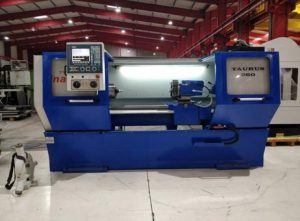
From Factory Floor to Your Workshop: Evaluating a Pre-Owned, Used, Secondhand, Surplus CNC Machine Before Purchase Kapp Niles KX 260 Twin CNC Gear Grinding Machine made in Germany
If you’re evaluating a pre-owned / second-hand / surplus unit of the Kapp Niles KX 260 TWIN gear grinding machine (made in Germany) for purchase, here is a comprehensive checklist—tailored to this machine model—to guide your inspection and decision. I’ll walk you through the key specifications, what to look out for, how to assess condition, and how to value the purchase in context of your workshop.
1. Machine Overview & Key Specifications
Before you dive into condition checks, it’s useful to understand the machine’s capabilities and typical configuration.
- The KX TWIN series is designed for continuous generating grinding with dressable and non-dressable tools.
- Specifically for the KX 260 TWIN:
- Max tip diameter ≈ 260 mm.
- Module range approx. 0.5 – 6 mm (for the 260 version) according to manufacturer spec.
- Max face width approx. 320 mm (or 520 mm depending on configuration) and helix angle ±45°.
- Machine concept: Two identical workpiece spindles arranged on opposite sides of a rotary indexing table, allowing one part to be machined while the other is loaded/unloaded, thus minimizing idle time.
- Control system: Often uses Siemens Sinumerik 840D (or variant) in Kapp Niles machines. For example listings of used KX 260 TWIN show “CNC control … Siemens Sinumerik 840 DSL.”
- Manufacturer: Kapp Niles is a German-based specialist in gear and profile finishing machines.
Understanding these specs helps you assess whether the machine meets your workshop’s requirements (gear size, module, face width, batch size, automation, etc.).
2. Pre-Purchase Inspection Checklist
When evaluating a used machine like this, you want to cover mechanical, electrical / control / software, metrology / accuracy, running hours & maintenance history, and ancillaries / automation. Below is a detailed checklist, with notes tailored to the KX 260 TWIN:
A. Mechanical & Structural
- Check for obvious signs of wear, damage or repair:
- Bed, column, rotary table: look for cracks, excessive wear, missing covers, signs of collision.
- Spindles (both workpiece spindles and tool spindle): check run-out, bearing noise, vibration, heat.
- Indexing rotary table: smooth motion, no backlash, accurate indexing, smooth loading/unloading cycle.
- Tool spindle & dressing unit: since this machine can use dressable and non-dressable grinding tools, ensure the dressing mechanism works cleanly (axis movement, tailstock column if included). The machine spec mentions “integrated single spindle dresser … aligned with tool by turning tailstock column”.
- Automation / loading system: For the twin spindle concept to pay off, loading/unloading must work reliably. Check conveyor, gantry loader or robot if included.
- Coolant / filtration system: Grinding machines demand good coolant cleanliness; check filters, pumps, chiller, sump condition.
- Grinding wheel/tooling condition: Are the wheels included? Are dressers present? Are spare wheels/tools available? Check wear.
- Cleanliness of machine: A well-used grinding machine may have metal dust, but excessive debris or neglect may signal poor maintenance.
- Past collisions or reparations: Ask for service records; heavy collisions can affect alignment permanently.
B. Accuracy, Metrology & Test Parts
- Ask for last alignment / calibration report. For a gear grinding machine, accuracy is critical: flanks, backlash, lead error, profile error, tooth pitch, surface finish.
- Run a test piece if possible: confirm dimensional and geometric tolerances against what you plan to produce.
- Check the optional measuring/inspection device if included: According to catalog, Kapp Niles offers optional integrated measuring devices to measure and evaluate gear qualities directly in the machine.
- Confirm run-out of both spindles, verify integrity of tailstocks or support units.
- Check thermal stability: any hot spots, cooling issues, ambient conditions of prior installation.
C. Control / Electrical / Software
- Identify control type: likely Siemens 840D or variant. Confirm version, licensing and condition. For example listings show “Siemens 840D” in used units of KX 260S (similar series).
- Inspect control cabinet: cooling, wiring, signs of burns or modifications.
- Ask about software version, purchased options (automation modules, measuring modules).
- Check interface responsiveness, machine logs, alarm history.
- Inspect motors and drives: are they original? Are parts still available?
- Evaluate power supply and installation requirements (voltage, consumption, grounding).
- Confirm safety equipment and compliance (safety interlocks, guards, emergency stop).
- For export to Türkiye: check if control language, documentation, spare parts supply will work locally.
D. Running Hours & Maintenance History
- Ask seller for machine age, installation date, total hours or parts count (e.g., cycles, teeth ground). Example: a listing of KX 260S said “Only 18,321 total run hours” for a machine installed 2019/2020.
- Service logs: lubrication schedule, spindle bearing replacements, dressing unit maintenance, coolant changes.
- Check whether machine was used on full production cycles or intermittently — heavy usage vs lighter usage influences wear.
- Ask for details on any major repairs (spindle rebuild, gearbox, indexing table overhaul).
- If possible, ask about previous running conditions: full shift? number of operators? environment (clean vs dirty workshops) affects life.
- Request any RPM logs or spindle run history; if possible detect signs of overheating or overloads.
E. Ancillaries, Tooling & Cost of Ownership
- Confirm whether machine comes with: work-holding fixtures, tailstocks, loading automation, robot or gantry, pallet systems. These add value significantly.
- Tooling: Grinding wheels, dresser rolls, measuring probes — are they included, need replacement, what cost?
- Installation & relocation cost: The machine weight and footprint matter. Example spec shows floor space and machine weight for KX 260S: ~7,944 mm × 4,749 mm × 3,676 mm high; machine weight ~17,000 kg.
- Consider spare parts availability: Since the machine is German-made, availability in your country and shipping time are important.
- Training and programming: Gear grinding machines require skilled operators and setup time; factor in training cost/time.
- Utilities: Power consumption, cooling, extraction (dust/abrasive), floor loading, vibration isolation.
3. Fit for Your Workshop: Key Questions
When considering for your workshop context, ask:
- Does the machine’s workpiece size capacity (max diameter ~260 mm, as per spec) align with your parts? If you need larger gears, this may be limiting.
- Are your modules within the machine’s range (up to ~6 mm)? If you use very large modules or special helical angles, check capability.
- Do you require large batch production to benefit from twin-spindle concept? If you produce single pieces or small batches, the twin spindle may not deliver full benefit.
- Is automation included (loader, robot)? If not, the cycle time advantage may be diminished.
- Is your workshop environment suitable (foundation, utilities, cleanliness, operator skill)? Gear grinding demands high precision.
- What is your maintenance capability? If you cannot maintain high-end spindles or monitors, the machine may become a liability.
- Cost vs return: The acquisition cost is only one part—the cost of ownership (tooling, maintenance, training, downtime) matters.
4. Pricing & Value Considerations
Since this is a used machine, valuation must reflect condition, included accessories, and remaining life. Some factors:
- Age, hours, condition: A machine installed recently with low hours is worth more. Example: KX 260S listed with ~18,300 hours and “excellent” condition.
- Included automation and tooling: a twin-spindle machine without automation is less valuable than one with full robot/loader and tooling.
- Spare parts / accessories: If many consumables or tool wheels need replacement, cost will add up.
- Market availability: According to used machinery listing sites, there are few KX 260 TWIN machines for sale, which may influence bargaining power.
- Transport, installation, commissioning, and set-up cost: Especially when importing into Türkiye, shipping, customs, foundation, alignment, and start-up cost can be significant.
- Risk: Older machine or one with unknown history carries risk of hidden wear (e.g., spindle bearings, gearboxes) which may require expensive rebuild.
Suggested approach: Request a full condition report (see checklist above), obtain quotes for any necessary rebuild/repair that you find, and then negotiate price accordingly—ideally you’d aim for a discount that reflects the cost of bringing it to “good running” state plus an allowance for risk.
5. Red Flags to Watch Out For
During inspection & negotiation, watch for:
- Missing service/maintenance records or vague history (“we don’t know hours”)
- Spindle noise, vibration, heat—especially on start-up
- Indexing table backlash or uneven motion
- Grinding wheel system worn out, missing dressers, excessive wheel run-in time
- Control or software issues: outdated version, missing licenses, rusty cabinet
- Poor coolant/filtration system condition—contaminated coolant may indicate neglected maintenance
- Automation/loader issues: may be non-functional or partial, reducing machine productivity
- Parts not included: fixtures, tailstocks, tooling missing or must be purchased separately
- Foundation or installation issues: machine may have been moved, re-installed incorrectly, affecting accuracy
- If machine has been idle for long, check for rodent damage, seized lubrication pumps, rusty slides.
6. Due Diligence & Integration Plan
If you decide to purchase, plan for:
- Pre-purchase trial if possible: Run the machine with a test workpiece to verify process
- Inspection by independent service or metrology firm (especially for spindles, table alignment, control)
- Budget for refurbishment: bearings, spindle re-alignment, tool wheel dressers, coolant refresh
- Transport & installation: Plan floor/ foundation, crane capacity, vibration isolation, utilities (power, air, extraction)
- Operator training: Gear-grinding is specialized—ensure you have or hire trained staff
- Spare parts stock: Immediately order critical consumables (grinding wheels, dressers, filters)
- Commissioning & acceptance plan: Define performance criteria (accuracy, cycle time, scrap rate) and ensure seller assist if possible
- Maintenance schedule: Set up preventive maintenance, record-keeping, monitor hours/usage.
7. Summary & Recommendation
In summary: the Kapp Niles KX 260 TWIN is a high-precision, production-oriented gear grinding machine with twin-spindle indexing table concept, designed for medium to large batch gear grinding. For a second-hand purchase, you must focus on:
- verifying mechanical/structural condition (especially spindles and table)
- verifying metrology/accuracy capability
- checking control/electrical/software status
- checking included automation and tooling
- ensuring cost of ownership is understood (utilities, maintenance, spare parts)
- factoring in transport/installation/integration costs into your country
- ensuring alignment with your production needs (gear size, module, batch size)