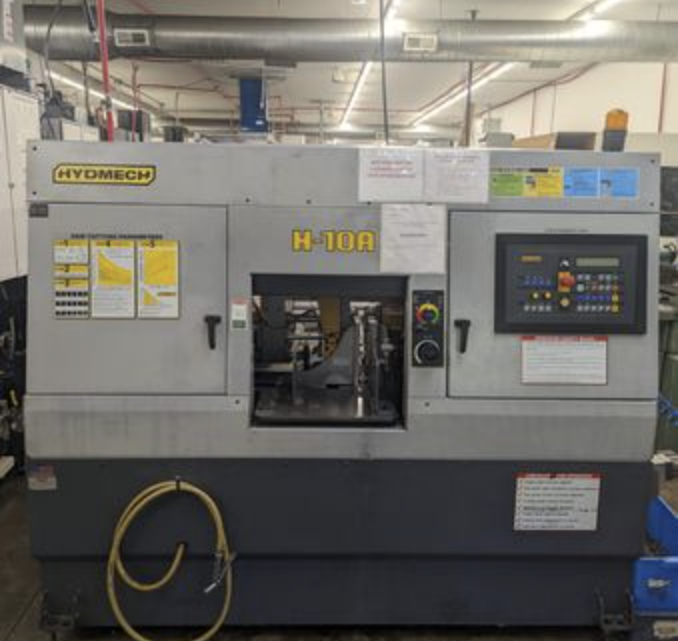
CNC Specialist’s Guide: Selecting the Right Used, Surplus, Secondhand, Pre-Owned HYD-MECH H10A Horizontal Bandsaw made in Canada
If you’re considering acquiring a used or surplus HYDMECH H10A horizontal bandsaw, here’s a professional guide to help you select the right one — focusing on what to check, risks, and how to maximize value.
Why the H10A remains a popular choice for secondhand buyers
- The H10A is a well-known automatic horizontal bandsaw with good cutting capacity: 10″ × 10″ at 90°, round capacity 10″, blade size 1¼”, and blade speed typically 40–350 sfm.
- With a 5 HP blade motor and hydraulic downfeed / vise, it’s engineered for heavy-duty and repetitive metal cutting — making it suitable for fabricators, machine shops, structural steel cutting, and all sorts of metal stock cutting needs.
- The machine is common and widely supported: parts and service support for HYDMECH saws extend globally, which helps ensure replacement parts remain available even for older units.
- Buying used often yields significant cost savings compared with a new industrial bandsaw, with savings potentially outweighing added maintenance costs — especially if you inspect carefully before purchase.
What to inspect when considering a used H10A
When you’re evaluating a used H10A (or any metal-cutting bandsaw), these are critical areas that often determine long-term reliability, cutting accuracy, and maintenance cost.
| Component / Feature | What to Check & Why |
|---|---|
| Frame & structure | Check the cast-iron frame and structure for cracks, weld repairs, or distortions. Any structural damage reduces rigidity and can compromise cut accuracy. |
| Wheels & wheel bearings | Rotate wheels by hand: check for play or wobble, inspect rubber tires for cracks or hard spots. Worn tires or bearings lead to poor blade tracking and premature blade wear. |
| Blade guides / guide arms | Inspect top and bottom blade guides (bearing or carbide inserts) for wear, damage or seized bearings. Bad guides compromise blade alignment and cut quality. |
| Blade tensioning & blade | Verify the hydraulic band-tensioning system works properly and blade tension readout is functional. Ensure the blade is suitable (right size/spec) and free from damage (teeth, warping, rust). |
| Drive / motor / hydraulics | Run the motor and drive system to check for smooth operation, overheating, vibration, or unusual noise. Confirm hydraulic systems (vise, downfeed) operate cleanly, without leaks. |
| Vise / clamping system | Test holding force, alignment and operation of the vise — it must clamp securely and squarely. Worn or defective vises undermine cutting accuracy and safety. |
| Coolant system & chip removal | If the machine has coolant and chip auger / conveyor: verify coolant flow, check for leaks, test chip-removal system. Neglecting this leads to shorter blade life and poor surface finish. |
| Controls / PLC / electronics | Ensure the CNC / PLC controller (if present) powers up, inputs respond, job memory works, and emergency-stop / safety interlocks are functional — especially important if you buy an “automatic” saw. |
| Test cut under load | Ideally cut a sample piece (e.g. mild steel round or rectangular stock), then inspect cut for square, burrs, surface finish. Check for vibration or misalignment under real cutting conditions. |
| Maintenance & usage history | Ask owner/seller for maintenance logs: blade changes, bearing replacements, hydraulic fluid changes, hours run, etc. A well-maintained saw is usually more reliable. |
Common “red flags” and what they indicate
- Wheel bearing play, wobble or damaged tires ⇒ problems with blade tracking, risk of blade breakage.
- Worn/damaged blade guides or seized guide bearings ⇒ inaccurate cuts, potential blade twisting or failure.
- Hydraulic leaks, inconsistent vise clamping, or sluggish downfeed ⇒ increased maintenance, unreliable clamping / positioning.
- Coolant pump or chip-conveyor not working (or missing) ⇒ increased tool wear, poor surface finish, cleanliness issues.
- Missing covers or damaged safety guards ⇒ safety hazard and possible regulatory / compliance issue.
- Unusual noises, vibration, or inconsistent motor operation ⇒ potential motor, gearbox or drive-train problems.
- No maintenance history or signs of abuse (e.g. welding repairs, makeshift fixes) ⇒ added risk — price should reflect potential rebuild cost.
What you can do to maximize value & minimize risk when buying used
- Inspect in person — don’t rely only on photos or seller claims. Ideally test-cut some material.
- Bring tools — straightedge to check table, dial indicator for wheel runout / alignment, sample stock for test cuts.
- Negotiate based on findings — wear items (belts, tires, blades, guides) are “consumables” — use that to lower price.
- Plan for maintenance / spare parts — even if saw seems good, fresh tires/wheel-rubber, new blade guides and maybe a new blade will extend life.
- Confirm parts & support availability — choose a machine with known serial range, and verify parts (blade, tires, guides, hydraulic components) are still available from HYDMECH or third-party suppliers.
- Estimate total cost of ownership (TCO) — balance purchase price + expected maintenance + downtime vs expected productivity gains to decide if used H10A remains a smart buy.
Who should consider a used H10A — and when new might be better
Good for:
- Shops needing a reliable saw for medium-duty to heavy stock cutting (rounds, bars, rectangular stock, mild steel, structural steel).
- Fabricators or small to mid-size shops on a budget needing good cutting capacity without paying full-new saw price.
- Operations where downtime cost is lower and occasional maintenance is acceptable.
Consider new / different model if:
- You require high shift-to-shift uptime and minimal maintenance intervals.
- You cut very heavy, abrasive, or high-alloy materials — newer saws may handle such demands more reliably.
- You prioritize safety, efficiency, and want latest features (e.g. updated PLC, variable-speed controls, better coolant / chip management, easy parts sourcing).
Conclusion: When a Used H10A Is a Smart Buy — And How to Get the Best Deal
The HYDMECH H10A remains one of the most widely traded used horizontal bandsaws — and for good reason: solid build, decent cutting capacity, and wide parts/service support. If you approach a purchase with a thorough inspection checklist, realistic expectations, and a plan for maintenance, a well-kept H10A can deliver reliable service for many more years — often at a fraction of the price of a new saw.
As long as you:
- inspect structure, wheels, guides, hydraulics carefully
- test under real load
- factor in expected wear & replacement parts
- confirm parts availability and support
… then buying a used H10A can be a very cost-effective and pragmatic choice for a CNC/machine shop or metal-fabrication facility.