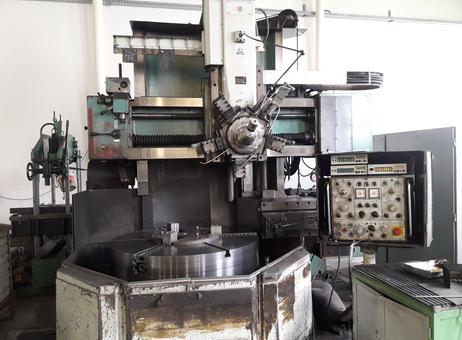
Avoid Costly Mistakes: Professional Tips for Purchasing a Pre-Owned / Second-Hand / used TOS Hulín SKJ 12A?
Here are professional tips for evaluating a used TOS Hulín SKJ 12A vertical turning lathe, to help you avoid costly mistakes. The SKJ 12A is a heavy, large workpiece machine, so issues that might be tolerable on smaller machines become very expensive here. Use this as your inspection & negotiation guide.
What Is the TOS SKJ 12A — Key Specs to Know
Knowing what the machine should be able to do helps you spot misrepresentation or hidden wear. Based on several listings, here are typical specification benchmarks:
| Spec | Typical / Catalog Value for the SKJ 12A |
|---|---|
| Table (face-plate) diameter | ~ 1250 mm |
| Maximum workpiece diameter | ~ 1400 mm without cross support; ~1300 mm with cross support |
| Maximum workpiece height | ~ 1150 mm |
| Maximum workpiece weight | ~ 6000 kg |
| Main spindle (motor) power | ~ 40 kW |
| Table speed, etc. | ~ 3500 mm/min table motion (or similar) |
| Physical size & weight | Very heavy (~ 13-20 tons in many listings), large footprint; machine is tall and wide. |
These give you baseline expectations. If seller’s machine is far off, that may indicate missing parts or heavy wear/modifications.
Key Things to Inspect & Test
Because of its size, age, and intended heavy duty use, the SKJ 12A has potential problem areas. When possible, go see the machine in person and try to do these checks.
| Area | What to Check / Test | Why It’s Critical & What to Look Out For |
|---|---|---|
| Mechanical and Structural Integrity | • Inspect the faceplate and table: is it flat, free of warping, cracks, distortions? Any signs of collisions or past damage. • Check the cross support (if present): vertical column, slideways or slide, checking for wear or looseness. • Inspect the main column, bed, ways/guides: rust, scoring, pitting, proper lubrication, dirty coolant/chip accumulation. • Check support (side support or steady rest) if used: alignment and wear. • Examine guardings, door shields, covers, and any safety features. | Since the SKJ 12A carries heavy workpieces, structural integrity determines safety, precision, stability. Worn or warped tables or supports will produce out-of-tolerance parts; may require expensive machining or replacement. |
| Spindle, Drive & Table Motion | • Run the table motion under load: see if speeds are met and motion is smooth at all speeds; listen for noise, vibration (especially in large bearings, gearing, drive belts or shafts). • Check the spindle or table drive motor(s): condition, any overheating, oil leaks, gear/drive mechanism condition. • Check drive amplifiers, converters (e.g. thyristor converters, or any replacement parts) for condition. • Check whether rotational amplifier or drives have been replaced or maintained; old electronic components degrade. • Check backlash or slop in drive gearing, table traverse systems. | Table drive and spindle are among most expensive components; wear here directly impacts work accuracy and reject rate. If electronic or drive parts are obsolete or damaged, cost of replacement can be very high. |
| Accuracy, Alignment & Tolerancing | • Use test indicators to check table flatness and trueness of face plate rotation (run-out). • Check alignment of cross slide/support with table rotation axis. • If side / cross support is used for workpiece support, check its vertical alignment and whether travel is smooth. • Perform a test turning / facing operation on a known block or workpiece and check dimensions, radial errors, surface finish. • Look for drift or deviation when in continuous operation (heat buildup may cause drift). | In large work-piece turning, accuracy matters: misalignment or wear leads to scrap, rework, time. Correcting misalignment or table/trunnion issues is laborious and expensive. |
| Controls, Electrical, and Power Systems | • What control / electrical system is installed (is it original? Has it been upgraded)? Are wiring panels clean, properly grounded? Look for water damage, rust, etc in electrical cabinets. • Check power requirements: what voltage, phase, current? Are the motors and drives suitable for your facility? • Test motor(s) under start/stop; check for smooth acceleration; any clipping or drop in power. • Inspect cooling / ventilation systems for motor / drive components; ensure fans/fins are clean. • Any replacements: e.g. “rotary amplifier on thyristor converter replaced” (as in some listings) — check condition and whether documentation or test data is available. | A major cost factor is in replacing or repairing control/electrical/drive components. Also mismatches in power can lead to operating issues or additional investment. |
| Wear & Maintenance History | • Ask for maintenance records: when major components were serviced (bearing replacements, drive gear overhauls, table motors, slide ways). • How heavily the machine has been used: lots of high-duty, interrupted cuts, or just smoother finishing work. • Environmental history: been kept in dry indoor environment or dusty / damp / explosive chip / coolant exposure. • Signs of neglect: leaks (oil, hydraulic, coolant), corrosion, dried up lubrication, missing shields or way covers. • Whether repainting, refitting has been done (could be cosmetic cover-ups). | Machines of this age that have been poorly maintained may look solid externally but have internal wear that leads to large repair bills. |
| Auxiliary Systems & Accessories | • Check if side support or steady rests are included and if they are well matched to machine capacity. • Cooling / coolant system: tank, pumps, piping, filters, coolant contamination or rust. • Chip removal / handling / cleaning access; guard panels; lighting. • Any copying device or measuring / digital read-outs. • Safety features: guards, emergency stop, covers. • Documentation: manuals, parts lists, electrical schematics. | Missing accessories may reduce what you can do, or force you to buy replacements. Safety or missing documentation can slow setup or bring regulatory risk. |
| Physical Condition & Site Requirements | • Check the base or foundation anchor points: floor must support machine load; any level / foundation issues. Because of the mass, small mis-leveling leads to large errors. • Size, height, doorways: can you get the machine into your facility easily. • Transport / rigging costs: moving such a heavy machine is expensive; dismantling, reassembly may be necessary. • Safety of lifting points, bolts, structural integrity for movement. • Check for leaks (oil, hydraulic fluid) on floor, on machine: may indicate problems. | Logistics can kill the cost advantage of a used machine. If moving / installing costs are high, they may offset savings. |
| Operational Testing | • If possible, see it run a full job similar to what you will do; heavy parts, biggest size, etc. • Run under continuous operation long enough to get temperature stabilization; see whether spindle/drive heat, vibration, noise is acceptable. • Observe performance at lower and higher loads; see how table speed and torque hold up. • Check control responsiveness and any drift over time. • If possible, measure and record run-out, flatness, deviations before and after working period. | Static inspections miss many misalignments, heating / deformation, vibration issues. Early detection saves money. |
Red Flags / Deal-Breakers Specific to SKJ 12A
Here are warnings to look for that often indicate a machine is not worth much, or that the buyer should insist on a large discount or repairs:
- Table warpage or cracks on the faceplate; any damage near fixture holes. Very difficult to repair.
- Severe bearing wear in spindle or table drive: noises, slack, inability to maintain speed or torque; overheating.
- Corrosion or damage to slide ways, cross support surfaces: pitting or rust that corrodes precision surfaces is usually expensive to correct.
- Electrical/electronics problems: power drive parts missing or obsolete; large signs of overheating or burnt wiring; missing control panels or parts; or if machine has been idle for many years without preservation.
- Missing or broken auxiliary support systems: for example side support, steady rest, safety guards, copying devices. If critical workpieces require support that is missing or misaligned, you may lose capability.
- Poor lubrication or signs of leaks: oil leaks, dried up grease, coolant mix infiltration — if the machine’s lubrication systems have not been maintained, internal wear can be severe.
- History of abuse: crashes, overloads, heavy interrupted cuts beyond what machine is rated for, or misuse (e.g. working beyond the support range, unbalanced loads).
- No documentation or spare parts: when parts are obsolete (bearings, motors, control components), replacement cost and lead time may be very bad.
- Misalignment between table, cross support, and column: if the workpiece height or cross slide is not square or not properly aligned, precision suffers.
- Machinery sitting idle for a long time without preservation: moisture, rust, seized parts, electrical degradation.
Questions to Ask the Seller
These help you get beyond what you can see and spot hidden costs early:
- What is the machine’s age and how many hours (or equivalent) has the table / spindle / main drive been used?
- What materials and size of workpieces have been machined (weight, height, diameter)? Any large out-of-balance loads or overhangs that stressed the machine?
- What maintenance has been done, and when (spindle, bearings, lubrication, slide ways, drives)? Are records available?
- Has the main motor / drive electronics / converter / amplifier ever been replaced or overhauled? If yes, who did it and is it working well?
- What condition are the slide ways and cross support; any known wear, misalignment, or need for regrinding or reprofiling?
- Has the machine been idle or operated steadily; was proper preservation done during idle periods?
- What auxiliary devices are included (supports, steady rests, copying apparatus, guards, safety features)?
- Is the control / electrical panel clean, original, or modified? Any issues with availability of spares for these or drive components?
- Can the machine be tested under load, with a part of similar size / weight as I plan to run?
- What are the power / electrical requirements? Are there any known issues with overheating / excessive vibration?
- What transportation, installation, site prep costs will be involved? (Foundations, leveling, rigging, etc.)
Calculating the True Cost / Negotiation Tips
Even when a used machine looks good, many costs tend to sneak in. To avoid surprises:
- Always budget significant repair / refurbishment: bearing replacements, electrical panel clean-ups, re-alignment, perhaps even regrinding of ways or faceplate. These can cost tens of thousands (depending on locale).
- Consider transportation & installation cost: moving a 13-20 ton machine, with height >4 m, demands special rigging, may require disassembly, and a strong foundation (floor, concrete, leveling).
- Factor in downtime before productive use: time for commissioning, adjustment, possible calibration, operator training.
- Price missing accessories / tooling into your offer: side supports, steady rest, guards, copying device, manual / documentation, any measuring/indicator devices. If these are missing or in poor condition, you’ll have to buy replacements.
- Consider ongoing spare parts & service: how easy is it to procure the motor, bearings, drive electronics, cables, etc., in your region. If something is obsolete, you may have to pay premium or do custom replacements.
- Use observed defects or upcoming maintenance needs as leverage in negotiations: e.g. if you find slide way wear, spindle issues, need for repaint or electrical rework. Even good machines at good prices sometimes hide issues that will cost.
- If seller provides documentation, test data, alignment / run-out measurements, that increases value; lack of such data reduces it.